“2.2 miles to the falls,” the trailhead marker announced — meanwhile my three-year-old was already limping in protest, legs officially “broken” according to her, and we hadn’t even left the gravel lot yet. Ring any bells? Anyone who’s ever tried to bribe a burnt-out toddler up a switchback already knows this: the right equipment isn’t a nice-to-have that smooths things over. It’s the thing that determines whether the hike happens at all.
Why This Matters for Traveling Families
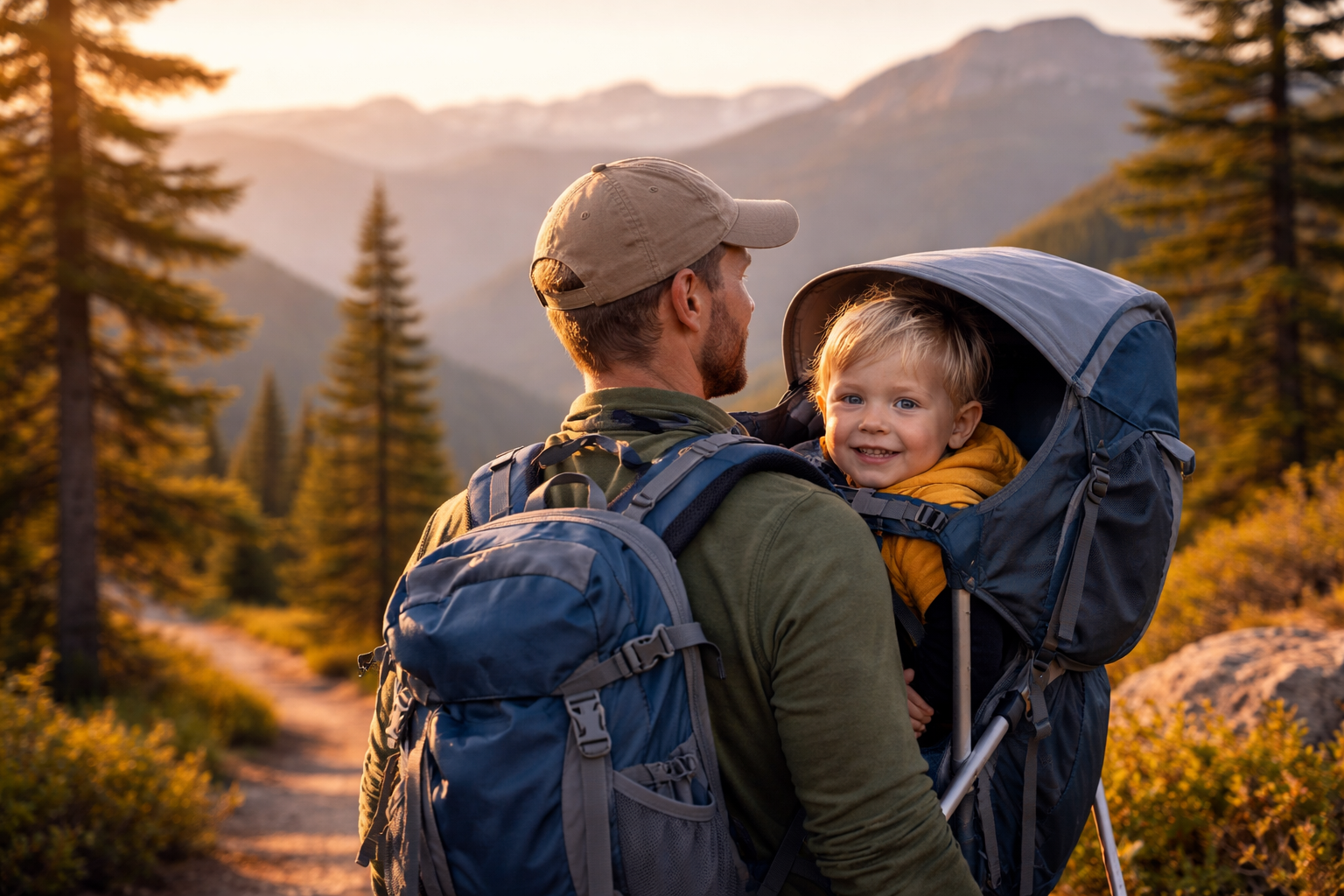
After dragging kids through more than 30 national parks and 15 countries, here’s the unvarnished conclusion I’ve landed on: a framed child hiking backpack is the one piece of gear no trail-loving family should be without. End of discussion. Strollers give out the second the pavement does. Soft-structured carriers — your Ergobabys and the like — are fantastic for infants and quick errands around town, but they dump all of your kid’s weight straight onto your shoulders and lumbar spine with nothing to redistribute the load, and on something like a five-mile push to a backcountry lake in the Cascades, that shortfall becomes brutal. A proper framed toddler carrier flips the equation. The weight rides on your hips instead of your shoulders, your balance stays solid over roots and rocks, and there’s room built in for snacks, spare layers, diapers, and a hydration bladder — all while your kid conks out against your back. That’s the gap between a paved 45-minute “hike” to an overlook and a real day-long trek to somewhere genuinely worth the sweat.
The sweet spot for this category is roughly 12 months and up — once a kid can hold their own head steady and sit unassisted — through about age four, or somewhere near the 40-pound ceiling. Below, I’ll break down the carrier that’s earned its keep on my own trails, what to actually check before buying, and a couple of honest gripes worth knowing before you commit.
The One Carrier That Held Up Over 2.2 Miles With a Cranky Three-Year-Old
The moment a toddler’s legs quit before you’ve even hit the first mile marker, whether your carrier distributes weight like genuine hiking gear — instead of like an oversized baby sling — decides whether the rest of the day is a family memory or a slow-motion disaster. I wanted something my shoulders could tolerate for hours on end, not a rig that made me feel like I was hauling a sandbag strapped to my spine.
Where it earns its keep
- A hip belt that genuinely shifts the load onto your hips rather than leaving your shoulders to do all the work — three hours into a trail, the difference is impossible to miss.
- Built-in sunshade paired with a ventilation panel meant my kid stayed shaded and cool while I wasn’t sweating through my shirt from carrying a tiny human on my back.
- A generous set of pockets fit snacks, a water bottle, and a first-aid kit without me needing to sling a second bag along, which kept me nimble on rougher ground.
Where it falls short
- Empty or packed away, it’s stiff and takes up serious space — squeezing it into a carry-on simply isn’t happening, so treat this as gear you buy for a specific trip rather than something you haul on every flight.
- The straps take real practice to get right; I misadjusted mine the first day and lost the whole afternoon fiddling with buckles, which stung given what I’d already spent.
I’ll admit I second-guessed the investment when I first felt the weight of it on my shoulders at the trailhead, but by mile 1.5 when my daughter was asleep against my back and my hips were carrying the load, I understood why it costs more than the cheap alternatives. Get the Deuter Kid Comfort Child Carrier if you’re serious about hiking with small kids.
Frequently Asked Questions
What age range can use a framed child hiking backpack?
A framed child carrier works best from roughly 12 months and up — once a kid can hold their own head steady and sit unassisted — through about age four, or somewhere near the 40-pound ceiling.
Why is a framed carrier better than soft-structured carriers for hiking?
A framed toddler carrier shifts weight onto your hips instead of dumping your kid’s weight onto your shoulders and lumbar spine. The weight distribution keeps your balance solid over roots and rocks, while soft-structured carriers offer no load redistribution on longer hikes.
Can you fit a child carrier in a carry-on bag?
No. The Deuter Kid Comfort is stiff and takes up serious space even when empty or packed away, so squeezing it into a carry-on simply isn’t happening. Treat it as gear you buy for a specific trip rather than something you haul on every flight.
What gear fits inside the child carrier pockets?
The generous set of pockets fit snacks, a water bottle, and a first-aid kit without needing a second bag. You can also carry a hydration bladder, spare layers, and diapers while keeping your hands free on the trail.
About This Article

Written by Elena Vasquez. Elena Vasquez is a full-time traveler and the founder of Witty Passport. Over fifteen years and more than 50 countries across six continents — including a stretch spent leading groups professionally through Southeast Asia and the remote highlands of South America — she's written the kind of destination guides she always wished existed: practical, specific, and built on real experience rather than recycled itineraries. More about this site.
Scope and limits. Elena is a full-time traveler, not a licensed travel agent or immigration adviser. Entry requirements, visa rules, and advisories change without notice — always confirm against the official government source for your destination and passport before booking.
Verify this against a primary source
Specifics change, and your situation may differ from the one described here. These are the authorities worth checking directly:
- U.S. Department of State — entry requirements and travel advisories
- CDC Travelers' Health — vaccination and health notices by destination
- TSA — current carry-on and screening rules