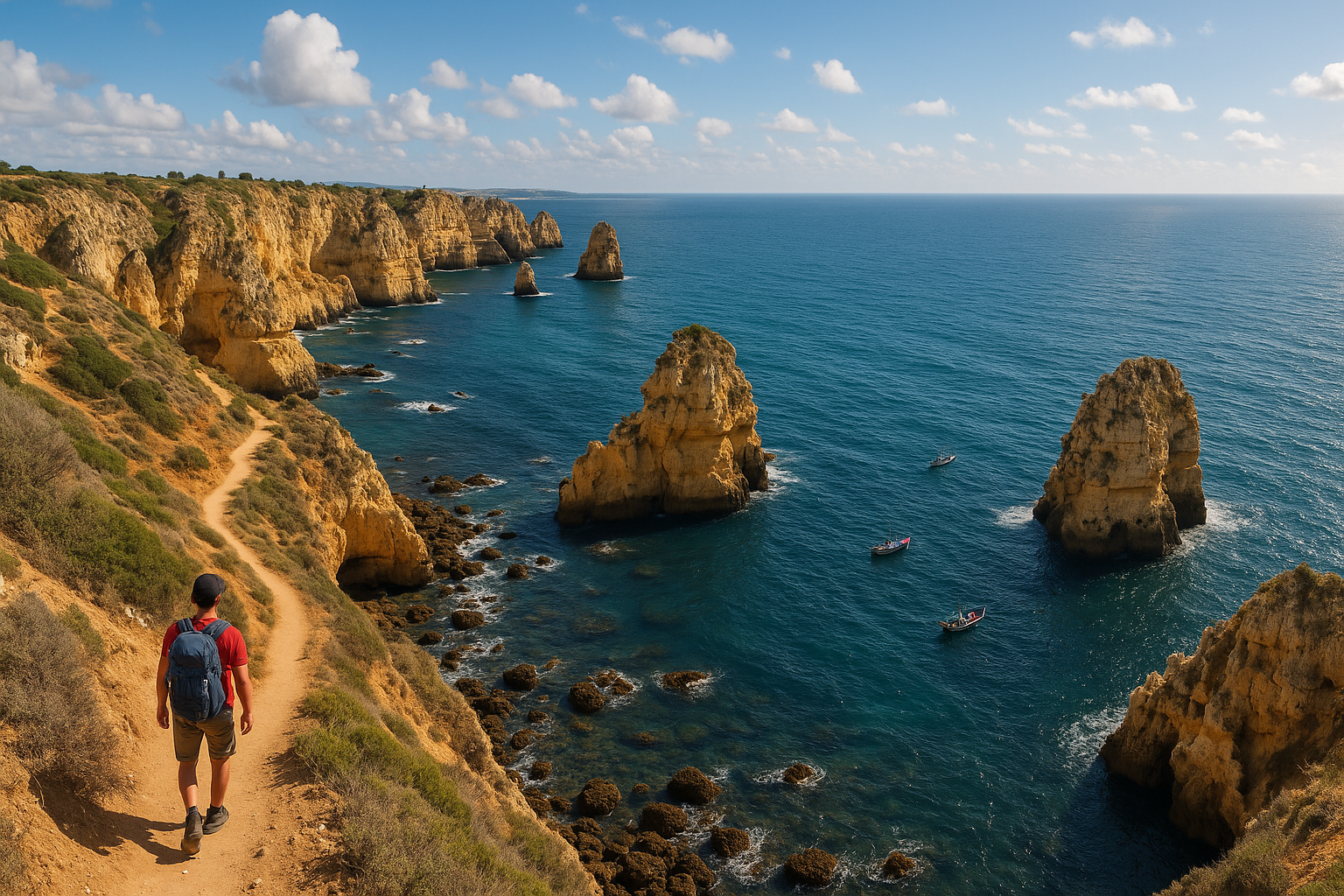
The week my company went fully remote, I opened a map and asked a question I’d never seriously asked before: if I can work from anywhere, why am I still sitting in this apartment? My finger landed on Portugal almost immediately, tracing a coastline that seemed to go on forever — and I quickly realized forever was barely an exaggeration. Stretching for hundreds of miles, Portugal’s coastline shifts from jaw-dropping sea cliffs in the Algarve to the wild, wind-battered shores of the Costa Vicentina to sun-drenched lagoons in the Alentejo, each region with its own unmistakable personality. Whether you’re chasing surf, hunting for a quiet cove to open your laptop, or simply trying to eat the world’s best pastéis de nata with an ocean view, this guide covers everything you need to plan your own stretch of the Portuguese shore.
What I Recommend
Portugal’s coastline means serious sun exposure—I learned this the hard way on the Algarve cliffs. Neutrogena Sunscreen Lotion Beach Defense SPF 70 is my non-negotiable companion for any coastal trip, especially when you’re spending hours exploring tide pools and golden beaches. It’s water-resistant enough to handle the Atlantic spray and won’t leave you looking like a greasy mess in photos.
Whether you’re hiking the dramatic cliffs of the Ponta da Piedade or lounging in a fishing village, a wide brim sun hat is genuinely useful—not just for UV protection, but because the Portuguese sun reflects off the water like you’re inside an oven. I wear mine nearly every day when I’m on the coast, and it’s saved me from at least two nasty burns.
The Portuguese coastline involves a lot of walking, scrambling over rocks, and unexpected weather changes. A lightweight, packable rain jacket packs down to almost nothing and has bailed me out more times than I can count when afternoon Atlantic squalls rolled in without warning. It’s the one thing I never travel without along any coastline.
Those coastal cliffs and secluded beaches mean you’re often far from the nearest shop, so a filtered water bottle is a practical lifesaver during long exploration days. Portugal’s tap water is excellent, so you can refill anywhere—and staying hydrated in that relentless coastal sun isn’t optional, it’s essential.
If you’re serious about capturing those stunning golden-hour coastal shots, a portable phone tripod lets you get yourself in the frame without begging a stranger or dealing with shaky self-timer videos. The Portuguese cliffs are too photogenic not to document properly, and this tiny tripod has made my coastal photos infinitely better.
As an Amazon Associate, I earn from qualifying purchases.
The 40-Year Tawny That Made Me Question Every Wine Decision I’ve Ever Made
Our guide, Tomás, had the kind of easy confidence that comes from spending your whole life on the Douro. He met our small group at Porto’s Cais da Ribeira just after eight in the morning — me clutching a pastel de nata like a security blanket — and within minutes he was pointing out the old rabelo boats moored along the quay, explaining that those flat-bottomed wooden vessels once carried barrels of port wine downriver from the valley estates to the lodges in Vila Nova de Gaia. “Before the roads, before the trains,” he said, “the river was everything.” As we pushed off and the city’s tiled facades slowly gave way to terraced hillsides climbing improbably steep slopes, Tomás explained that the Douro Valley’s schist-and-granite terraces are so labour-intensive to maintain that the entire region earned UNESCO World Heritage status in 2001 — one of the world’s oldest protected wine regions, demarcated back in 1756 by the Marquis of Pombal, centuries before “wine tourism” was a thing anyone needed to invent.
By the second quinta, I was feeling pleasantly warm and deeply pleased with myself. Then came the moment. The winemaker, a compact woman in her seventies named Dona Filomena, brought out a dusty bottle — the 40-year tawny her late grandmother had blended — and poured it with the kind of quiet ceremony that makes you sit up straight. I sat up so fast I knocked my tasting glass clean off the barrel we were using as a table. It shattered. Every head turned. Tomás, bless him, just handed me a fresh glass and said, “Good. The old one probably had cobwebs.” Dona Filomena laughed, which felt like absolution. The tawny itself tasted like dried figs, roasted hazelnuts, and something I can only describe as time — genuinely the most complex thing I’ve ever put in my mouth. Tomás noted that tawny ports get their amber colour from deliberate oxidation during long barrel ageing, which is what separates them from ruby ports. I nodded like I’d always known that. I had not.
If a day of sailing through one of Europe’s most dramatic wine landscapes while occasionally embarrassing yourself in front of winemakers sounds like your idea of a perfect Tuesday, it absolutely should be. These full-day Douro Valley cruise experiences fill up fast, especially in harvest season (September–October), so don’t leave it to chance. You can browse similar Portugal tours on Viator and lock something in before your trip — future you, slightly wine-flushed on a river boat, will be very grateful.
The Sun-Kissed Algarve
The Algarve is Portugal’s most famous coastal region. It is known for its golden cliffs and stunning rock formations. The sun shines here for much of the year, warming the turquoise waters. Beaches like Praia da Marinha are consistently ranked among the world’s most beautiful. Its limestone sea stacks and arches create a breathtaking scene. Nearby, the Benagil Cave offers a spectacular sea-carved grotto with a natural skylight.
Exploring this area reveals countless hidden coves and family-friendly beaches. Towns like Lagos and Albufeira provide vibrant hubs with restaurants and nightlife. Yet, you can always find a quiet spot to lay your towel. The region’s unique geology makes it a perfect place for boat tours, kayaking, and paddleboarding. These activities allow you to see the magnificent coastline from a different perspective.
Alentejo: The Wild, Untouched Coast
North of the Algarve lies the Alentejo region. Its coastline is dramatically different. Here you will find a wild, rugged, and less-developed stretch of shore. This area is protected as part of the Southwest Alentejo and Vicentine Coast Natural Park. The park preserves the raw beauty of the landscape. The beaches are often vast, empty, and backed by windswept dunes and cliffs.
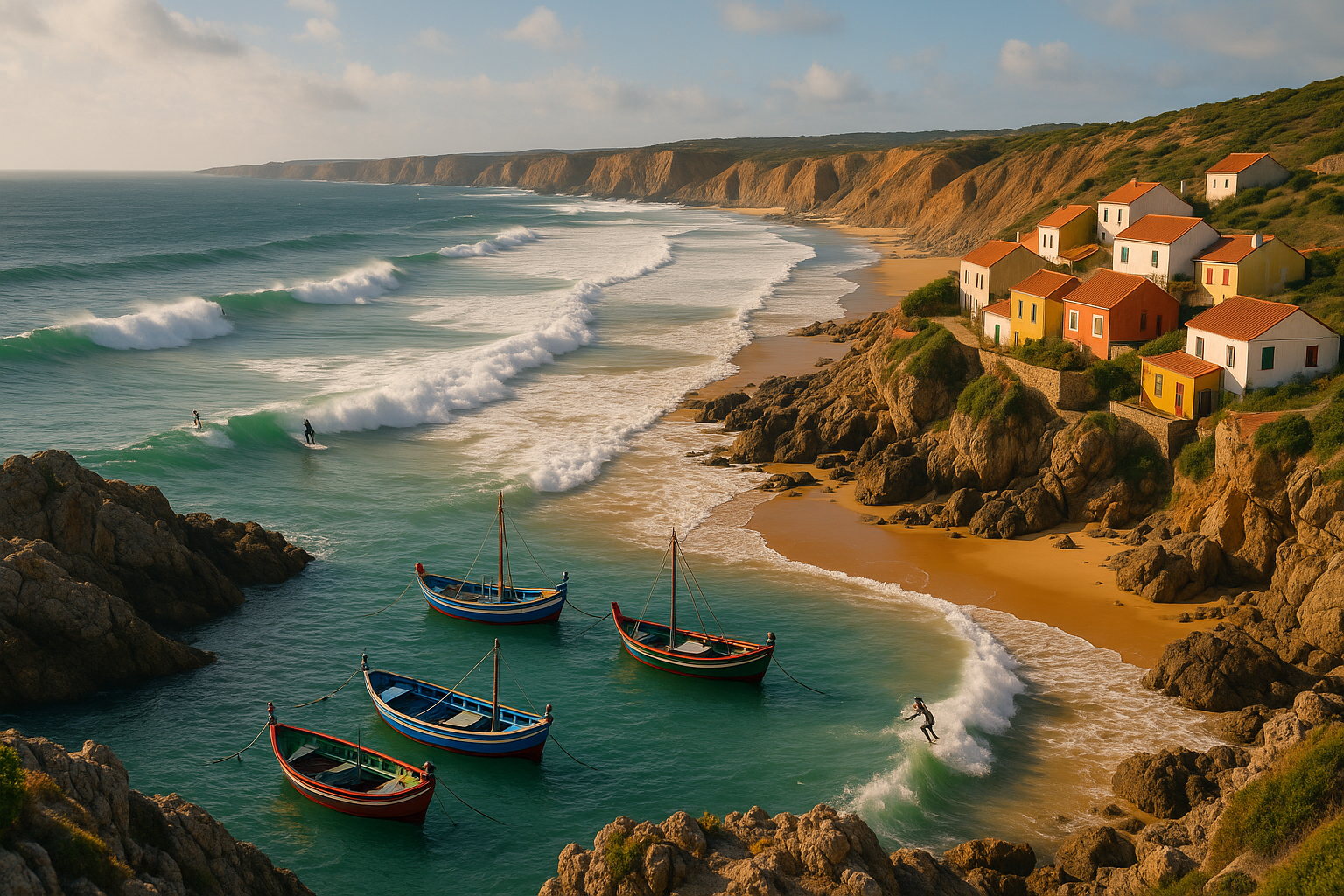
This coast is a paradise for nature lovers, hikers, and surfers. The famous Rota Vicentina Fishermen’s Trail follows the cliffs, offering incredible ocean views. Surfers flock to spots like Zambujeira do Mar and Arrifana for their consistent waves. The Alentejo coast provides a sense of escape and a connection to untamed nature. It is a refreshing contrast to the more bustling tourist areas.
Lisbon’s Coastal Corridor
The area around Portugal’s capital offers a fantastic blend of culture and coastal life. A short train ride from Lisbon takes you to the chic resort towns of Cascais and Estoril. These towns boast beautiful sandy beaches, elegant marinas, and a lively atmosphere. They are perfect for a quick escape from the city. You can enjoy sunbathing, swimming, and dining at excellent seaside restaurants.
For those seeking more action, the coastline north of Lisbon is a surfing mecca. The town of World Surfing Reserve was designated as the first World Surfing Reserve in Europe. Ericeira was officially dedicated as a World Surfing Reserve in 2011 to protect its unique density of world-class surf breaks. This recognition highlights the quality and consistency of its waves. From powerful point breaks to gentle beach breaks, Ericeira has options for surfers of all skill levels.
The Lush Costa Verde
Portugal’s northern coast is known as the Costa Verde, or “Green Coast.” This name perfectly captures its essence. The landscape is lush and green, meeting the cool, powerful Atlantic Ocean. The beaches here are often wide and windswept, with fine white sand. The weather is milder than in the south, offering a refreshing climate during the hot summer months. This region provides a different, more authentic Portuguese experience.
Near the vibrant city of Porto, you can find popular beaches like Praia de Matosinhos. It is famous for its excellent surfing conditions and incredible seafood restaurants. The northern coast is dotted with traditional fishing villages. These communities maintain their cultural heritage. Exploring the Costa Verde means discovering a quieter, more rustic side of Portugal’s magnificent shoreline.
More Than Just Beaches
While the beaches are the main attraction, the Portuguese coastline offers so much more. It is a hub for adventure and culinary delights. Surfing is a national pastime, with world-class waves found all along the coast. Windsurfing and kitesurfing are also extremely popular, especially in windy spots like Guincho, near Cascais.
Hiking is another fantastic way to experience the coast. The Rota Vicentina hiking trail network in the Alentejo is a world-renowned trail network. It offers hundreds of kilometers of marked paths along the cliffs and through the countryside. Of course, no trip to the coast is complete without sampling the seafood. Coastal towns serve incredibly fresh fish and shellfish. Enjoy a simple grilled sea bass or a flavorful seafood stew at a restaurant overlooking the ocean.