I have a confession: I have never once planned a trip around a museum, a beach, or even a particularly stunning mountain view. Every single itinerary I’ve ever built starts with a question — what’s being eaten there, and when? If you share this particular affliction, then November in Mexico is basically your Super Bowl. The intersection of food festivals, Mexico Día de Muertos celebrations, and the most dramatic culinary traditions on the planet makes this the single most delicious month on the travel calendar. UNESCO didn’t hand Mexico a recognition for Intangible Cultural Heritage of Humanity for its gastronomy for nothing. This is a country where food is ceremony, where recipes are inheritance, and where a single dish can carry 500 years of history in one bite. So let’s talk about the Mexican food festivals worth building your entire November around.
Why Mexico Is Arguably the World’s #1 Food Festival Destination
Let’s settle this debate quickly. Mexico’s gastronomy isn’t just good — it’s structurally, culturally, and historically unlike anywhere else on earth. In 2010, Mexico became one of the first countries to have its traditional cuisine recognized by UNESCO as an Intangible Cultural Heritage of Humanity. That’s not a food blog award. That’s the United Nations acknowledging that Mexican cooking — its ingredients, techniques, rituals, and communal meaning — is irreplaceable human culture. When you add in the staggering regional diversity (Oaxacan mole negro is as different from Yucatecan cochinita pibil as French Burgundy is from Japanese ramen), the result is a country where mexican food festivals to visit could fill an entire calendar year. November just happens to be when the magic peaks, anchored by the sacred and spectacular Día de los Muertos.
Food Festivals Mexico Día de Muertos: The Oaxaca Experience
Oaxaca Día de los Muertos Food Celebrations
- Location: Oaxaca City and surrounding villages, Oaxaca State
- Dates: October 31 – November 4 (core days; events build for the week prior)
- Must-Try Dishes: Mole negro, pan de muerto, tamales de rajas with chocolate caliente made from ground cacao paste
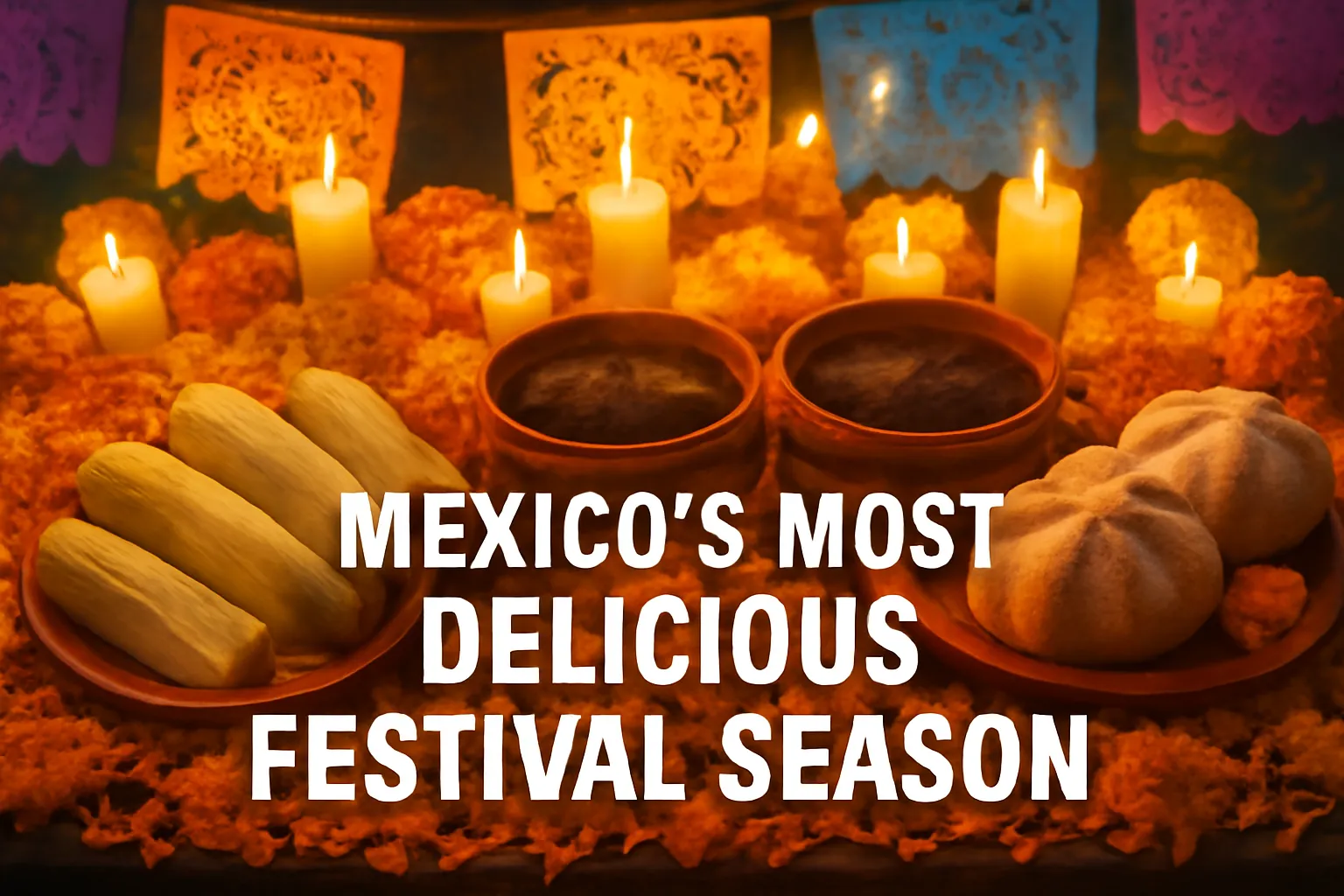
If there is one food-travel experience I recommend to every single person who asks me where to go, it’s Oaxaca during Día de los Muertos. This is not a food festival in the conventional sense — there’s no wristband, no vendor map, no Instagram activation booth. It is a living, breathing, deeply sacred tradition in which food is literally an offering to the dead, and you are an honored witness. Families build ofrendas (altars) piled with the favorite foods of their departed loved ones: mole negro so complex it contains over 30 ingredients including multiple dried chiles and dark chocolate; pan de muerto dusted with orange zest and sugar; tamales wrapped in banana leaves; and chocolate caliente made the old way, ground on a metate stone and frothed by hand. The day of dead food traditions Mexico observes here aren’t tourism products — they’re acts of love, and approaching them with reverence will get you farther than any guidebook tip. That said, Oaxaca’s markets and restaurants go all-in, and you can eat extraordinarily well for $8–$15 USD per meal. Book accommodation at least 3–4 months out — this is one of the most in-demand travel weeks in all of Mexico, and the good guesthouses inside the city fill up fast.
Practical Tip: Skip the cemetery-hopping tourist circuit on the night of November 1st and instead ask your hotel to connect you with a local family’s ofrenda gathering. Many Oaxacan families welcome respectful visitors — bring marigolds or a small food offering as a gesture of participation rather than observation.
Mexico City’s Festival del Mole: 50+ Varieties Under One Roof
Festival del Mole, Mexico City
- Location: Various venues, Mexico City (CDMX) — often Plaza de la Constitución or Xochimilco area
- Dates: Late October through early November, approximately one week
- Must-Try Dishes: Mole negro from Oaxaca, mole poblano, mole amarillo, pipián verde, and regional variations you’ve never heard of
Picture this: over 50 varieties of mole, represented by producers and cooks from across the entire country, all in one location. The Festival del Mole in Mexico City is essentially a graduate-level course in one of the world’s most misunderstood sauces. Most people outside Mexico think mole is “that chocolate sauce.” That is like saying wine is “that grape juice.” Attending this festival will permanently recalibrate your understanding of depth, complexity, and patience in cooking. Tastings typically run 20–50 pesos per sample, and vendors are extraordinarily generous with explanations about their regional techniques. The atmosphere is communal and genuinely joyful — less hushed reverence, more grandmother proudly ladling sauce onto a stranger’s tortilla. For mexico food travel november, this event pairs brilliantly with Día de los Muertos programming happening simultaneously across the city. Budget roughly $20–$40 USD for a serious tasting session, and another $15–$20 for a full mole lunch at one of the sit-down vendors.
Practical Tip: Arrive early on a weekday if possible — the weekend crowds are intense, lines get long by noon, and your palate will be genuinely fatigued by mole number 22 if you’re not strategic about it. Bring a small notebook or use your phone’s notes app to track which regions made your favorites.
Plan Ahead for Puebla’s Chile en Nogada Season and Oaxaca’s Guelaguetza
Feria Nacional del Chile en Nogada — Puebla
- Location: Puebla City, Puebla State
- Dates: August through September (plan by November for next year’s trip)
- Must-Try Dishes: Chiles en nogada (the dish), mole poblano, cemitas poblanas
Okay, yes — technically you’ve missed it for this November. But if you’re reading this and mentally building your 2025 Mexico food travel calendar, Puebla’s Chile en Nogada season is non-negotiable. The dish itself — a poblano chile stuffed with a picadillo of meat, fruit, and spices, bathed in walnut cream sauce and decorated with pomegranate seeds and parsley in the colors of the Mexican flag — is only made with fresh walnuts available August through September. It is Mexico’s most patriotic dish and arguably its most architecturally beautiful. The Feria Nacional celebrates it with cooking competitions, tastings, and the kind of civic pride you usually only see at World Cup qualifiers. Start planning and booking accommodation in Puebla now, because September fills up surprisingly fast for a city that doesn’t always make the top-ten tourist lists.
Guelaguetza Food Events — Oaxaca
- Location: Oaxaca City, Oaxaca State
- Dates: July (first two Mondays after July 16th)
- Must-Try Dishes: Tlayudas, chapulines (toasted grasshoppers), mezcal tastings from the Sierra Juárez region
The Guelaguetza is primarily a dance and cultural festival, but anyone who’s attended knows the food component is half the reason to go. Every region of Oaxaca sends its most representative culinary traditions, and the market stalls and street food scene around the festival grounds are extraordinary. Tlayudas — those massive, crispy-chewy tortillas loaded with black bean paste, Oaxacan string cheese, and your choice of meats — are eaten standing up, which is the only correct way. And if you haven’t yet tried chapulines (crunchy, lime-and-chile-dusted toasted grasshoppers), the Guelaguetza is the perfect low-pressure introduction. The mezcal tastings that accompany the festival are serious business: sip slowly, never shoot, and if a producer offers you a small jícara (gourd cup) rather than a shot glass, that’s a sign you’re about to taste something special. Add this to your July 2025 itinerary now — the free bleacher seats for the main ceremony are first-come, first-served and require lining up before dawn.
Mezcal, Pulque, and the Art of Respectful Tasting in Mexico
A note on drinking etiquette that will make you a better festival guest and a more welcome presence at any mezcalería or pulquería you wander into. Mezcal is not tequila’s party-animal cousin — it is a craft spirit with enormous regional variation, often made by families using methods unchanged for generations. The universal rule: never shoot it. Mezcal is sipped from a small clay or gourd vessel, slowly, with appreciation. When someone pours for you first, it’s customary to acknowledge the gesture before drinking. Pulque — the fermented agave sap that predates mezcal and was once reserved for Aztec priests and the elderly — is an entirely different experience: thick, slightly viscous, mildly sour, and profoundly local. You’ll find it at markets and dedicated pulquerías, rarely in tourist restaurants. Ordering it marks you immediately as someone who actually does their homework, and the reaction from locals is usually warm and enthusiastic. At any tasting event during food festivals mexico dia de muertos season, pacing yourself isn’t weakness — it’s wisdom.
The Cookbook That Actually Explains Why Oaxacan Mole Tastes Nothing Like What You’ll Make at Home
You’ll arrive in Oaxaca convinced you understand mole negro from eating it once in a restaurant, then taste the real thing and realize you’ve been missing entire layers of flavor, technique, and history. This cookbook bridges that gap before you even land.
What works
- The mole and pan de muerto recipes are grounded in actual tradition, not simplified Instagram versions—you’ll understand what you’re eating when you’re standing in a mercado tasting the real thing.
- The ingredient sourcing advice is specific enough that you can actually hunt down proper Mexican chocolate, chilies, and spices in guesthouses or local markets without feeling completely lost.
- Reading it before the trip preps your palate and gives you conversation starters with vendors and cooks who appreciate when travelers know the difference between mole negro and mole rojo.
What doesn’t
- It’s not a quick-reference pocket guide—at 300+ pages it’s heavy to pack, and you’ll mostly use it before departure and after you get home, not on the trip itself.
- Some of the specialty ingredients are genuinely difficult to source even in Mexico City or Oaxaca, so expect some “close enough” substitutions despite the book’s specificity.
I nearly returned it after realizing I couldn’t find half the chiles it called for in Oaxaca’s Central de Abastos, but then a vendor looked at my dog-eared pages and started telling me which local cooks used which combinations—suddenly the book became a conversation piece, not just a recipe collection. My Mexican Kitchen: 100 Recipes Rich with Tradition, Flavor, and Spice
This post contains affiliate links. As an Amazon Associate, I earn from qualifying purchases at no extra cost to you.