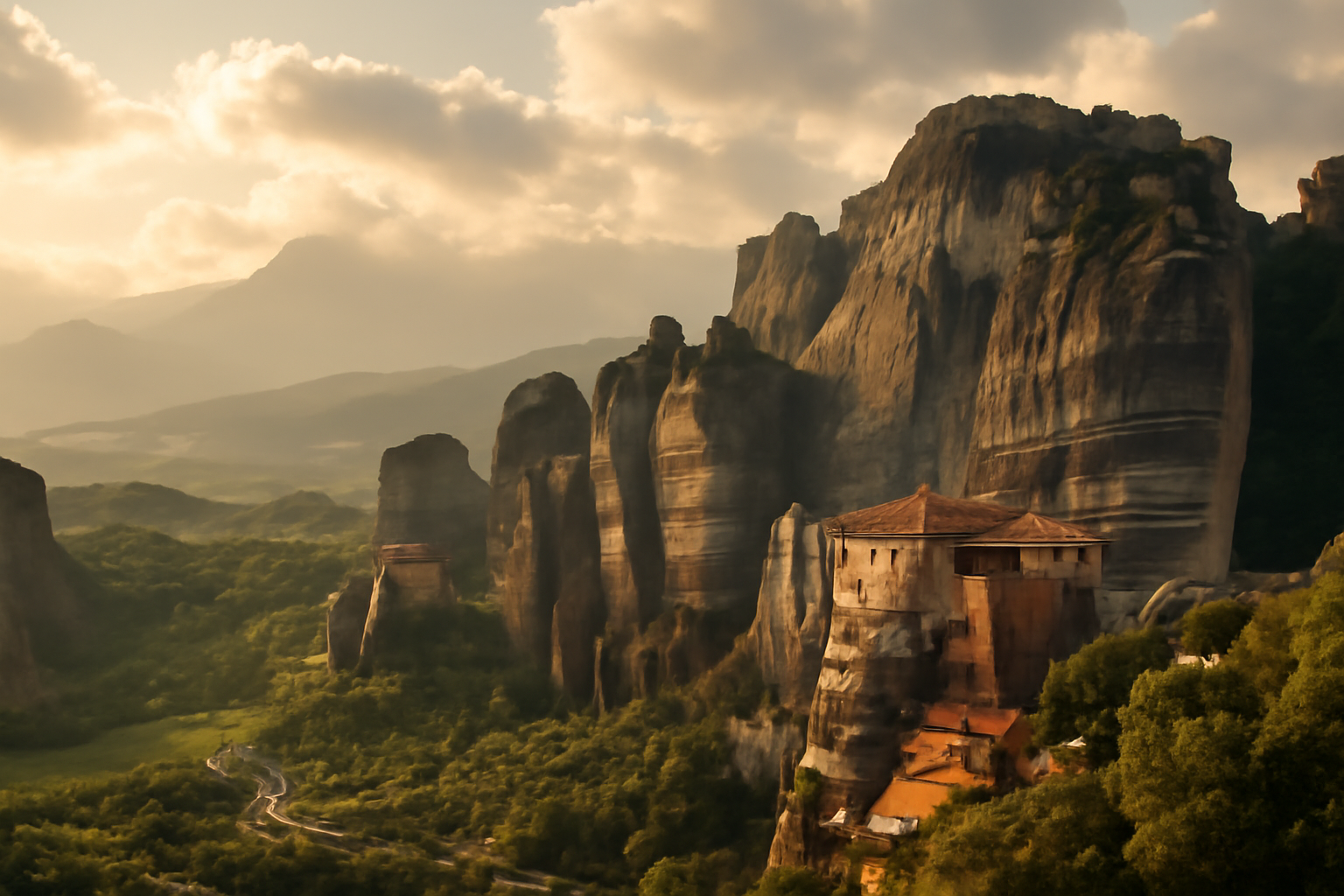
Knowing how to access and explore Meteora monasteries is the first step to making the most of your visit. These extraordinary religious complexes sit atop sheer sandstone pillars rising more than 400 meters above the Thessaly plain, which means reaching them takes a little more thought than a typical sightseeing stop. The good news is that with the right information, navigating the area is straightforward and genuinely rewarding.
In this guide, you’ll find everything you need to plan your visit to the Meteora monasteries — from the best driving routes and where to park, to the walking paths that connect each site and the most logical order to visit them. Whether you’re arriving by car, hiring a taxi, or setting out on foot from Kalambaka, the sections below will help you move through the area efficiently and comfortably.
I’ll be honest with you: the first time I saw photos of Meteora, I assumed they were digitally altered. Monasteries perched on top of impossibly tall rock pillars in central Greece? Sure, okay. But then I actually stood at the base of those formations and looked up, and my brain completely short-circuited. The place is so surreal it almost loops back around to feeling fake again — except your aching legs from the climb remind you it’s very, very real. If you’re trying to figure out how to access and explore Meteora monasteries without losing your mind over confusing schedules, dress code rules, and which trails are actually worth your time, you’ve landed in the right place. Let’s sort it all out.
This post contains affiliate links. As an Amazon Associate, I earn from qualifying purchases.
Getting to Meteora: Trains, Buses, and Road Trips
The gateway town for Meteora is Kalambaka, and it’s more accessible than most people expect. Your three main options from Athens are train, bus, or driving — each with its own flavor of adventure.
By Train
This is my personal favorite and the most scenic option. Trains run from Athens’ Larissa station to Kalambaka, with a change at Palaiofarsalos. The total journey is roughly four to five hours depending on connections. Book tickets through the Hellenic Train website in advance, especially in summer. The train arrives right into Kalambaka, meaning you’re practically already there when you step off the platform. Dramatic entrance: 10/10.
By Bus (KTEL)
KTEL buses run from Athens’ Kifissos terminal to Kalambaka and take around four and a half hours. Tickets are cheap and the buses are reliable. The downside? The terminal in Athens is a bit of a trek from the city center, so budget extra time to get there.
By Car or Rental
Driving gives you the most flexibility, especially if you want to chase sunrise or sunset light without depending on tour bus schedules. The drive from Athens takes about three and a half hours via the E75 motorway. Parking near the monasteries is available along the road, but spots fill up fast in peak season. Get there early, or be prepared to hike from a bit further down.
How to Get Around Between the Monasteries
Once you’re in Kalambaka, you have a few options for moving between the six active monasteries scattered across the rock complex.
Walking trails connect the monasteries and are genuinely one of the highlights of a visit. The main trail network runs from Kalambaka up through the rocks and loops around the plateau. A full circuit on foot takes around three to four hours and rewards you with viewpoints you simply cannot get from a car window. Wear real shoes — I cannot stress this enough. The trails are uneven, rocky, and steep in places.
Driving or taking a taxi between monasteries is perfectly reasonable if hiking the full route isn’t your thing. The main road winds past most of the monastery entrances, and you can park, visit, and drive to the next one in sequence. Taxis from Kalambaka are affordable for a half-day circuit if you negotiate a price upfront.
Organized day tours from Athens or Thessaloniki exist if you want everything handled for you. They’re convenient but rushed — you’ll typically get two or three monasteries and a scenic stop, then you’re back on the bus. If Meteora is a priority rather than a checkbox, I’d push for an overnight stay in Kalambaka instead.
Which Monasteries to Visit (And When They’re Actually Open)
Here’s the thing nobody warns you about: the monasteries rotate their closure days, and not all six are open on the same days. Walking up 300 steps to find a locked gate is a special kind of disappointment, so planning ahead matters.
If your time is limited, prioritize Great Meteoron (the largest and oldest) and Varlaam (arguably the most visually dramatic from the outside, with incredible frescoes inside). These two are the undisputed must-sees. The other four — Roussanou, St. Nicholas Anapausas, Holy Trinity, and St. Stephen’s — are absolutely worth visiting if you have the time, but if you only have one day, anchor your plan around Meteoron and Varlaam.
General opening hours run from roughly 9:00 AM to 5:00 PM, though these shift slightly by season. Most monasteries are closed one or two days per week, and the days differ by monastery — Meteoron is typically closed on Tuesdays, Varlaam on Fridays. Always verify current schedules before you go, as they do change. The complete guide to visiting Meteora monasteries has a detailed breakdown of opening days and practical logistics worth bookmarking.
The Meteora Monastery Dress Code: What You Actually Need to Wear
Let’s talk dress code, because this trips people up more than any other part of the visit. The monasteries are active religious sites, and they enforce the rules at the gate — no exceptions, no negotiation.
The Meteora dress code requirements are:
- Shoulders must be covered — no tank tops or sleeveless shirts
- Legs must be covered — no shorts or short skirts
- Women must wear skirts or long pants (most monasteries prefer skirts for women, and some provide wrap skirts at the entrance)
- Men must wear long trousers — not shorts
Most monastery entrances do have fabric wraps available to borrow if you show up underprepared, but they’re thin, awkward, and sometimes in short supply during peak season. My advice: just dress the part from the start. A lightweight linen shirt with long sleeves and comfortable loose trousers works brilliantly and keeps you cool in the summer heat. For a full rundown of exactly what to wear and what to avoid, check out the Meteora monasteries dress code guide — it covers every scenario including what counts as acceptable for each gender.
Best Time to Visit, Sunrise Spots, and Photography Tips
Spring (April–May) and early autumn (September–October) are the sweet spots. The weather is mild, the crowds are manageable, and the light is genuinely magical. Summer is beautiful but hot and packed — you’ll be queuing in direct sun and sharing those iconic viewpoints with forty other people angling for the same shot.
For sunrise, the Psaropetra viewpoint above Kalambaka is one of the best perches in the area — you’ll need to drive or hike up before dawn, but the mist sitting between the rock pillars in early morning light is the kind of thing you keep as a screensaver for years. Sunset is spectacular from the road above Varlaam, looking back toward Meteoron with the last light hitting the stone faces.
Photography inside the monasteries varies — some allow it freely, others restrict or prohibit it in certain areas. Flash photography is universally unwelcome. The exterior views from the trails, though? Completely fair game and genuinely breathtaking.
What to Pack for a Day at Meteora
Between the hiking trails, the monastery steps, and the uneven terrain, your footwear choice matters a lot. I’d skip the cute sandals for this one.
For a lighter trail day, the NORTIV 8 Women’s Lightweight Breathable Hiking Sneakers are a solid pick — mesh upper, good grip, and comfortable enough for hours of walking without feeling like you’re wearing boots in July. If you want something with a little more ankle support for the steeper sections, the Merrell Women’s Moab 3 Mid Waterproof is a trail classic that handles rocky terrain effortlessly. And for something in between — supportive but still lightweight — the NORTIV 8 Women’s Outdoor Fashion Sneakers in Grey Pink hit a nice sweet spot.
For carrying your layers, water, and snacks without feeling like you’re hauling a suitcase up a cliff face, a packable daypack is your best friend. The ZOMAKE Ultra Lightweight Packable Backpack (25L) folds