I was standing at the ticket gate of Kyoto Station, slightly jet-lagged and clutching a paper map I’d printed at home like it was 2003, when a stranger in a perfectly pressed linen shirt walked up and asked me the question I now get asked at least twice a week: “Tokyo vs Kyoto — which is better?” I gave her the same look I give everyone. The kind that says, oh, you sweet optimistic traveler, sit down. If you’ve been googling “Tokyo vs Kyoto which is better” hoping for a clean winner, I have good news and mildly annoying news. The good news: I have a real answer. The mildly annoying news: it depends — but only on about three very specific things, and I’m going to tell you exactly what they are.
The ¥800 Mamachari That Made Kyoto Worth the 5:45am Alarm
I’d been warned that Arashiyama’s bamboo grove turns into a selfie queue by 9am, so I wanted to be there at first light — which meant I needed a bike, not a taxi. Most rental shops near our ryokan in Fushimi didn’t open until 8 or 9, which defeated the whole point. BikesBooking let me filter by pickup location and time, and I found a mamachari-style city bike available for collection at 6am, about four minutes’ walk from where we were staying. The booking took maybe ten minutes the night before, cost ¥800 for the full day, and there was no “show up and hope for the best” element to it — the bike was tagged with my name when I arrived.
Cycling the bamboo-lined paths before 7am with almost no one around was genuinely one of those moments that justifies getting out of bed in the dark. The mamachari wasn’t fast or fancy — it had a basket and a bell and that’s about it — but it was exactly right for the pace of the morning. If you’re doing Kyoto and want to actually see the famous spots rather than photograph crowds at them, this approach works. I sorted the rental through BikesBooking, and the early-opening filter alone was worth it.
This post contains affiliate links. As an Amazon Associate I earn from qualifying purchases at no extra cost to you.
I’ve spent two weeks in Tokyo and two weeks in Kyoto on separate trips. Not back-to-back, not rushed, not on a group tour. Solo, slow, and with enough time to get genuinely lost in both cities on multiple occasions. What follows is my genuinely opinionated, occasionally self-deprecating, hopefully useful comparison of these two extraordinary places.
The Vibe Is Completely Different — and That’s the Whole Point
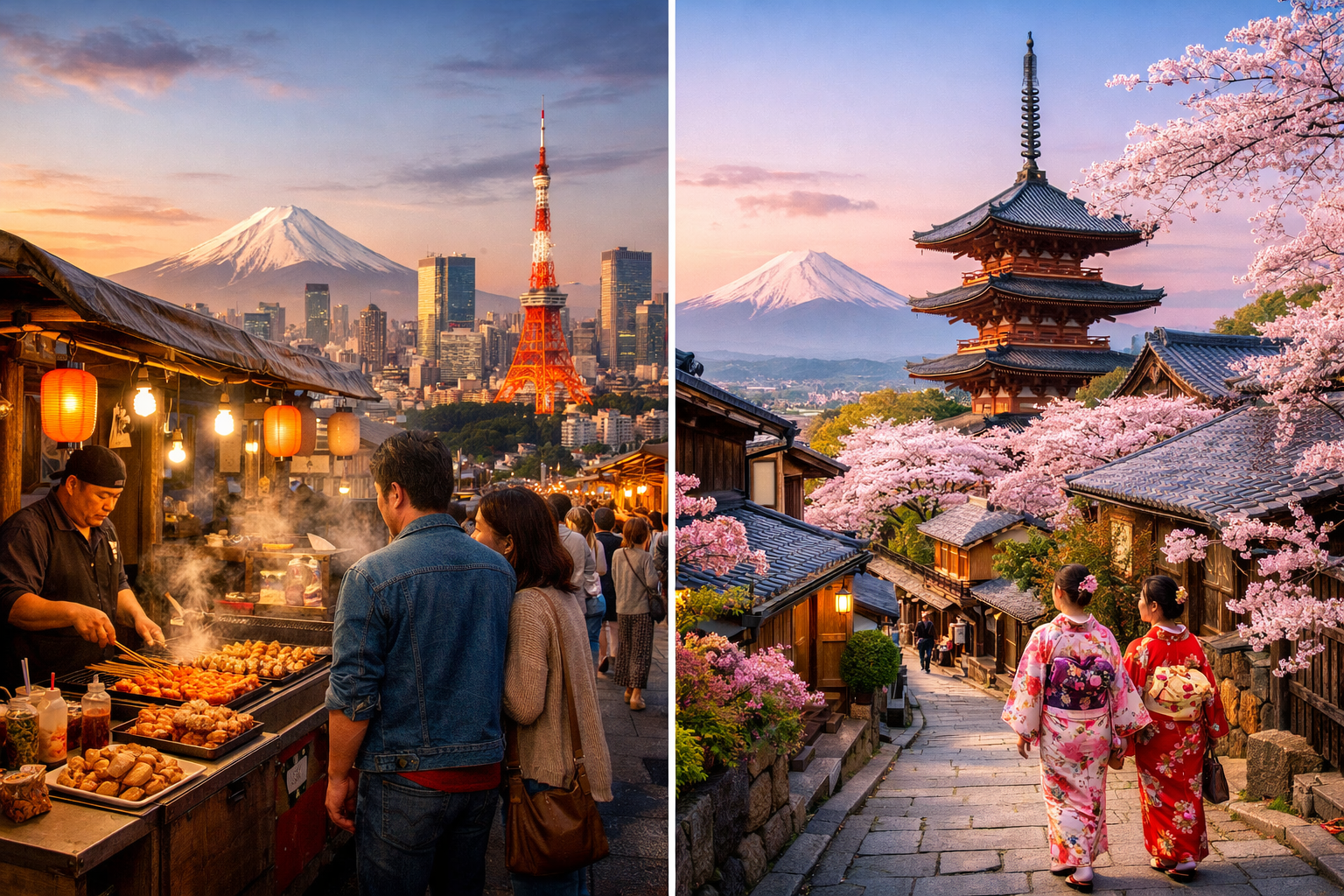
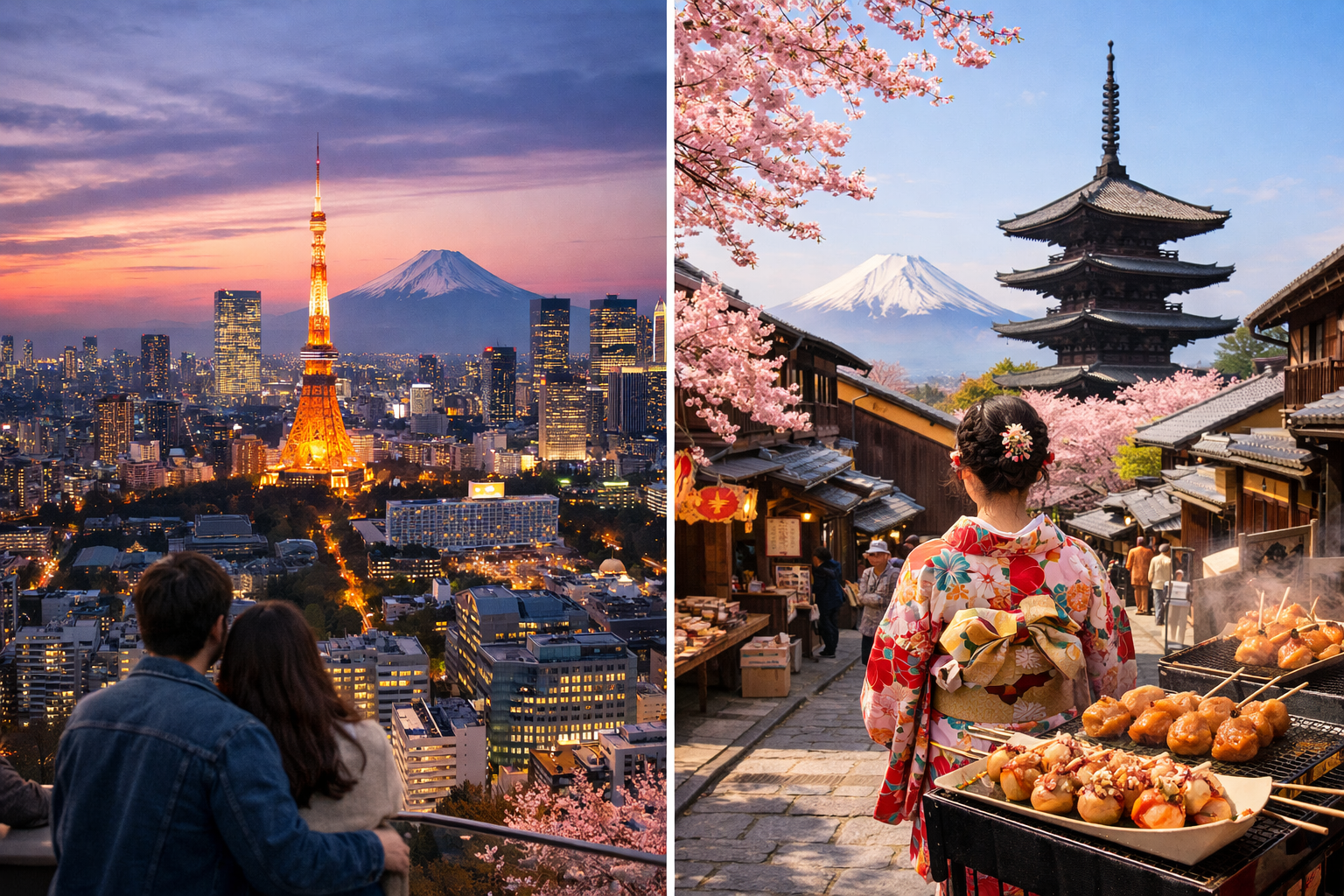
People act like Tokyo and Kyoto are two versions of the same thing, like choosing between two flavors of the same ice cream. They are not. They are not even the same dessert. Tokyo is the ice cream parlor itself — loud, neon-lit, open until 3am, and somehow selling thirty-seven varieties of soft serve. Kyoto is the quiet tea house around the corner where the menu has four items and every single one of them will stop you in your tracks.
Tokyo is one of the great megacities of the world. It’s overwhelming in the best possible way. You will walk out of a subway station and have absolutely no idea which direction you’re facing, and then you’ll look up and see a giant Godzilla head poking out of a building and decide it doesn’t matter. The neighborhoods shift dramatically — Shibuya is a sensory assault, Yanaka feels like a village frozen in time, Shimokitazawa is where every cool twenty-something with a vintage jacket seems to live. The city rewards you endlessly for just wandering.
Kyoto operates at a slower frequency. It has over 1,600 Buddhist temples and 400 Shinto shrines. You can spend an entire morning walking the Philosopher’s Path and feel a kind of peace that’s genuinely hard to find in a city of any size. The geisha districts in Gion are real, not a theme park recreation, and the food — the kaiseki, the yudofu tofu hot pot, the matcha everything — is some of the most intentional cuisine I’ve ever eaten. It asks you to slow down. I resisted for two days. By day three, I had completely surrendered.
Before your trip, I’d strongly recommend picking up Frommer’s Japan (Complete Guide) — it gives an honest, practical breakdown of both cities without the fluff, and I’ve found it more useful for planning than any single blog post (including this one, I’ll admit).
What Kind of Traveler Are You? (Be Honest With Yourself)
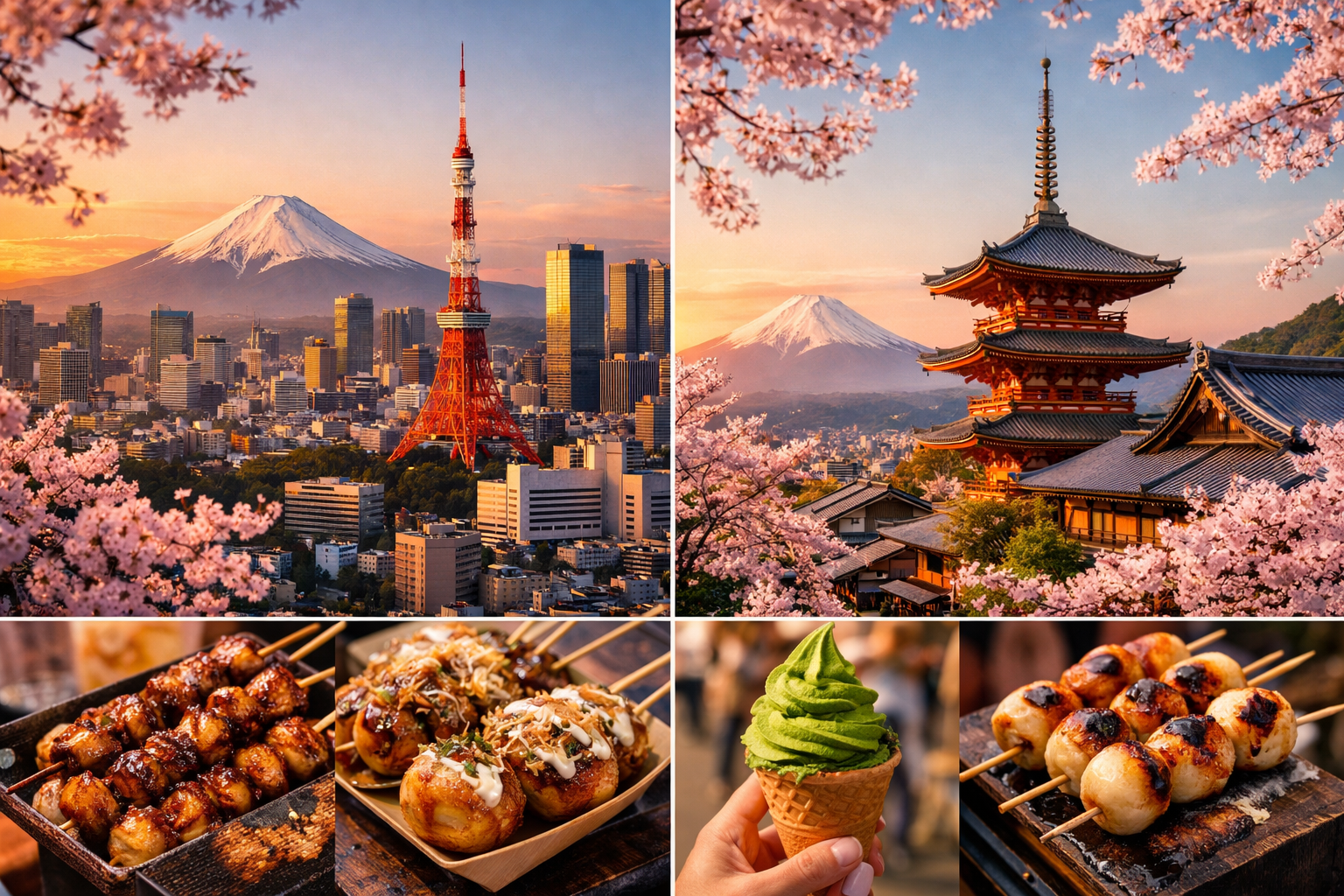
This is where I get a little direct, because I think travel content does people a disservice by being too wishy-washy. Here’s my honest breakdown by traveler type:
Go to Tokyo First If…
- You’re on your first trip to Japan and want maximum “wow” factor fast
- You love cities — proper big, beating, buzzing cities
- Food is a major driver of your travel (the ramen alone justifies the flight)
- You have limited time and need a city that delivers across every category
- You’re traveling with teens or kids who need constant stimulation to stay happy
Go to Kyoto First If…
- History, culture, and temples are what drew you to Japan in the first place
- You’ve visited Tokyo before and want a different texture on this trip
- You’re a slow traveler who actually enjoys sitting in one place for an afternoon
- You’re obsessed with traditional Japanese aesthetics — gardens, ceramics, textiles
- You want a base for day trips (Nara, Osaka, and Hiroshima are all very reachable)
If you’re going to Kyoto, the Lonely Planet Pocket Kyoto & Osaka guide is compact enough to actually carry and detailed enough to be genuinely useful on the ground. I kept mine in my day bag the entire trip and referenced it more than I expected to.
Practicalities That Actually Matter
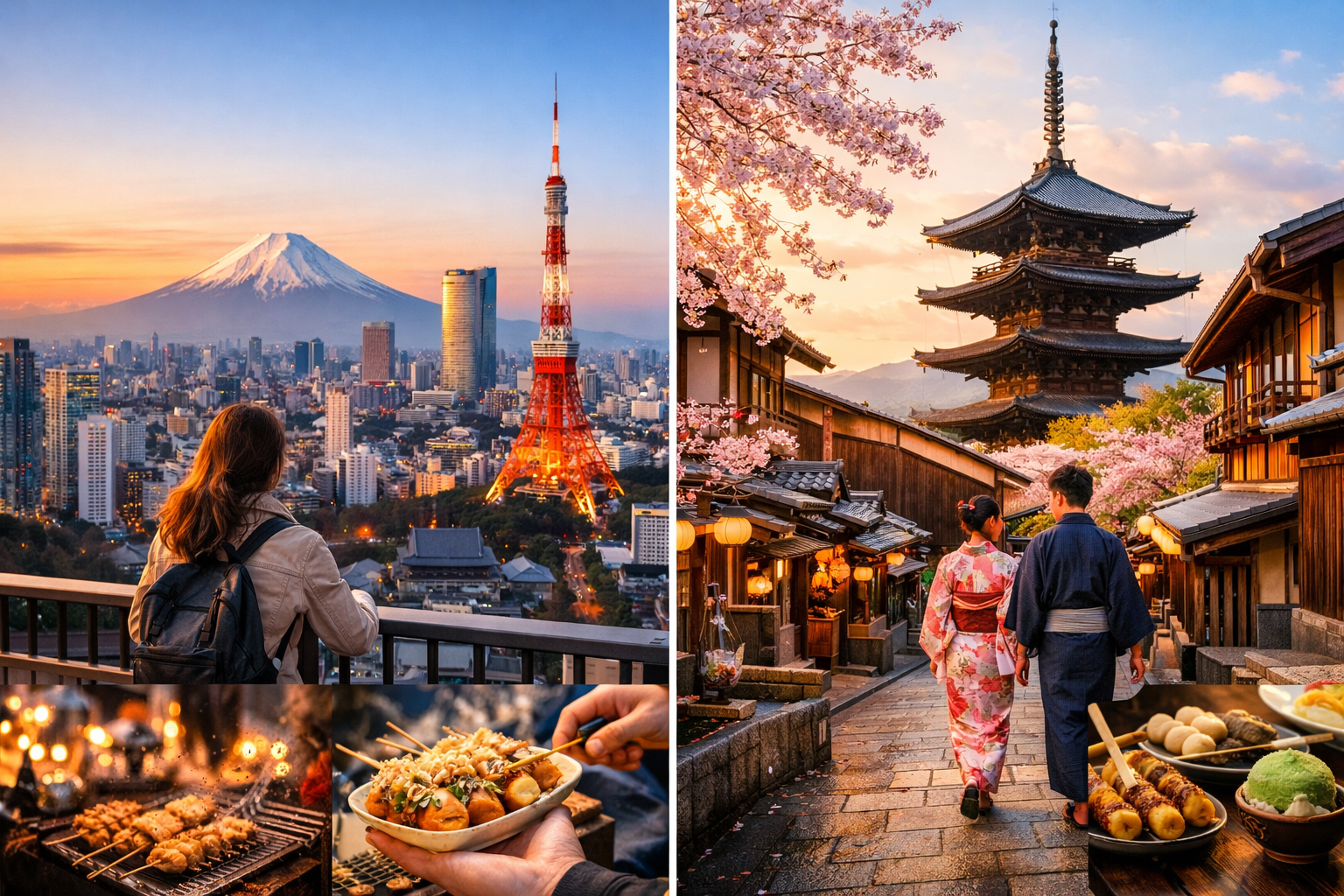
Let me talk about the logistics, because some of the differences between these cities are practical rather than philosophical, and they affect your trip more than you’d think.
Getting Between the Two Cities
The Shinkansen bullet train between Tokyo and Kyoto takes about two hours and fifteen minutes. It is, objectively, one of the great travel experiences in the world — smooth, punctual, and you’ll feel quietly smug about the whole thing. If you’re visiting both cities (which I’d always recommend if you have ten days or more), the Japan Rail Pass Travel Guide 2026 is an invaluable resource for planning your routes and understanding exactly where the JR Pass saves you money. Spoiler: it absolutely does on the Tokyo–Kyoto stretch.
Spanish speaker? There’s also a Spanish edition of the Japan Rail Pass guide, and if German is your language, the German edition is equally thorough. Planning the rail side of a Japan trip is genuinely one area where a dedicated guide pays for itself many times over.
Navigating Each City Day-to-Day
Tokyo has one of the most complex subway systems on earth. I say that with admiration and a little residual anxiety. The Lonely Planet Japan Travel Guide has some of the clearest breakdown of Tokyo’s neighborhoods and transit connections I’ve seen in print, and it covers Kyoto just as well. Worth having for either leg of your trip.
Kyoto is actually better navigated by bus and bicycle than by train for many areas. Renting a bike there was one of my better decisions — worse decisions included wearing entirely the wrong shoes on a day I walked 22,000 steps through temple grounds. Learn from me.
A Few Gear Notes
Japan uses Type A plugs (same as North America), but if you’re coming from Europe or Australia, pick up a Ceptics Japan Travel Adapter with Dual USB before you go. It’s ultra-compact, which matters when you’re already trying to pack light. Speaking of which — Japan involves a lot of removing and putting on shoes at temples and traditional restaurants. I cannot overstate how much easier life becomes when your bag is organized. I use Travelon Mesh Pouches to separate my layers, electronics, and daily carry items. The mesh means you can actually see what’s inside without unpacking everything at a temple entrance.
My Honest Recommendation (and What I’d Do Differently)
When people ask me “Tokyo vs Kyoto which is better,” here is what I actually tell them: if you can only visit one city, go to Tokyo — but spend at least one day trip in Kyoto. If you have ten days or more, start in Tokyo, end in Kyoto, and let the trip arc from overwhelming wonder to quiet revelation. It’s a genuinely satisfying emotional journey, and I don’t say that lightly.
What I’d do differently? I’d go back to Kyoto in late November rather than spring. Autumn foliage there is reportedly just as spectacular as cherry blossom season with considerably thinner crowds. I’d also book a ryokan for at least two nights — a traditional Japanese inn — which I kept pushing to “next time” and deeply regret skipping.
The honest truth is that Tokyo will dazzle you and Kyoto will move you. Most travelers need a bit of both. Japan is extraordinary and these two cities are, together, an incomparable pair. Don’t let the choice paralyze you. Just go.
Have you visited one or both? I’d genuinely love to know which one captured your heart — drop it in the comments below. And if you’re in the planning stages, bookmark this post, grab one of the guides linked above, and start building that itinerary. Your future self will thank you enthusiastically and possibly tearfully.