
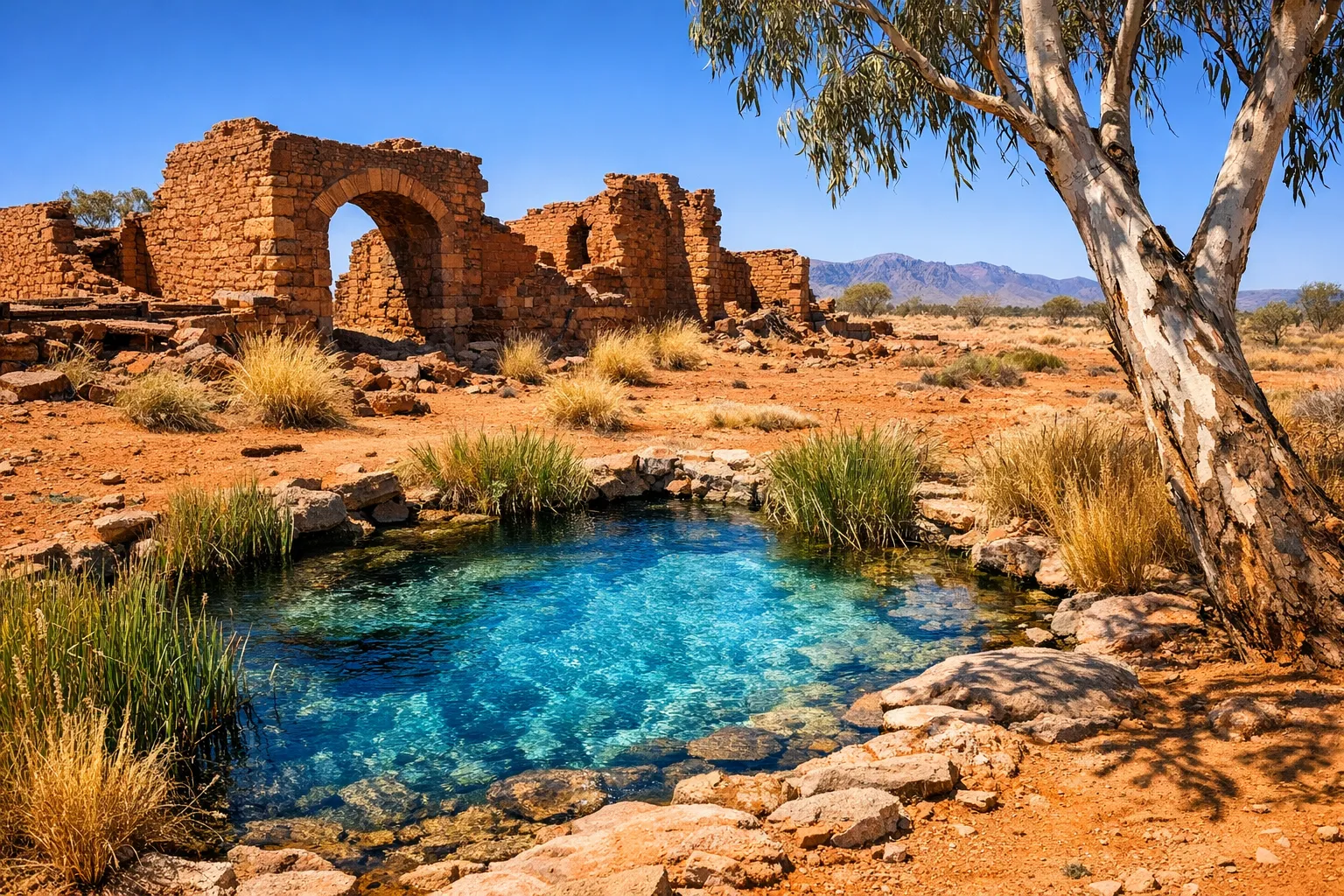
We eloped on a Tuesday with three friends and a bottle of champagne, telling ourselves the real trip would come later. “Later” arrived 18 months after our wedding when we finally stopped waiting for the perfect time and booked one-way flights to the heart of Australia’s Red Centre. Standing beneath that impossibly wide outback sky, red dust on our boots and absolutely no mobile signal, we understood immediately why this place demands more than a casual visit — it demands respect. Australia’s wild outback offers one of the most unforgettable journeys on earth, but the vast, remote plains will humble you fast if you arrive unprepared.
Instead, self-drive adventurers must plan every detail carefully. This guide will help you conquer the Outback safely. We will explore iconic routes, vehicle preparation, and vital safety tips. Therefore, you can focus on the stunning landscapes.
Preparing Your Vehicle for the Dirt
Driving through the Outback tests your vehicle’s limits. Travel Guide Therefore, a reliable four-wheel-drive vehicle is absolutely essential. Standard cars simply cannot handle the rugged terrain. Before leaving home, mechanics must perform a thorough inspection.
Furthermore, you must pack essential spare parts. Bring extra belts, hoses, and multiple spare tires. Additionally, a quality tire repair kit is crucial. Corrugated dirt roads will quickly destroy weak tires.
Essential Recovery Gear for Outback Travel
Recovery equipment is non-negotiable when venturing into Australia’s remote outback. Furthermore, the right gear separates a minor inconvenience from a life-threatening situation. Always pack these core recovery essentials:
- Snatch strap – Travel Guide Connects to another vehicle for dynamic pulling – Traction boards – Provide grip under bogged tyres – Sturdy shovel – Clears sand and debris around wheels – Tree trunk protector – Shields anchor points during recovery
Getting Unstuck in Deep Sand
Deep sand bogs are extremely common across outback tracks. Consequently, knowing how to use your recovery gear is just as important as carrying it. Additionally, deflating your tyres to around 18-20 PSI dramatically improves traction before attempting recovery.
Moreover, traction boards like MaxTrax work brilliantly when placed under spinning wheels. Therefore, always keep them accessible rather than buried under luggage.
Upgrading Your Suspension System
Factory suspension systems simply aren’t designed for heavily loaded outback vehicles. Furthermore, carrying weeks of food, water, and fuel adds enormous weight. As a result, standard springs compress excessively, reducing ground clearance and handling.
Consider these proven suspension upgrades:
- Heavy-duty coil springs – Support increased payload effectively
- Performance shock absorbers – Absorb corrugated road impacts
- Dakar-style leaf springs – Ideal for dual-cab ute setups
- Extended bump stops – Prevent suspension bottoming out
Investing Wisely in Your Setup
However, not all upgrades suit every vehicle or travel style. Therefore, consult a 4WD specialist before purchasing suspension components. Meanwhile, brands like Old Man Emu and Dobinsons offer outback-proven solutions.
Ultimately, proper suspension upgrades protect your vehicle, improve safety, and make long outback drives significantly more comfortable. Investing upfront saves costly repairs later.
Tackling the Oodnadatta Track
Legendary Road Trip Routes Through the Red Centre
The Red Centre is a road tripper’s dream destination. Oodnadatta Track – Outback South Australia Furthermore, each route tells a different story of Australia’s ancient past. These journeys demand respect, preparation, and a genuine sense of adventure.
The Oodnadatta Track
The Oodnadatta Track stretches through some of Australia’s most remote landscapes. Additionally, this iconic unsealed road connects Marree to Marla in South Australia. Travelers experience true outback isolation along every dusty kilometer.
Key highlights include:
- Mutawintji Historic Site – ancient rock art galleries
- Coward Springs – natural artesian thermal pools
- William Creek – Australia’s smallest pub town
- Pink Roadhouse at Oodnadatta – a legendary outback landmark
What to Expect on the Track
However, this route isn’t for inexperienced drivers. A 4WD vehicle is strongly recommended throughout. Road conditions change dramatically after rainfall events.
Consequently, always carry these essentials:
- Oodnadatta Track – South Australian Tourism Commission Minimum 20 litres of extra water
- Emergency satellite communication device
- Spare tyres (at least two)
- Detailed paper maps as backup
Beyond the Oodnadatta Track
Moreover, the Red Centre offers several equally spectacular alternatives. The Gibb River Road challenges drivers with river crossings and rugged gorges. Meanwhile, the Strzelecki Track winds through stunning desert dune country.
The Birdsville Track is another legendary option worth exploring. Therefore, many adventurers combine multiple tracks into extended outback expeditions. Each route rewards patient travelers with extraordinary natural beauty.
Planning Your Journey
Timing matters enormously when tackling these remote roads. Furthermore, the cooler months between April and September are ideal. Summer temperatures regularly exceed 45 degrees Celsius, making travel dangerous.
Always register your travel plans with local authorities beforehand. Outback Australia Travel Guide – When to Go Additionally, inform someone reliable about your expected return date. Preparation ultimately determines whether your adventure becomes a triumph or an emergency.
Wabma Kadarbu Mound Springs Conservation Park – South Australian Tourism
Specifically, the mound springs at Wabma Kadarbu offer a fascinating sight. Water bubbles up from the Great Artesian Basin here. However, this route demands immense respect. Drivers must monitor changing weather conditions constantly.
Heavy rain can close these tracks instantly. Thus, always check local road reports before departing. Furthermore, the track features sharp rocks that easily puncture standard tires. Therefore, Light Truck construction tires are mandatory.
Exploring the Red Centre Way
Alternatively, you might tackle the famous Red Centre Way. This route connects Alice Springs with Uluru and Kings Canyon. Specifically, it provides breathtaking views of ancient rock formations. You will drive through the majestic West MacDonnell Ranges. Here, deep gorges offer refreshing swimming holes.
Subsequently, the route turns onto the unsealed Mereenie Loop. Travel Guide This section requires a special permit to transit through Aboriginal lands.
Navigating the Mereenie Loop’s Challenges
The Mereenie Loop Road Trip Guide – Outback Australia presents a truly rugged adventure. Indeed, its unsealed sections are legendary for a reason. Specifically, you will encounter notorious corrugations along much of the track. These are relentless, washboard-like ripples across the road surface. Consequently, they create a constant, jarring vibration within your vehicle. Furthermore, they demand intense driver focus and vigilance.
These continuous bumps will relentlessly rattle your vehicle. Mereenie Loop Road – Outback Australia | Lonely Planet Moreover, constant shaking stresses every component, from the engine mounts to the dashboard. Suspension systems work overtime to absorb these impacts. Therefore, loose items inside your cabin can become projectiles. Thus, proper vehicle preparation is essential for both safety and comfort. Ultimately, your vehicle’s integrity depends on careful navigation.
Crucially, lowering your tire pressure is absolutely vital here. This isn’t merely a suggestion; it’s a critical safety strategy for outback travel. Essentially, reducing pressure increases the tire’s footprint on the ground. Consequently, more rubber contacts the rough, loose surface. Moreover, it helps distribute the vehicle’s weight more evenly. Therefore, it provides significantly better traction on unsealed dirt roads.
A reduced tire pressure allows the tire to flex more effectively. Kata Tjuta (The Olgas) – Uluru-Kata Tjuta National Park Specifically, it acts like an additional, forgiving shock absorber for your vehicle. This flexibility effectively absorbs the brutal shock from each corrugation. Furthermore, it significantly protects your vehicle’s chassis from excessive strain. It lessens the impact on axles and other suspension components. As a result, your ride becomes noticeably smoother and safer. Always remember to re-inflate your tires to road pressure once you return to sealed surfaces.
The Majestic Reward: Kata Tjuta
Finally, the challenging drive through the Mereenie Loop concludes. The rugged outback landscape gradually transforms before your eyes. Then, the truly iconic, domed formations of Kata Tjuta appear on the horizon. These colossal rock formations, also known as The Olgas, are simply breathtaking. Indeed, they offer a profound sense of ancient wonder and geological majesty. Moreover, their spiritual significance to the local Anangu people is palpable. This spectacular panorama is a fitting reward for navigating the outback’s demanding tracks.
Managing Fuel Supplies
Fuel management is a critical aspect of Outback travel. Distances between roadhouses are incredibly vast. Sometimes, you will drive hundreds of kilometers without seeing a town. Therefore, calculating your fuel range is vital. You must know exactly how far your vehicle can travel.
Additionally, always carry extra fuel in approved jerry cans. Travel Guide Headwinds and soft sand dramatically increase fuel consumption.
Furthermore, you should map out your fuel stops in advance. Mark every roadhouse on your physical map. Do not rely solely on digital mapping apps. Sometimes, remote roadhouses run out of fuel unexpectedly. Consequently, having a safety reserve is absolutely necessary. Always carry enough fuel to reach the next two stops.
Water Storage and Food Planning
Meanwhile, water is even more important than fuel. Travel Guide Experts suggest carrying at least ten liters per person daily. Furthermore, you should store water in multiple small containers. If one large tank leaks, you lose everything. Consequently, redundant storage saves lives.
Additionally, you must plan your meals carefully. Fresh produce will spoil quickly in the desert heat. Therefore, pack plenty of dry goods and canned foods. A high-quality portable fridge is an excellent investment for fresh meat.
However, fridges draw significant power from your battery. Thus, installing a dual-battery system is highly recommended. This setup ensures your engine battery remains fully charged. As a result, you will never wake up to a dead car.
Safety and Communication Gear
The Australian Outback presents unique communication challenges. Mobile phone towers are scarce across these immense distances. Consequently, your smartphone will quickly become useless for communication. This lack of connectivity is not just inconvenient. It poses a significant safety risk for travelers. Therefore, relying on standard mobile networks is a critical mistake. Planning for communication is absolutely essential.
Investing in a satellite phone offers a vital communication link. These devices connect directly to orbiting satellites. Thus, they provide reliable voice and data services. You can make calls even in the most remote areas. For instance, contacting emergency services is always possible. Many companies offer satellite phone rentals. This makes them a more accessible option for short trips. Additionally, ensure you understand its operation before departure.
Another crucial device is the Personal Locator Beacon (PLB). This small unit sends a distress signal via satellite. It transmits your exact GPS coordinates. Consequently, rescue teams can pinpoint your location. PLBs are registered to an individual. This registration includes your emergency contact details. They are designed for dire emergencies. However, they do not allow for two-way communication. A PLB is a last resort.
Consider your specific travel needs. A satellite phone offers ongoing communication. Therefore, it’s ideal for regular check-ins. A PLB, conversely, is for emergencies only. Many experienced Outback travelers carry both. This combination provides maximum safety. Always ensure your chosen device is fully charged. Furthermore, test it before heading into remote areas. Knowing how to use it is paramount.
Essential Outback Safety Tips
Communication devices are only one part of safe Outback travel. Furthermore, comprehensive preparation is vital. Inform someone about your exact route. Provide them with your expected return time. Carry ample supplies of water and food. Additionally, a detailed map and compass are indispensable. GPS units are also highly recommended. However, batteries can fail. Always have a backup plan.
In addition, a two-way radio is highly recommended. This device lets you speak with passing truck drivers. You can coordinate safe overtaking maneuvers on dusty roads.
Moreover, always tell someone your exact itinerary. Give a trusted friend your route map and expected arrival times. If you fail to arrive, they can alert the authorities. Finally, never leave your vehicle if you break down. Your car provides crucial shade and visibility.
Navigating Changing Road Conditions
Outback roads change constantly. Graders smooth out the dirt, but traffic quickly creates harsh corrugations. Consequently, adjusting your tire pressure is absolutely necessary. Lowering your pressure softens the ride and protects your suspension. Also, it increases traction on loose gravel.
However, you must reduce your speed when driving on soft tires. High speeds will generate excessive heat and cause blowouts. Furthermore, wildlife poses a massive hazard. Kangaroos, emus, and stray cattle frequently wander onto the road.
Driving in the Outback – Tourism Australia
Therefore, you should never drive between dusk and dawn. Animals are most active during these twilight hours. Instead, arrive at your campsite early. Then, you can relax and enjoy the spectacular desert sunset safely.
Embrace the Red Centre
An Outback adventure requires significant effort and planning. However, the rewards are truly extraordinary. You will witness star-filled skies that defy imagination. Furthermore, the ancient, vibrant landscapes will leave you breathless.
By preparing your vehicle properly, you ensure a safe journey. Managing your supplies carefully gives you peace of mind. Ultimately, respecting the harsh environment is the key to success. You must adapt to the conditions, rather than fighting them.
Now, start planning your epic Red Centre road trip today. Gather your maps, prep your vehicle, and pack your supplies. The ultimate Australian adventure awaits you.
What I Recommend
Getting bogged down in the Outback isn’t a matter of if, but when—and MaxTrax traction boards have genuinely saved my bacon more times than I can count. These lightweight, stackable boards give you the grip you need when your tires are spinning uselessly in red sand, and they pack down small enough to throw in your vehicle without taking up precious space. I’ve seen solo travelers get unstuck in minutes with these instead of waiting hours for help that might not come.
A quality snatch strap recovery is non-negotiable if you’re venturing deep into remote areas where you might need another vehicle to pull you free. Unlike rigid tow bars, a snatch strap uses kinetic energy to help extract a bogged vehicle safely, and it’s become standard kit for every serious Outback traveler I know. It’s one of those things you hope never to use, but you’ll be desperately grateful if you need it.
A puncture in the middle of nowhere stops being an adventure pretty quickly, which is why I never leave without a reliable road tire repair kit. These kits come with plugs, patches, and all the tools you need to get back on the road without waiting for a tow truck that may take 12+ hours to reach you. It’s saved my hide on rutted tracks where a sidewall puncture could have ended my trip entirely.
The corrugated Outback roads will absolutely punish your vehicle’s suspension, so upgrading to heavy duty coil springs makes a massive difference in ride quality and load capacity. If you’re carrying camping gear, extra fuel, and supplies for weeks in the bush, proper suspension keeps your vehicle from bottoming out and gives you better clearance over rocks and ruts. The difference between stock springs and upgraded coils is honestly night and day on rough terrain.
Better ground clearance and a smoother ride over those notorious Outback corrugations come from installing quality performance shock absorbers. I’ve watched travelers with standard shocks get bounced around like they’re on a mechanical bull, while upgraded shocks absorb the punishment and actually make the drive enjoyable. Your back (and your vehicle) will thank you for investing in this upgrade before heading out.
Tire pressure management is critical in the Outback—sometimes you need to air down for better traction in sand, then air up again for pavement—making a portable compressor tire an absolute must-have. A good 12V compressor means you’re not relying on roadside help or stranded with flat tires, and it only takes up about the size of a small toolbox. I’ve used mine dozens of times in the field, and it’s paid for itself a hundred times over in peace of mind.
When you’re stuck in sand or mud, a sturdy recovery shovel road becomes your best friend for digging out tires and clearing obstacles. Unlike a regular shovel, recovery shovels are designed to be lightweight yet durable, and they fold or collapse for easy storage alongside your other recovery gear. I’ve used mine to dig berms, clear debris, and help other travelers who were in worse shape than I was.
Carrying extra fuel, water, camping equipment, and supplies for weeks means you need somewhere to secure it all, and a quality roof rack cargo system keeps your vehicle’s weight distributed properly and frees up interior space. A good roof rack doesn’t just add capacity—it actually improves your visibility and keeps gear secure over rough terrain where things would otherwise rattle loose. Mine has been through dozens of countries and still performs flawlessly.
The distances between fuel stations in the Outback are genuinely massive—we’re talking 400+ kilometers with nothing in between—so a long range fuel tank setup is worth every penny if you’re planning an extended journey. Extra fuel capacity removes the anxiety of watching your gauge creep toward empty while still hours from the nearest pump, and it opens up remote routes that would otherwise be unreachable. I learned this lesson the hard way, and now it’s non-negotiable for any serious Outback expedition.
Perhaps most importantly, a satellite communicator outback provides genuine peace of mind when you’re truly isolated with zero cell service. Whether it’s for emergency situations or just checking in with loved ones, having a way to communicate when you’re days away from civilization is genuinely reassuring. I’ve never needed mine for an actual emergency (knock on wood), but knowing I have it changes the entire mental experience of remote travel.
*As an Amazon Associate, I earn from qualifying purchases.