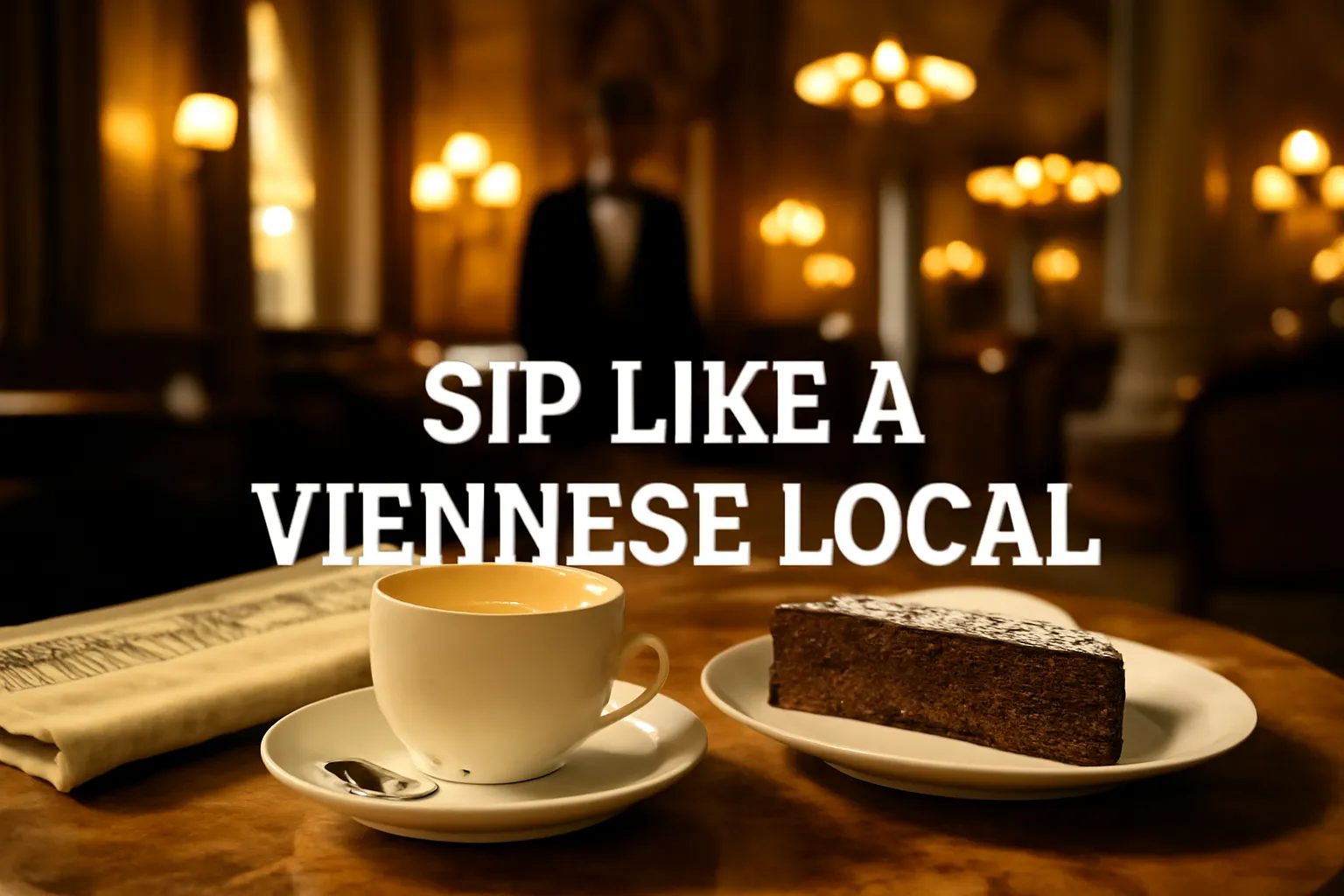
There is a moment, somewhere between your first sip of a Wiener Melange and the third time a waiter glides past your marble table without once suggesting you order something else, when you understand that Vienna has figured out something the rest of the world has not. Sitting in a Viennese coffee house is not a transaction. It is not a pit stop. It is an entire philosophy of life compressed into a gilded, newspaper-scented room — and once you experience it, every other coffee culture will feel faintly apologetic by comparison. Vienna coffee house culture is, quite literally, UNESCO Intangible Cultural Heritage. That designation is not handed out for good espresso. It is awarded when a city builds its entire social and intellectual fabric around the act of sitting down, slowing down, and refusing to leave.
Why Vienna Coffee House Culture Is Unlike Anything Else on Earth
Vienna’s first coffee house opened in the 1680s, and the city has been perfecting the art of lingering ever since. The Wiener Kaffeehaus — the traditional Viennese coffee house — is built around a concept so radical it feels almost subversive in the modern world: you are welcome to stay as long as you like. Order one coffee, unfold a newspaper from the wooden rack by the door, and consider the next two hours entirely your own. No one will rush you. No one will hover. The waiter, dressed in formal black and white, will bring your coffee on a silver tray with a small glass of water — always a glass of water, unrequested — and then leave you entirely in peace. This is not indifference. This is respect. It is the Viennese understanding that some of history’s best thinking has happened at a coffee house table, and they have no interest in interrupting it. Sigmund Freud was a regular. Trotsky played chess at Café Central. Arthur Schnitzler practically lived in these rooms. When a city’s coffee houses have shaped its literature, its politics, and its psychoanalytic tradition, “just getting coffee” ceases to mean anything at all.
The Vienna Cafe Culture Guide to What You’re Actually Drinking
Before you walk into a traditional Viennese coffee house and confidently order “a coffee,” do yourself the favor of learning the vocabulary. The menu will be longer and more specific than you expect, and ordering correctly is a small but genuine pleasure.
- Wiener Melange — Vienna’s signature drink and the obvious first order. Espresso topped with steamed milk and a cloud of milk foam, served in a porcelain cup. It is gentler and milkier than a cappuccino, and absolutely the right place to start.
- Einspänner — Strong black coffee served in a glass, topped with a generous mound of unsweetened whipped cream. You drink it through the cream. It sounds excessive and it is exactly as good as it sounds.
- Kleiner Brauner / Großer Brauner — A small or large espresso served with a tiny pitcher of cream on the side. Understated, excellent.
- Verlängerter — Literally “elongated,” this is a Brauner stretched with extra hot water. Think of it as Vienna’s answer to an Americano, though a Viennese would bristle at the comparison.
- Fiaker — Named after the city’s horse-drawn carriages, this is a strong black coffee spiked with rum and topped with whipped cream. Order one in the afternoon and commit to the experience fully.
- Kapuziner — A small coffee with just a drop of cream, turning it the brown of a Capuchin monk’s habit. It is the historical ancestor of the cappuccino, and ordering one feels appropriately smug.
One cardinal rule: that glass of water arriving with your coffee is not a hint to leave. It will be quietly refreshed as you linger. Accept it as the small ceremony it is.
The Best Coffee Houses in Vienna You Actually Need to Visit
Café Central
Inside the Palais Ferstel on Herrengasse, Café Central is one of the most architecturally theatrical rooms in a city full of theatrical rooms. Vaulted neo-Gothic ceilings, arched marble columns, and a grand piano that gets played on weekend afternoons. Leon Trotsky used to sit here playing chess in the early 1900s — there is a wax figure of him by the door, which is either charming or unsettling depending on your politics. Expect a Melange for around €5–6 and a queue on weekends. Go on a weekday morning and take your time with the breakfast menu.
Café Sperl
If Central is the coffee house for tourists who appreciate history, Sperl is the coffee house for people who want to feel like a local artist in 1880 — and remarkably, not much has changed since then. The billiard table is still there. The bentwood chairs are original. The regulars read actual newspapers. Sperl feels lived-in rather than preserved, which is a crucial distinction. Order an Einspänner and a slice of whatever is on the pastry trolley. Budget around €5–8 for coffee and cake.
Café Hawelka
Dark, slightly cramped, bohemian in the most authentic sense — Hawelka has been the haunt of Vienna’s artists and intellectuals since the 1930s. The walls are covered in art donated or traded for coffee over the decades. The famous draw is the Buchteln: warm, yeast-risen buns filled with plum jam, only available after 10pm. Plan your evening around this. They are worth it.
Café Sacher and Demel
These two institutions are forever linked by one of the great pastry disputes in culinary history: who makes the “original” Sachertorte. Hotel Sacher (behind the Vienna State Opera) and Demel (on the Kohlmarkt) spent decades in legal battles over the recipe. The short version: Sacher’s torte has the apricot jam layer inside, Demel’s has it underneath the chocolate glaze. You are obligated to try both and form an opinion. A slice of Sachertorte with schlagobers (whipped cream) runs about €7–9 at either establishment.
Vienna Food and Coffee Guide: What to Eat at Every Table
The food in a traditional Viennese coffee house is a serious matter and should not be treated as an afterthought to your coffee order. Beyond the Sachertorte, here is what deserves your attention:
- Apfelstrudel — Warm apple and cinnamon wrapped in paper-thin pastry, served with vanilla sauce or whipped cream. Pair it with a Melange for the classic afternoon Jause (the Viennese equivalent of teatime, typically around 3–4pm).
- Kaiserschmarrn — Shredded, caramelized pancake dusted with powdered sugar and served with plum compote. It is dessert pretending to be a main course and I mean that as the highest compliment.
- Topfenstrudel — A curd cheese strudel that is lighter and slightly more subtle than its apple cousin. Excellent with a Verlängerter.
- Palatschinken — Thin Austrian crepes, typically filled with jam or nut paste. Ordered at breakfast, they are magnificent. Ordered at any other time, they are also magnificent.
Coffee House Etiquette: How Not to Mark Yourself as an Amateur
Viennese coffee house waiters have a reputation for being brusque, and I would gently reframe this: they are formal, they are efficient, and they expect you to know what you want. This is not rudeness — it is a different register of hospitality, one that prizes your autonomy over performed friendliness. A few ground rules will serve you well. Always acknowledge your waiter with a greeting when ordering. Tips are expected and appreciated — round up or add 10%, handing the tip directly to the waiter rather than leaving it on the table. When you are ready for the bill, say “Zahlen, bitte.” Do not wave. Do not snap. And above all, do not apologize for sitting for two hours over a single coffee. That is precisely what you are supposed to do. Morning visits (from opening until around 11am) are quieter and ideal for breakfast. The afternoon Jause from 3–5pm is the peak pastry hour. Evenings bring a more social, wine-and-Viennese-schnitzel energy at some establishments.
Traditional Viennese Coffee Houses vs the New Third-Wave Scene
Vienna has quietly developed a serious specialty coffee scene alongside its grand institutions, and the two worlds coexist without apparent hostility. Jonas Reindl Coffee Roasters (with locations near the Votivkirche and Westbahnhof) serves some of the best single-origin filter coffee in Central Europe in a stripped-back, Nordic-influenced space. Kaffeefabrik in the 4th district roasts on-site and takes its sourcing with the kind of seriousness usually reserved for natural wine. If you care about brewing methods and bean provenance, these are your people. But here is my honest recommendation: do both. Spend your mornings at a Café Central or a Sperl with a Melange and a pastry, do your wandering, and drop into Jonas Reindl in the afternoon for a precise, thoughtfully extracted filter coffee. Vienna is one of very few cities in the world where a century-old tradition and a cutting-edge coffee culture operate at equal quality. You would be foolish to choose sides.
Beyond the Coffee House: Building a Full Vienna Food Day
A coffee house crawl pairs brilliantly with the rest of Vienna’s food landscape. Start your morning at a traditional coffee house for breakfast, then walk to the Naschmarkt — Vienna’s sprawling open-air food market running along the Wienzeile — for mid-morning browsing. Vendors sell everything from Austrian cheeses and cured meats to Turkish spices, fresh-pressed juice, and some of the best falafel in the city. Pick up supplies or settle at one of the market restaurants for a proper lunch (budget €12–18 for a sit-down meal). In the evening, head toward the wine taverns known as Heurigen on the outskirts of the city — Grinzing, Sievering, and Neustift am Walde are the classic villages — for glasses of Grüner Veltliner and cold buffet plates of bread, lard, and pickles. And if you find yourself wandering home after midnight, stop at a Würstelstand. These sausage stands scattered across the city are a Vienna institution: order a Käsekrainer (cheese-filled sausage), take it with mustard and bread, and eat it standing on the pavement at 1am alongside taxi drivers and opera-goers in black tie. It is one of the great democratic food experiences of Europe.
A Coffee House Walking Route for One Day
This loop covers Vienna’s historic first district and connects four landmark coffee houses within easy walking distance:
- 9am — Café Central (Herrengasse 14): Breakfast Melange and Kipferl (crescent roll). Admire the ceiling. Read a newspaper you cannot understand.
- 11am — Demel (Kohlmarkt 14): Stop for a slice of Sachertorte and to watch the pastry chefs work through the glass display kitchen. Pick up a box of chocolates to take home.
- Afternoon — Naschmarkt wander: Walk down to the market via the Ringstrasse. Graze freely.
- 3:30pm — Café Sperl (Gumpendorfer Straße 11): The classic afternoon Jause. Apfelstrudel with vanilla sauce and an Einspänner.
- 10pm — Café Hawelka (Dorotheergasse 6): Return for the legendary Buchteln. Order a Fiaker. Stay as long as you like. This is, after all, the entire point.
The Pocket Guide That Kept Me From Ordering in Pantomime
Vienna’s coffee house culture runs deep, and the unwritten rules are everywhere — from which districts have the best Melange to which cafés actually welcome lingerers versus tourists who’ll be guilt-tripped into leaving after 20 minutes. Without a solid reference, you’ll either miss the real thing or accidentally stumble into a tourist trap charging €8 for mediocrity.
What works
- The neighborhood breakdowns actually tell you which districts have the coffee houses where locals sit for three hours with one cup — it’s granular enough to matter and small enough to actually read before your flight lands.
- The “coffee house etiquette” section cuts through the mystique without making you feel stupid; it explains why waiters ignore you (on purpose) and what “Melange” actually means without the pretension.
- It fits in a day bag, so you’re not lugging around a 600-page doorstop when you just need to know if you’re in the right place or ordering the right thing.
What doesn’t
- Maps are tiny and not always current — one café listed as “must-visit” had closed two years before my trip, which was frustrating when I’d built a whole morning around finding it.
- It assumes you have basic German survival language; if you’re completely lost with pronunciation, the pocket size means there’s only so much hand-holding it can do.
I almost ditched it halfway through my first morning, thinking it was too general, but by day two I realized how often I was checking the neighborhood guide before wandering into a new district. Rick Steves Pocket Vienna turns out to be the difference between authentic stumbling and lost tourist stumbling.
This post contains affiliate links. As an Amazon Associate, I earn from qualifying purchases at no extra cost to you.