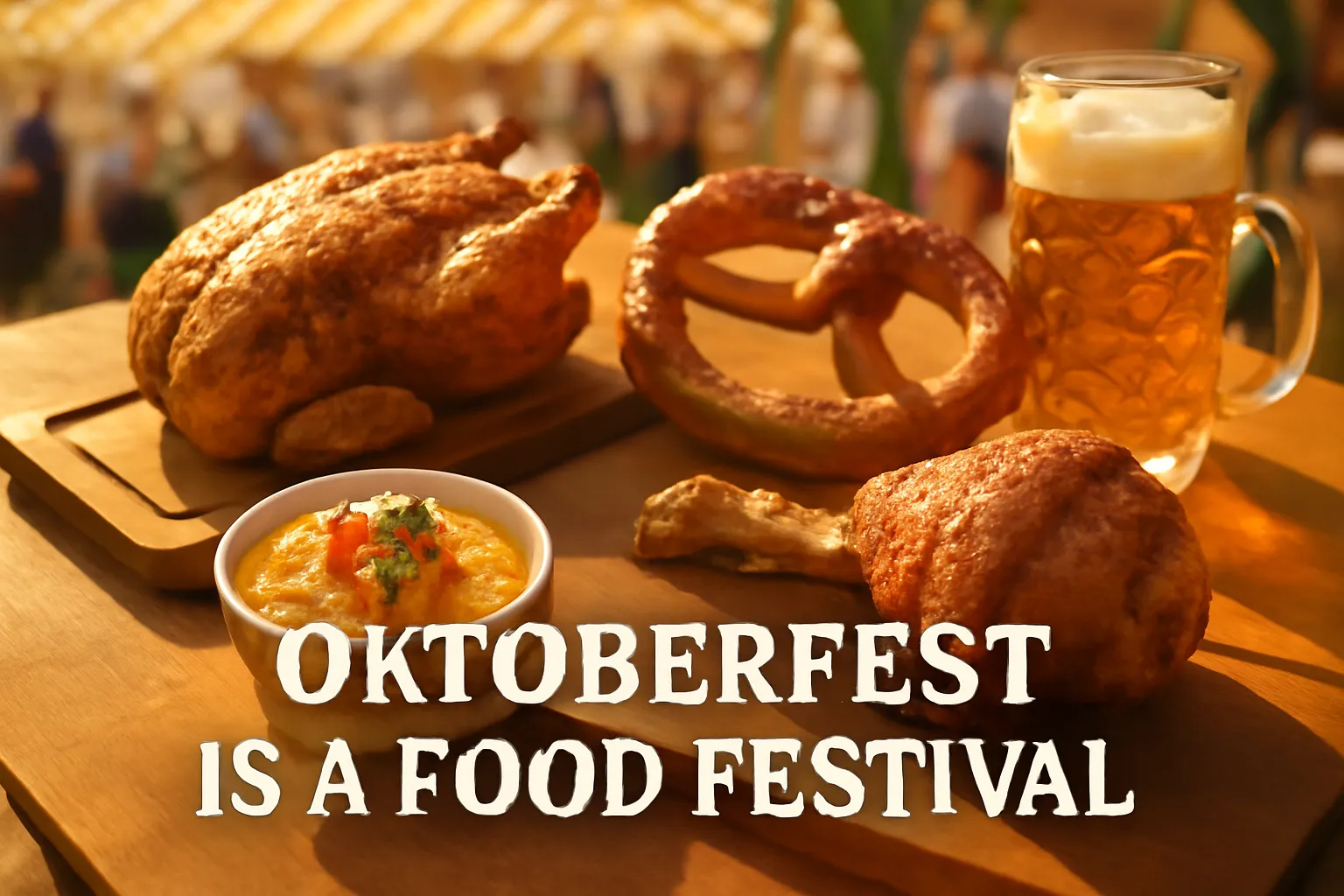
I plan my entire travel calendar around food. Not landmarks, not museums, not even beaches — food. If a destination has a legendary dish I haven’t eaten yet, I’m booking flights. Which is exactly why September is my favorite month of the year: it’s when Munich transforms into the greatest open-air food festival on the planet. Yes, I said food festival. Everyone fixates on the beer, and look, I get it — a liter of Märzen in a festive tent with a brass band playing is genuinely one of life’s great pleasures. But if you’ve only thought of Oktoberfest as a drinking event, this Oktoberfest food guide is about to change your entire trip strategy.
Why Your Oktoberfest Food Guide Should Start with the Food (Not the Beer)
Here’s the thing nobody tells you before your first Oktoberfest: the Wiesn (as locals call it) runs for 16 days in late September and early October, and the culinary experience is as deep, complex, and worth planning for as anything you’d find at a Michelin-starred tasting menu. More than 14 large beer tents and dozens of smaller ones operate simultaneously, but many of them are also serious kitchens turning out thousands of traditional Bavarian plates every single day. Beyond the tents, Munich’s neighborhoods light up with restaurant specials, pop-up food markets, and culinary events that most tourists never find because they’re too busy queuing at Hofbräuhaus. This guide is your permission slip to treat Oktoberfest as the food event it truly is — and drink some excellent beer along the way, obviously.
The 8 Must-Try Dishes: Your Traditional Oktoberfest Dishes to Try Checklist
1. Hendl (Roast Chicken) — €14–18
The half-roasted chicken served at Oktoberfest is not the sad rotisserie bird from your grocery store. These are crispy-skinned, herb-rubbed, fall-off-the-bone gorgeous, cooked on massive rotating spits inside the tents and sold by the half. The Hacker-Pschorr tent is particularly renowned for theirs. Eat it with your hands. That’s non-negotiable.
2. Schweinshaxe (Pork Knuckle) — €18–24
A slow-roasted pork knuckle the size of your forearm, lacquered in its own crackling skin with a side of potato dumplings and dark beer sauce. This is the dish that makes vegetarians briefly reconsider their life choices. The Ochsenbraterei tent specializes in whole-ox roasting, but nearly every tent will serve a serious Schweinshaxe. Budget at least €20 and zero regrets.
3. Obatzda (Bavarian Cheese Spread) — €7–10
This is the sleeper hit of the entire festival — a whipped, paprika-dusted spread made from aged Camembert, butter, cream cheese, onions, and caraway seeds, served with a Brezen (pretzel) and radishes. It’s creamy, punchy, and deeply addictive. It also pairs frighteningly well with a Mass of Märzen. Order it as a starter every single day. Budget travelers, rejoice: it’s one of the most affordable items on any tent menu.
4. Kaiserschmarrn (Shredded Pancake) — €10–13
Dessert exists at Oktoberfest, and it is magnificent. Kaiserschmarrn is a fluffy, torn-apart pancake dusted with powdered sugar and served with plum compote or apple sauce. The name translates roughly to “the Emperor’s mess,” and eating a warm, caramelized plateful while a brass band plays is genuinely one of those travel moments you remember for years.
5. Weisswurst (White Sausage) — €6–9 for two
Munich’s iconic white veal sausage is traditionally a breakfast food — locals say it should never hear the church bells ring past noon — but at Oktoberfest, rules are flexible. Served in warm water with sweet mustard and a pretzel, these are delicate, herby, and nothing like a regular sausage. The traditional way to eat them is to “zuzeln” — sucking the meat out of the skin. Do it. Embrace it. You’re in Munich.
6. Brezen (Pretzels) — €4–7
The lye-dipped, coarse-salted Bavarian pretzel is so far superior to anything sold at an airport or mall that they barely share a name. At Oktoberfest they come enormous — sometimes half a meter across — and are sold by women carrying them on wooden boards threaded over their shoulders. Eat one warm with butter. Then buy another one to carry around and feel extremely festive.
7. Steckerlfisch (Grilled Fish on a Stick) — €12–16
Head to the outer fairground area and you’ll find rows of stands grilling whole mackerel, trout, and herring on wooden skewers over open flames. The skin crisps up, the flesh stays tender, and the smell alone is worth the walk. Steckerlfisch is one of the most underrated things you can eat at Oktoberfest and a fantastic option for anyone wanting a break from pork. It’s also a legitimately great budget move compared to sit-down tent meals.
8. Dampfnudeln (Steamed Dumplings) — €8–11
These pillow-soft steamed yeast dumplings come with vanilla custard or a sweet wine sauce and represent everything cozy about Bavarian cuisine. They’re harder to find than other items on this list — look for them at the smaller traditional tents like Schöniger’s Wirtshaus am Bavariapark — which makes tracking one down feel like a genuine food adventure win.
Food Tents vs. Beer Tents: What to Know Before You Reserve
Here’s the distinction that will transform your trip: the large beer tents (Hofbräu, Augustiner, Paulaner) are primarily drinking venues where food is served, while several smaller, family-run tents lean more heavily into traditional Bavarian cuisine. The Ochsenbraterei tent has been roasting whole oxen since 1881 and functions as much as a restaurant as a beer hall. The Fischer Vroni tent is the go-to for Steckerlfisch. For the full food-focused experience, also look at the Oide Wiesn — the “Old Oktoberfest” section of the grounds that leans into traditional Bavarian culture, crafts, and food with a noticeably calmer atmosphere. Reservations for the large tents should be booked three to six months in advance — most open their booking systems in the spring. Walk-in spots exist, but primarily early mornings on weekdays.
Beyond the Grounds: Munich Food Events and Neighborhood Restaurants During the 16-Day Festival
One of the best-kept secrets of the Wiesn is that you can eat extraordinarily well in Munich without setting foot on the festival grounds. During the festival weeks, restaurants across Maxvorstadt, Schwabing, and the Viktualienmarkt area run special Oktoberfest menus with shorter lines, lower noise levels, and often better versions of the classics. The Viktualienmarkt — Munich’s beloved daily food market — has an outdoor beer garden and stalls that go full Bavarian during Oktoberfest season. It’s a fantastic spot for a relaxed mid-morning Weisswurst breakfast or an afternoon Obatzda without fighting for bench space. Restaurants like Zum Franziskaner and Spatenhaus an der Oper near the city center offer full traditional menus and take reservations well ahead of the crowds. For foodies who want to go deeper, look into Bavarian cooking classes and food tours that run specifically during Oktoberfest — several culinary tour operators offer market-to-table experiences that combine Viktualienmarkt shopping with hands-on cooking.
Vegetarian, Vegan, and Family-Friendly Options (More Than You’d Think)
Oktoberfest has quietly become far more vegetarian-friendly than its pork-heavy reputation suggests. The Obatzda is vegetarian. Pretzels, Kaiserschmarrn, Dampfnudeln, and Käsespätzle (a cheesy noodle bake that deserves its own spot on this list) are all meat-free. Several tents now offer dedicated vegetarian sections on their menus, and the organic food tent Bioladen on the festival grounds serves sustainable, plant-based Bavarian dishes. For families, the Children’s Area (Kinderland) within the fairgrounds is specifically designed with family dining in mind — lower prices, calmer atmosphere, and kid-friendly food. The Oide Wiesn section also charges a small entry fee (around €4) that significantly reduces the crowd intensity, making it the sane choice for eating with children or anyone who needs to actually taste their food in peace.
Your Day-by-Day Eating Strategy (So You Don’t Blow the Budget on Day One)
If you’re attending multiple days — and I genuinely recommend at least three to do this properly — pace yourself like the experienced eater you are. Day one, hit the tent you’ve reserved and go big: Hendl, Obatzda, a Mass of beer, Kaiserschmarrn. Experience the full theatrical circus of the tents. Day two, go early (before 11am) for a Weisswurst breakfast at the Viktualienmarkt, then explore the outer fairground food stalls for Steckerlfisch and Brezen at lower prices. Day three, skip the grounds entirely at lunch — eat at a neighborhood restaurant doing Oktoberfest specials, then return to the festival grounds in the evening for the atmosphere and a Schweinshaxe. Budget-wise, tent meals with a beer typically run €30–45 per person per sitting. Outer stalls and market eating can bring a full meal in at under €20. Spreading these across your visit keeps both your wallet and your waistband in reasonable condition.
The Costume That Actually Fit in My Carry-On (and Didn’t Fall Apart in a Beer Tent)
Show up to Oktoberfest in street clothes and you’ll feel like you’re dining in a tuxedo at a backyard barbecue. But packing a full Bavarian costume from home meant I’d either blow my checked-bag weight limit or look like I’d grabbed whatever was cheapest at the airport gift shop—which I did once, and it was a mistake I won’t repeat.
What works
- The full kit comes as one package, so you’re not hunting down lederhosen, hat, and suspenders in three separate Munich shops on day one.
- The fabric actually holds up to spilled beer and tent-bench wear—it’s not tissue-paper costume material that tears when you squeeze into a crowded beer hall.
- Shipping to your destination (or home first) beats trying to find authentic sizing in a language you don’t speak while jet-lagged.
What doesn’t
- The sizing runs small—I ordered my usual size and the lederhosen required borderline dangerous sitting negotiations during my first full day at the festival.
- It’s not an investment piece; this is costume-grade, not heirloom-quality, so don’t expect it to last beyond 2–3 festival seasons of heavy use.
I nearly sent it back after trying it on the morning of opening day, convinced I’d made a terrible call with the fit. But I sized up a piece, made it work, and actually enjoyed blending in with the crowd instead of feeling like an American tourist in khakis. Spooktacular Creations Oktoberfest Costume Set with Lederhosen and Bavarian Hat
This post contains affiliate links. As an Amazon Associate, I earn from qualifying purchases at no extra cost to you.