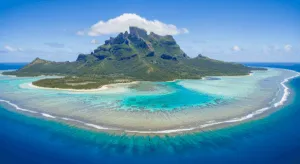
I once had a client named Phillip — retired banker, spreadsheet enthusiast, convinced he’d cracked Bora Bora before he’d even landed in French Polynesia — who booked his own connecting flight instead of trusting our group’s transfer schedule, and missed it by forty minutes, stranding himself in Tahiti while our boat pulled away from the dock without him. It took six hours and two favors from a dive-shop friend to get him to the resort, and by the time he arrived, he’d missed the one activity he’d been talking about since we left the airport. That’s the thing about Bora Bora: the lagoon and the volcanic peaks are exactly as stunning as every screensaver promises, but the island rewards people who show up with a plan, not just a camera roll. What’s underneath the postcard is a place stacked with genuine adventure — pulse-spiking water sports alongside slower cultural moments that land harder than you’d expect. This rundown covers the top ten things to do in Bora Bora, the stuff that turns the trip into something more than scenery. (If you haven’t nailed down the logistics yet, my ultimate Bora Bora travel guide covers that groundwork — come back here once it’s sorted.)
The Top 10 Things to Do in Bora Bora
My ranking system is simple and a little selfish: these are ordered by which ones I’d do again without hesitation if a boarding pass landed in my inbox tomorrow. Prices in French Polynesia move with the season and the exchange rate, so read every figure below as a ballpark estimate, not a locked-in quote.
1. Get in the water with blacktip sharks and stingrays
This is the signature Bora Bora moment, and it’s every bit as strange and wonderful as people say: you drop off the side of a boat into waist-deep lagoon water, stingrays drift over like they’re expecting to be fed, and blacktip reef sharks cruise nearby without much interest in you. Group excursions generally start around $150 per person, and the full-day options throw in extra snorkel stops and a grilled-fish lunch on a private motu. I walked in expecting my nerves to win and walked out laughing underwater, which I genuinely didn’t think was a thing that could happen. Try to book a smaller group tour when possible — a dozen swimmers in the water is a completely different experience than forty.
2. Spend an afternoon at the Coral Gardens
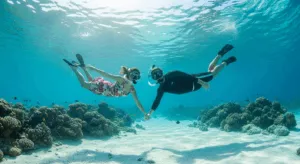
The Coral Gardens are a shallow, current-free stretch of lagoon thick with parrotfish, butterflyfish, giant clams, and one enormous moray eel I’ve decided to remember with more affection than terror. It’s a solid choice for beginners — a mask and snorkel is all the gear you need — and it’s a standard stop on most lagoon tours, though kayaking there on your own works too. Aim for the dry months, May through October, when visibility is at its sharpest and the water sits so still you’d swear you were floating in a tank someone forgot to seal.
3. Stake out a spot on Matira Beach
Matira is the island’s one genuinely public stretch of sand — free, open to anyone, tucked on Bora Bora’s southern point roughly ten minutes from Vaitape. The shallows here slope gently and stay clear of coral, making it one of the only spots on the island where you can just walk in and float without booking a boat. Arrive before 8 a.m. while it’s still mostly locals; the crowds show up by mid-morning. Food trucks and snack stands cluster nearby, and as I mention in my budget guide to the island, that’s the best money-saving move you’ll find anywhere in Bora Bora.
The Sunscreen I Should Have Packed Before the Lagoon Got the Best of Me
Bora Bora’s lagoon throws UV light back at you like a mirror — it’s practically a second sun — and ordinary sunscreen gives up in saltwater inside an hour, burning through faster than you’d assume possible. I found this out the painful way by day two of my trip.
What earned its spot in my bag
- Held up in salt water noticeably longer than the chemical stuff I’d packed — I was reapplying every 90 minutes instead of every 45, which meant fewer interruptions mid-snorkel.
- Didn’t turn me into a greasy mess in the humidity; the mineral formula sat lighter on my skin than the thick, oily bottle I’d overpacked out of habit.
- Actually mattered for the reef — Bora Bora’s lagoon ecosystem is delicate, and going reef-safe felt like the bare minimum given everything these islands already deal with.
Where it fell short
- Spray coverage got patchy any time there was wind — and there’s basically always wind out on the water — so I still ended up rubbing it in by hand half the time regardless.
- It costs noticeably more than what you’d grab at a drugstore, and one bottle disappears faster than you’d plan for on a week-long trip.
I almost skipped it on my second lagoon day because I was tired of reapplying anything, but that’s when I realized the mineral formula had actually prevented the lobster-red shoulders I was sporting from getting worse. Grab the Reef Safe Mineral Sunscreen Spray SPF 50+ before you go.
4. Snorkel the enclosed waters of the Lagoonarium
The Lagoonarium is a natural pocket of lagoon around a motu where rays, blacktip sharks, and schools of tropical fish gather in water that never gets deeper than your waist — essentially the shark-and-ray encounter with the difficulty dialed down, and I mean that as praise. Most visitors reach it as one stop on a half-day or full-day lagoon tour rather than a standalone trip. If big marine life makes you nervous, do this one before you attempt the open-lagoon shark swim — it’s a confidence boost wearing the costume of a wildlife tour.
5. Head into the interior on a 4×4 safari
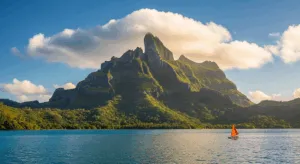
Here’s something the brochures skip: nobody summits Mount Otemanu. The top section is loose basalt on a near-vertical face, which puts it firmly off-limits — the farthest you can get on foot is a tough guided hike to a cave partway up, pulling yourself along fixed ropes the whole way. The smarter move is a 4×4 safari, usually $80–120 per person for three to four hours, which climbs to sweeping viewpoints and the rusting WWII-era American naval cannons still perched above the lagoon. Mine also stopped at a small fruit-and-vanilla plantation, where I absorbed more Polynesian history in twenty minutes than an entire week of resort pamphlets had managed to teach me.
6. Try the Aqua Safari helmet walk on the lagoon floor
Imagine walking across white sand three meters below the surface in what looks like an astronaut’s helmet, breathing normally, hair somehow still bone-dry. That’s the Aqua Safari, and it demands no certification whatsoever — you don’t even have to know how to swim. Budget around $155 per person, and expect roughly 30 minutes underwater surrounded by a coral garden, with an instructor watching the whole time. Of every big water activity on this list, it’s the one I’d push hardest on anyone who swears they’re “not a water person.”
7. Loop the island on a jet ski
A guided jet-ski loop around the lagoon takes roughly two hours and usually runs $180–240, with stops built in for swimming and, on my tour, a coconut-husking demo performed at a speed that honestly rattled me. You travel single-file behind a guide, so this reads more as “very fast sightseeing” than “reckless thrill ride” — Mount Otemanu keeps sneaking into every angle of every photo. If you’re only going to splurge on one adrenaline-heavy excursion, this is the one that hands you the most lagoon per dollar spent.
8. Get out on a paddleboard or kayak at dawn
At sunrise, the lagoon flattens to glass, the tour boats are still docked, and the island goes quiet enough that you can hear water dripping off your paddle. Rentals typically cost $20–40 an hour, though if you’re staying at a resort, kayaks and paddleboards are often thrown in free with your room — one of the low-key perks I break down in my guide to Bora Bora’s overwater bungalows. Of every free-or-nearly-free hour I spent on the trip, this one topped the list — and I say that as someone who fell off the board twice before figuring out where to plant my feet.
9. Close the day with a sunset cruise
Sunset cruises — whether by catamaran, outrigger canoe, or something pouring champagne — generally start around $250 per person, and the sight of the sun sinking behind Mount Otemanu’s silhouette makes a strong case for the price tag. It leans romantic, no question; I went alone and had a genuinely great time making friends with a honeymooning couple’s spare canapés. If you’re traveling with a partner, this fits neatly into the honeymoon itinerary I put together here.
10. Eat where locals eat (and keep tabs on Bloody Mary’s)
The food trucks and snack stands scattered around Vaitape and Matira serve poisson cru — raw tuna in coconut milk and lime — for a small fraction of what resorts charge, and it turned into a daily habit for me. The island’s most famous restaurant, Bloody Mary’s, known for its sand floor and wall of celebrity photos, shut down in late 2023 for a complete rebuild and is expected to reopen as a restaurant and boutique hotel in September 2026 — verify its status before you plan a dinner around it. Whatever else you do, eating off resort grounds at least once a day works wonders for your budget and your sense of where you actually are.
The Adapter That Kept My Phone Alive in the Middle of the Lagoon
Bora Bora’s resorts spread across separate motu, and running out of power for your phone, camera, or GPS out there isn’t just annoying — it can turn into a real problem. I learned that the hard way when my US charger fried itself in a Polynesian outlet, leaving me with a dead phone and zero way to reach my boat guide.
What earned its spot in my bag
- Fits Bora Bora’s Type A and Type I outlets with no voltage converter required — you just plug in, which matters when you’re shuttling between overwater bungalows and village guesthouses.
- Several USB ports meant I could charge my phone, camera, and headlamp all at once — a necessity when you’re stacking water activities back-to-back and can’t risk any of them dying.
- Small enough to toss in a daypack without noticing the extra weight, so I actually brought it along on snorkeling trips and hikes instead of leaving it behind at the bungalow.
Where it fell short
- Just one outlet takes grounded, three-prong plugs, so if several of your devices need grounding, you’ll still want to pack a small power strip.
- The USB ports charge slower than plugging straight into a wall, which turned frustrating the day I had 45 minutes before a sunset cruise and a camera battery sitting at 3%.
I almost ditched this adapter halfway through my trip because I thought the slower charging wasn’t worth the space, but then I got caught on a motu without power for four hours and realized it was the difference between capturing memories and sitting in the dark. Grab a universal travel adapter before you board your flight to French Polynesia.
Ten experiences down, one mildly sunburned solo traveler, and not a single regret. Bora Bora is pricey, remote, and worth every logistical headache it puts you through — and if you want help managing those headaches, my complete planning guide has you covered.
Frequently Asked Questions
Can you summit Mount Otemanu on Bora Bora?
No. The top section is loose basalt on a near-vertical face, putting it firmly off-limits. The farthest you can get on foot is a tough guided hike to a cave partway up. A smarter option is a 4×4 safari, usually $80–120 per person for three to four hours, which climbs to sweeping viewpoints instead.
What is the best time to visit Coral Gardens in Bora Bora?
Aim for the dry months, May through October, when visibility is at its sharpest and the water sits so still you’d swear you were floating in a tank. The Coral Gardens are a shallow, current-free stretch of lagoon thick with parrotfish, butterflyfish, giant clams, and a moray eel.
Is there a public beach on Bora Bora?
Yes. Matira Beach is the island’s one genuinely public stretch of sand — free, open to anyone, tucked on Bora Bora’s southern point roughly ten minutes from Vaitape. The shallows slope gently and stay clear of coral, making it one of the only spots where you can walk in and float without booking a boat.
What happened to Bloody Mary’s restaurant in Bora Bora?
Bloody Mary’s, known for its sand floor and wall of celebrity photos, shut down in late 2023 for a complete rebuild and is expected to reopen as a restaurant and boutique hotel in September 2026. Verify its status before you plan a dinner around it.
About This Article

Written by Elena Vasquez. Elena Vasquez is a full-time traveler and the founder of Witty Passport. Over fifteen years and more than 50 countries across six continents — including a stretch spent leading groups professionally through Southeast Asia and the remote highlands of South America — she's written the kind of destination guides she always wished existed: practical, specific, and built on real experience rather than recycled itineraries. More about this site.
Scope and limits. Elena is a full-time traveler, not a licensed travel agent or immigration adviser. Entry requirements, visa rules, and advisories change without notice — always confirm against the official government source for your destination and passport before booking.
Verify this against a primary source
Specifics change, and your situation may differ from the one described here. These are the authorities worth checking directly:
- U.S. Department of State — entry requirements and travel advisories
- CDC Travelers' Health — vaccination and health notices by destination
- TSA — current carry-on and screening rules