
Introduction to Jordan’s Ancient Monastery
The Architectural Marvel of Al Deir
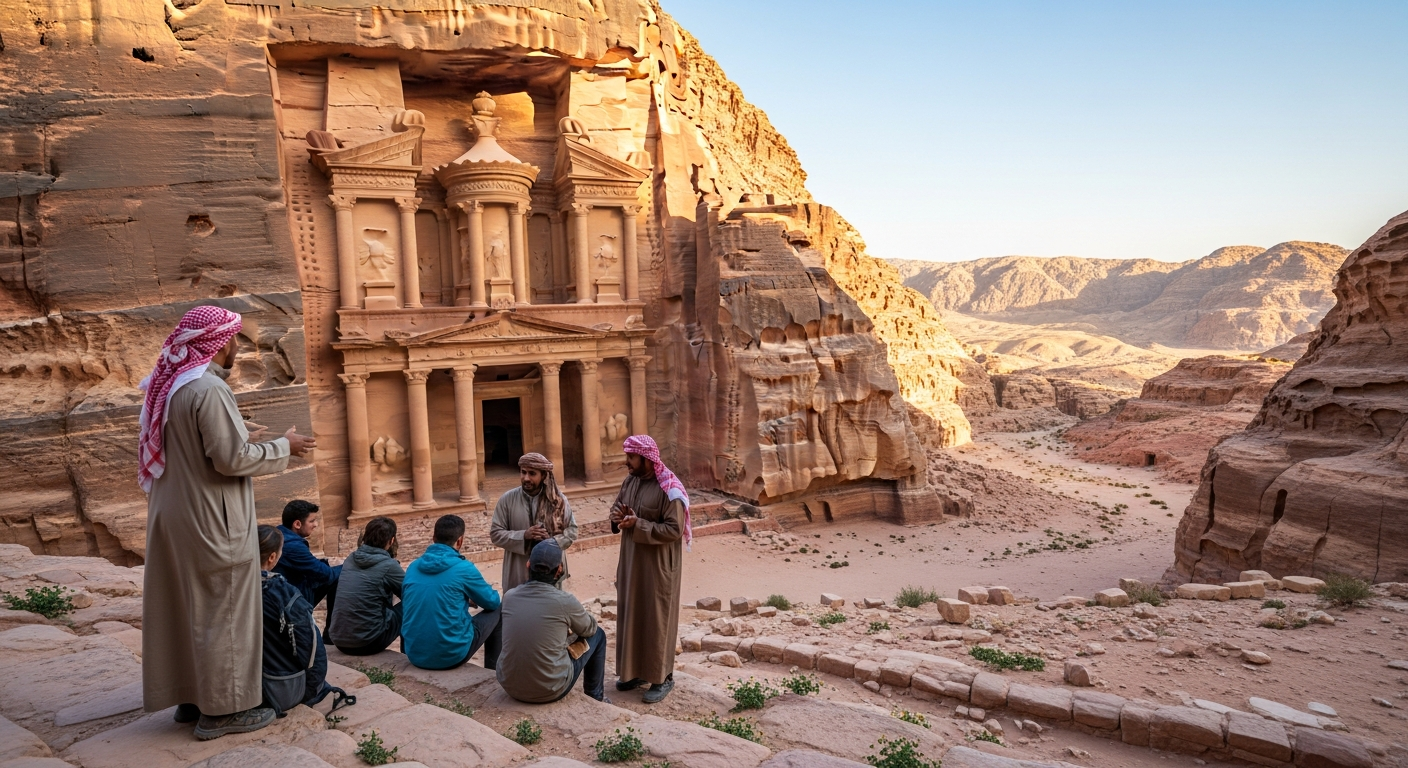
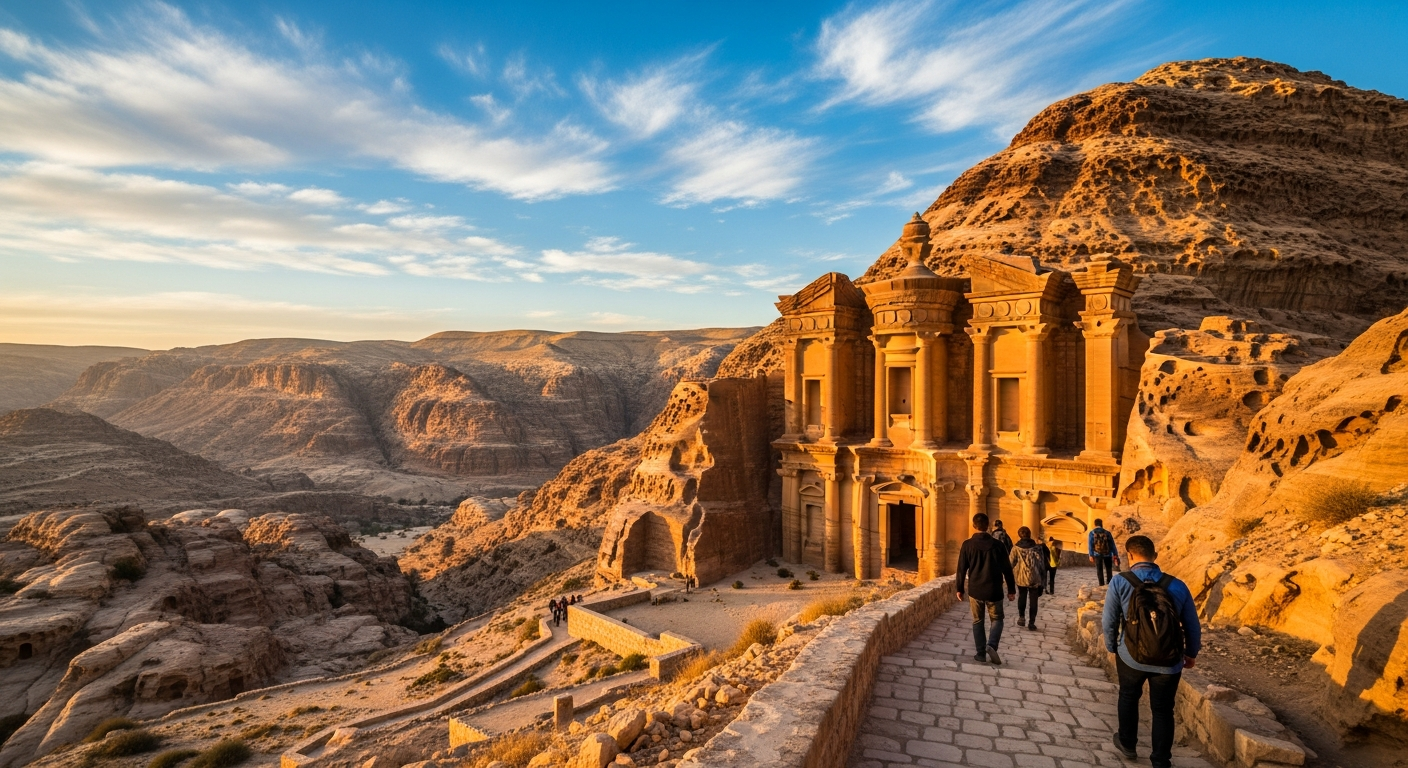
Carved directly into the sandstone cliff face, Al Deir is a masterpiece of Nabataean engineering. In fact, it is significantly larger than the famous Treasury. The structure measures approximately 48 meters wide and 45 meters high. Consequently, the sheer scale of the facade leaves visitors breathless.
The design features a classical arrangement of columns and pediments. However, the style is bolder and less ornate than other Petra monuments. For example, the capitals are typically Nabataean rather than Corinthian. The doorway alone is massive, dwarfing anyone who stands before it. Ultimately, the monument’s size emphasizes the power of its ancient creators.
Conquering the Climb
Reaching this remote site requires physical effort. Specifically, travelers must conquer a steep path of roughly 800 rock-cut steps. However, the strenuous climb is incredibly rewarding. As you ascend, the path winds through stunning mountain scenery.
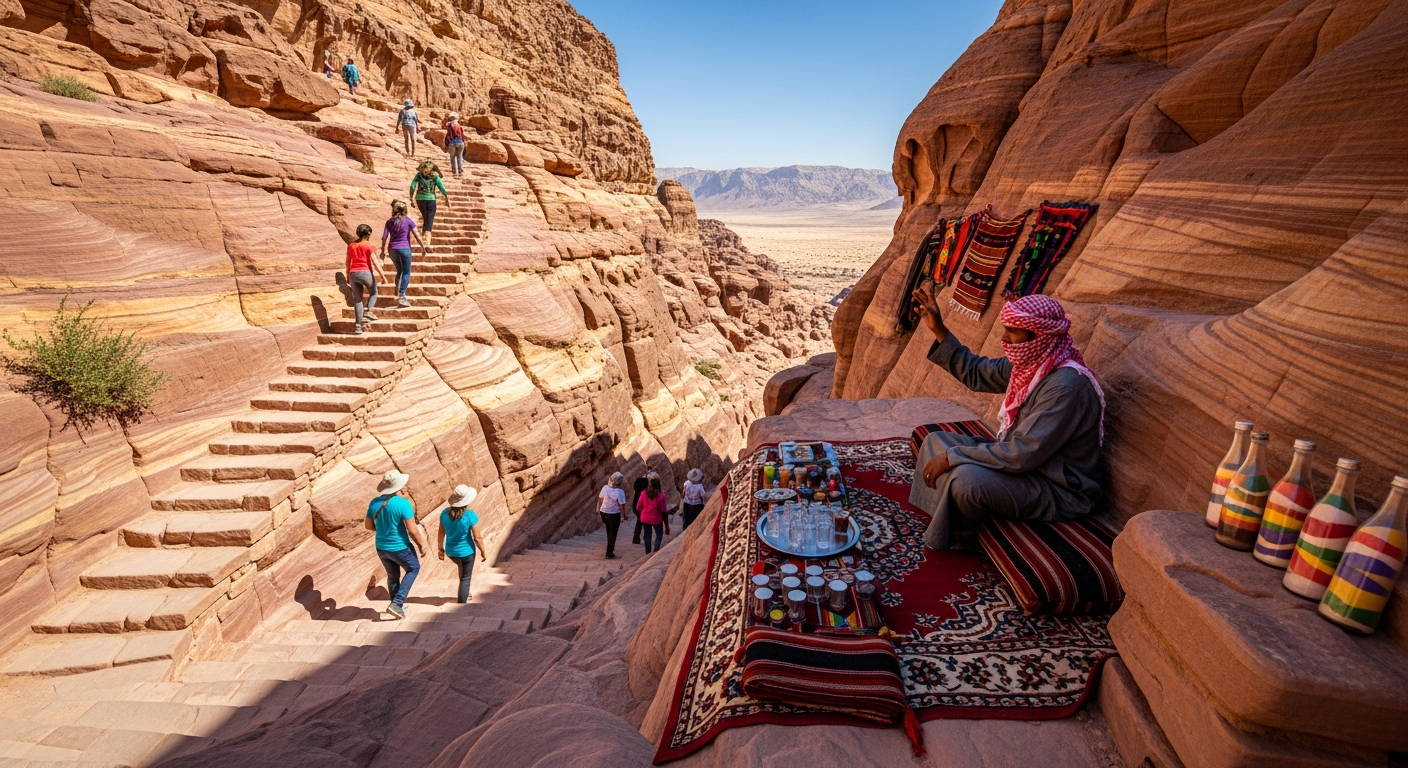
Furthermore, the route offers unique cultural encounters. Local Bedouin vendors set up small stalls along the trail. Here, you can pause for tea or purchase handmade souvenirs. Additionally, donkeys are available for hire if walking proves too difficult. Nevertheless, hiking on foot allows you to fully appreciate the dramatic views.
When planning your adventure to explore Jordan’s magnificent Al Deir monastery and conquer those challenging 800 rock-cut steps, having the right gear can make all the difference in your experience. Starting with proper footwear, the XPETI Men’s TERRA hiking boots provide excellent ankle support and traction for navigating those ancient stone steps carved into the mountainside. To stay properly hydrated during the strenuous climb, consider bringing a backpack with an integrated water bladder system that allows you to drink hands-free while ascending the steep trail. Since Jordan’s desert sun can be intense even during the cooler months, protecting yourself with a Home Prefer Outdoor sun hat featuring a wide brim and neck flap will shield your face and neck from harmful UV rays throughout your journey. For those who prefer a more compact hydration solution or need a backup water source, a collapsible pack of water bottles can easily fit into your bag and be refilled at the Bedouin tea stalls along the route. If you’re traveling light or want a secondary bag for day trips around Petra, an ultralight foldable backpack offers convenient storage without adding unnecessary weight to your main luggage. Don’t forget to apply reef-safe Neutrogena Beach Defense sunscreen before starting your hike, as the high-altitude sun exposure can lead to severe burns if you’re not properly protected. For additional stability on the uneven ancient steps and rocky terrain, lightweight TREKOLOGY Trek-Z Cork trekking poles can reduce strain on your knees during both the ascent and descent from the monastery. To capture the breathtaking views and architectural details of this magnificent Nabataean masterpiece, bring along a high-resolution camera that can handle the challenging lighting conditions inside the carved sandstone structure and the bright outdoor scenery. Since you’ll be spending considerable time away from electrical outlets while exploring remote archaeological sites, a GOODaaa Portable Charger with multiple outputs ensures your phone, camera, and other devices stay powered throughout your entire adventure in Petra. Finally, enhance your understanding of the historical and cultural context by bringing along a comprehensive travel book that provides detailed information about Jordan’s ancient sites, local customs, and practical tips for making the most of your visit to this extraordinary destination.
Historical Significance
Historically, scholars believe the Nabataeans constructed this monument in the mid-first century AD. Originally, it likely served as a royal tomb or a religious meeting place. Its open courtyard suggests it accommodated large crowds for ceremonies.
Later, the site underwent a significant transformation. During the Byzantine era, Christians reused the grand hall as a church. Therefore, you can still see crosses carved into the interior rear wall. As a result of this modification, the building earned its modern name, “The Monastery.”
Essential Visitor Tips
Proper planning ensures the best experience at Al Deir. Because the site is exposed, the sun can be intense. Therefore, follow these practical guidelines for a safe visit:
- Start Early: Begin your hike in the morning. Consequently, you will avoid the harsh midday heat.
- Hydrate Often: Carry at least two liters of water per person.
- Wear Grip Shoes: The sandstone steps can be slippery. Thus, sturdy hiking boots are essential.
- Stay for Sunset: The afternoon light turns the rock a deep golden color.
- Explore Nearby: Walk slightly past the Monastery. There, you will find viewpoints overlooking the Wadi Araba valley.
A Brief History of the Monastery
Ancient Origins and Purpose
The Monastery, known locally as Ad Deir, stands as a testament to Nabataean architectural brilliance. Originally carved around the 3rd century BCE, this monumental structure functioned as a royal tomb. However, scholars debate whether it honored King Obodas I or served another prominent figure. The Nabataeans chose this remote mountaintop location deliberately. Consequently, the site offered both spiritual significance and strategic isolation from the bustling city below.
The tomb’s original purpose reveals much about Nabataean death rituals and beliefs. These ancient people believed in elaborate afterlife preparations. Therefore, they invested enormous resources into creating lasting monuments. The Monastery represents one of their most ambitious funerary projects. Moreover, its scale suggests the deceased held exceptional importance within their society.
Evolution Through Different Civilizations
The structure underwent remarkable transformations across various historical periods. During the Byzantine era, Christian monks repurposed the tomb as a chapel. Additionally, they carved crosses into the interior walls, marking their religious presence. This adaptation gave the monument its current name, “the Monastery.” Furthermore, evidence suggests monks lived in surrounding caves for centuries.
The building’s evolution mirrors Jordan’s complex cultural history. Each civilization left distinct architectural and religious markers. For instance, Byzantine modifications coexist with original Nabataean designs. Meanwhile, later Islamic periods also influenced the surrounding area. This layering creates a unique archaeological narrative spanning over two millennia.
Architectural Magnificence and Scale
The facade’s dimensions truly astound modern visitors and researchers alike. Measuring 47 meters wide and 48 meters tall, it exceeds even Petra’s famous Treasury. The structure rivals an eight-story modern building in height. Consequently, its presence dominates the mountainous landscape dramatically. The Nabataeans achieved this scale using only hand tools and determination.
The intricate craftsmanship displays exceptional technical skill and artistic vision. Elaborate columns feature Corinthian capitals with detailed floral motifs. Additionally, the central doorway stands nine meters high, dwarfing human visitors. The urn crowning the monument measures eight meters in height alone. Local Bedouin legends claim this urn once contained pharaoh’s treasure. However, bullet holes from treasure hunters prove these stories inspired real searches.
Engineering Without Modern Technology
Creating such monumentality required innovative engineering solutions and immense labor. The Nabataeans carved directly into the rose-red sandstone cliff face. Therefore, they worked from top to bottom, removing massive stone quantities. This technique demanded precise mathematical calculations and spatial planning. Furthermore, artisans worked suspended on scaffolding hundreds of feet high.
The construction process likely spanned several decades of continuous effort. Hundreds of workers participated in this monumental undertaking simultaneously. Moreover, the remote location complicated logistics for tools and supplies. Despite these challenges, the result demonstrates remarkable precision and symmetry.
Architectural Features
The Monastery’s design combines Hellenistic and Nabataean architectural styles. Its facade features large pilasters, columns, and an urn at the top. Despite its grandeur, the interior is relatively simple, with a single room and an altar at the far end. This simplicity contrasts with the elaborate exterior, emphasizing the structure’s blend of cultural influences.
Hiking to the Monastery
The Journey Begins at Petra’s Heart
The trek to the Monastery starts from Petra’s bustling center. Visitors depart from the area surrounding the iconic Treasury. This central location serves as the gateway to one of Jordan’s most remarkable monuments. Therefore, most travelers combine visits to both sites in a single day.
The path initially winds through the ancient city’s main thoroughfare. Moreover, hikers pass numerous carved facades and historical structures along the way. These preliminary sights offer a taste of Nabataean architectural genius. Consequently, many visitors pause frequently to photograph these preliminary wonders.
Conquering the Ancient Stone Stairway
The ascent comprises roughly 800 hand-carved steps etched directly into sandstone cliffs. Nabataean craftsmen created this pathway centuries ago using primitive tools. Each step varies in height and depth, reflecting ancient construction methods. Additionally, the irregular spacing requires careful footing throughout the climb.
The stairway zigzags up the mountainside in dramatic fashion. Furthermore, the route includes several switchbacks that ease the steep gradient. Rest areas appear periodically along the trail. These natural platforms provide opportunities to catch one’s breath and hydrate.
Spectacular Panoramas Along the Route
The climbing experience delivers constantly changing perspectives of Petra’s terrain. Early sections reveal sweeping views of the Siq canyon below. Meanwhile, higher elevations showcase the vast desert expanse beyond the archaeological site. The rust-colored mountains create a stunning backdrop throughout the journey.
Strategic viewpoints emerge at various intervals during the ascent. For example, certain bends offer unobstructed vistas of distant valleys. The interplay of light and shadow across the sandstone creates photographic opportunities. As a result, the hike becomes as memorable as the destination itself.
Physical Challenge and Triumphant Reward
The climb typically requires 45 to 60 minutes for moderately fit individuals. However, the duration varies significantly based on personal fitness levels. The altitude gain and step count present genuine physical demands. Nevertheless, the achievable difficulty makes it accessible to most determined visitors.
Completing the ascent generates a profound sense of personal achievement. The physical exertion heightens appreciation for the Monastery’s grandeur. Moreover, the journey mirrors the pilgrimage ancient Nabataeans once undertook. This connection to history enriches the overall experience immeasurably.
Trail Details
Preparing for Your Monastery Trek
The journey to Jordan’s famous Monastery, known as Ad Deir, requires proper physical preparation and planning. Most visitors complete the ascent in approximately 60 to 90 minutes. However, your pace may vary based on fitness level and weather conditions. Therefore, it’s wise to allow extra time for photography and rest stops.
The trail consists of more than 800 hand-carved steps winding up the mountain. Consequently, appropriate footwear becomes absolutely essential for safety and comfort. Sturdy hiking boots or trail shoes with good ankle support work best. Additionally, shoes with deep tread patterns prevent slipping on smooth stone surfaces. Meanwhile, avoid sandals or flip-flops, as they offer inadequate protection and grip.
Essential Items to Bring
Hydration is crucial during this challenging climb, especially between May and September. Furthermore, temperatures can soar above 35°C (95°F) during summer months. Experts recommend carrying at least one liter of water per person. Moreover, consider bringing electrolyte supplements to replace lost minerals through perspiration.
For example, many travelers pack the following items:
- Two water bottles (minimum 500ml each)
- Sunscreen with SPF 30 or higher
- A wide-brimmed hat or cap
- Sunglasses for eye protection
- Light, breathable clothing
- A small snack for energy
Rest Areas and Scenic Viewpoints
The ancient Nabataean engineers thoughtfully designed multiple resting points along the route. These strategically placed platforms offer breathtaking panoramic views of the surrounding valleys. Additionally, natural rock formations provide shade during the hottest parts of the day. As a result, hikers can pace themselves comfortably throughout the ascent.
Approximately every 100 steps, you’ll find carved niches and ledges. These spots served religious purposes in ancient times. However, today they function as perfect places to catch your breath. Meanwhile, the changing perspectives reveal new aspects of Petra’s stunning landscape.
Local Vendors and Cultural Encounters
Throughout your climb, you’ll encounter Bedouin families operating small refreshment stands. These vendors have maintained this tradition for generations. For instance, they offer freshly brewed mint tea served in traditional glasses. Moreover, cold soft drinks and bottled water are readily available at reasonable prices.
The souvenir selection includes handcrafted items unique to the region:
- Colorful sand art bottles depicting desert scenes
- Traditional Bedouin jewelry made from local materials
- Hand-woven textiles and scarves
- Small carved stone replicas of Petra’s monuments
Furthermore, purchasing from these vendors supports local families directly. In contrast to commercial tourist shops, the money goes straight to the community. Additionally, many vendors are happy to share stories about their heritage and the Monastery’s history. Therefore, these interactions add meaningful cultural depth to your physical journey.
Essential Visitor Tips
Best Time to Visit
The best time to visit the Monastery is during the cooler months of spring and autumn. Temperatures are more manageable, and the light enhances the site’s natural beauty. Morning visits are ideal for avoiding crowds and capturing stunning photographs.
Unique Experiences
The Tea Stall Experience
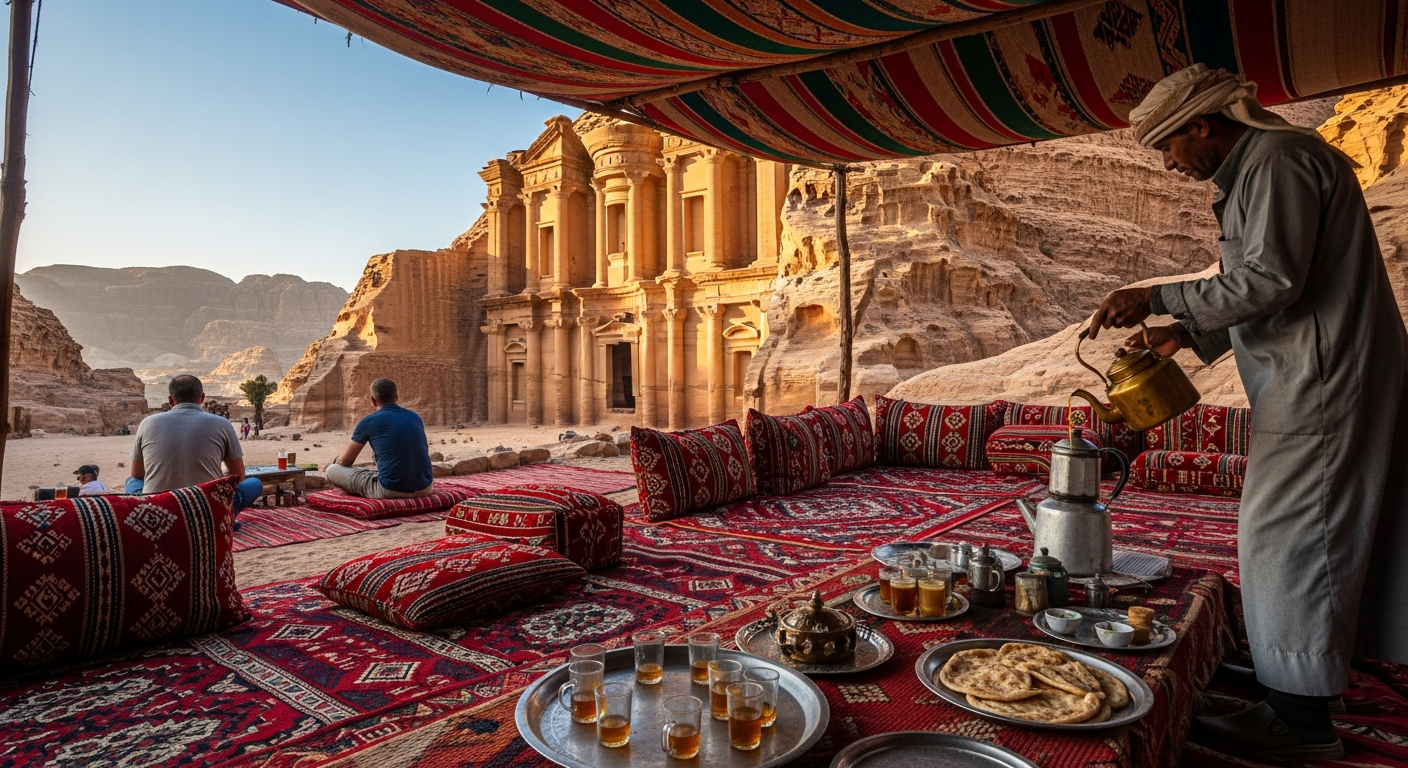
The tradition of sipping Bedouin tea at the Monastery creates an unforgettable moment. Local vendors carefully position their colorful stalls along the rocky plateau. These strategic spots offer unobstructed views of the ancient facade. Furthermore, the sweet mint tea perfectly complements the achievement of completing the climb.
The tea stalls themselves reflect authentic Jordanian hospitality. Vendors brew the tea using traditional methods passed down through generations. Additionally, many offer freshly baked bread and local snacks. The simple setup includes cushions, carpets, and shade canopies. This creates a welcoming oasis in the desert landscape.
Why This Tradition Matters
This tea ritual transforms a tourist visit into a cultural exchange. Travelers can engage directly with local families who operate these businesses. Moreover, purchasing tea supports the community economically. The vendors share stories about Petra and their Bedouin heritage. Consequently, visitors gain insights beyond what guidebooks provide.
The timing of this break proves strategically perfect. After ascending nearly 800 steps, your body needs rest and hydration. Therefore, the tea stop becomes both practical and pleasurable. The sweetened beverage replenishes energy while you photograph the monument.
Creating Lasting Memories
Many travelers cite this tea experience as their favorite Petra moment. The combination of physical accomplishment, stunning architecture, and human connection resonates deeply. For instance, watching sunset colors illuminate the Monastery while holding warm tea creates sensory magic. This intimate experience contrasts sharply with the crowded Treasury below. As a result, visitors often linger here longer than initially planned.
Conclusion
Visiting Jordan’s ancient Monastery offers a journey through history and culture. Travel Guide From its architectural grandeur to the invigorating hike, every aspect of the trip provides a deeper understanding of the Nabataean civilization. Whether you are an avid hiker or a history enthusiast, the Monastery promises a rewarding adventure. Plan your visit wisely to make the most of this extraordinary site. .
When planning your adventure to explore Jordan’s magnificent Al Deir monastery and conquer those challenging 800 rock-cut steps, having the right gear can make all the difference in your experience. Starting with proper footwear, the XPETI Men’s TERRA hiking boots provide excellent ankle support and traction for navigating those ancient stone steps carved into the mountainside. To stay properly hydrated during the strenuous climb, consider bringing a backpack with an integrated water bladder system that allows you to drink hands-free while ascending the steep trail. Since Jordan’s desert sun can be intense even during the cooler months, protecting yourself with a Home Prefer Outdoor sun hat featuring a wide brim and neck flap will shield your face and neck from harmful UV rays throughout your journey. For those who prefer a more compact hydration solution or need a backup water source, a collapsible pack of water bottles can easily fit into your bag and be refilled at the Bedouin tea stalls along the route. If you’re traveling light or want a secondary bag for day trips around Petra, an ultralight foldable backpack offers convenient storage without adding unnecessary weight to your main luggage. Don’t forget to apply reef-safe Neutrogena Beach Defense sunscreen before starting your hike, as the high-altitude sun exposure can lead to severe burns if you’re not properly protected. For additional stability on the uneven ancient steps and rocky terrain, lightweight TREKOLOGY Trek-Z Cork trekking poles can reduce strain on your knees during both the ascent and descent from the monastery. To capture the breathtaking views and architectural details of this magnificent Nabataean masterpiece, bring along a high-resolution camera that can handle the challenging lighting conditions inside the carved sandstone structure and the bright outdoor scenery. Since you’ll be spending considerable time away from electrical outlets while exploring remote archaeological sites, a GOODaaa Portable Charger with multiple outputs ensures your phone, camera, and other devices stay powered throughout your entire adventure in Petra. Finally, enhance your understanding of the historical and cultural context by bringing along a comprehensive travel book that provides detailed information about Jordan’s ancient sites, local customs, and practical tips for making the most of your visit to this extraordinary destination.
*As an Amazon Associate, I earn from qualifying purchases.