A guidebook will tell you Rio’s Sambadrome is where you eat your way through Carnival. It isn’t — that’s where you pay tourist markup for cold food while the real cooking happens on the blocos routes a few blocks away, for a third of the price. I plan entire trips around this kind of correction, honestly, because I’ve never once chosen a destination for its architecture, its museum wing, or its beach rankings. Food decides where I go, and specifically the food that only exists in one place, at one moment, surrounded by people far too giddy to be waiting in a line. February earns its keep as the year’s most delicious travel month, and if carnival food festivals in February aren’t on your radar yet, you’re skipping some of the most charged, flavor-soaked, faintly overwhelming eating this planet has going. Carnival isn’t just a party wearing a costume — it’s a culinary identity in motion. Every city that observes it empties its food soul onto the street, and my job here is to point you toward exactly where to arrive hungry.
Why Carnival Food Festivals in February Are a Food Traveler’s Super Bowl
Carnival, at its core, is humanity’s best-organized excuse to eat everything before Lent shuts the whole operation down. Whether you trace it to the Catholic roots of Mardi Gras and Venice’s celebration, or to the Afro-Brazilian threads running through Rio, every version of this festival shares one trait: the food is personal, historically loaded, and impossible to recreate anywhere outside this exact window of time. Street vendors are running recipes handed down for generations. Neighborhoods quietly compete over whose spread is better. None of this food is a footnote to the festivities — it functions as the festival itself. From the february food festivals scattered across Europe and South America to the bayous outside New Orleans, here are the four carnival eating experiences I’d build an entire February trip around.
Rio de Janeiro Carnival — Brazil’s Street Food Fever Dream
📍 Rio de Janeiro, Brazil | Dates: Typically late January–early March (peaks the week before Ash Wednesday) | Duration: ~2 weeks of full carnival energy
Rio Carnival operates at such a volume — visually, sonically, emotionally — that plenty of first-time visitors simply forget to eat. Don’t let that be you. The street food running alongside Rio Carnival is essentially a second festival playing out at ground level, and it deserves your full attention. Vendors set up along every bloco route (the unofficial street parades, which frankly beat the ticketed Sambadrome shows for pure fun), and the smell drifting off those carts alone could bring on tears. Feijoada — the country’s signature black bean and pork stew — is the dish that owns carnival week here: dense, smoky, the sort of meal that convinces you to sit down on a curb and rethink your entire life. Acarajé, the Afro-Brazilian fritter packed with shrimp, vatapá paste, and hot sauce, is equally essential, especially around Santa Teresa and Lapa. And caipirinhas, naturally, keep pouring from sunrise straight through to the next sunrise.
Must-Try Dishes: Feijoada, acarajé with vatapá, pastel de forno (baked pastries), and caipirinhas built with fresh lime and real cachaça — not the inflated tourist pour.
Best Food Neighborhoods: Lapa for late-night eating, Santa Teresa for more artisanal plates and neighborhood bars, and the bloco routes through Ipanema and Leblon for the thickest cluster of vendors.
Practical Tip: Skip Sambadrome food altogether — overpriced and underwhelming is the honest description. Instead eat along a bloco parade route, where vendors are courting local regulars rather than tourist wallets. Budget around $15–25 USD a day on street food and drinks, and you’ll eat like you own the place.
Mardi Gras Food Festival Culture in New Orleans — The American Carnival That Eats Best
📍 New Orleans, Louisiana, USA | Dates: Runs from Epiphany (January 6) through Fat Tuesday (date varies, usually February) | Duration: 2+ weeks of escalating deliciousness
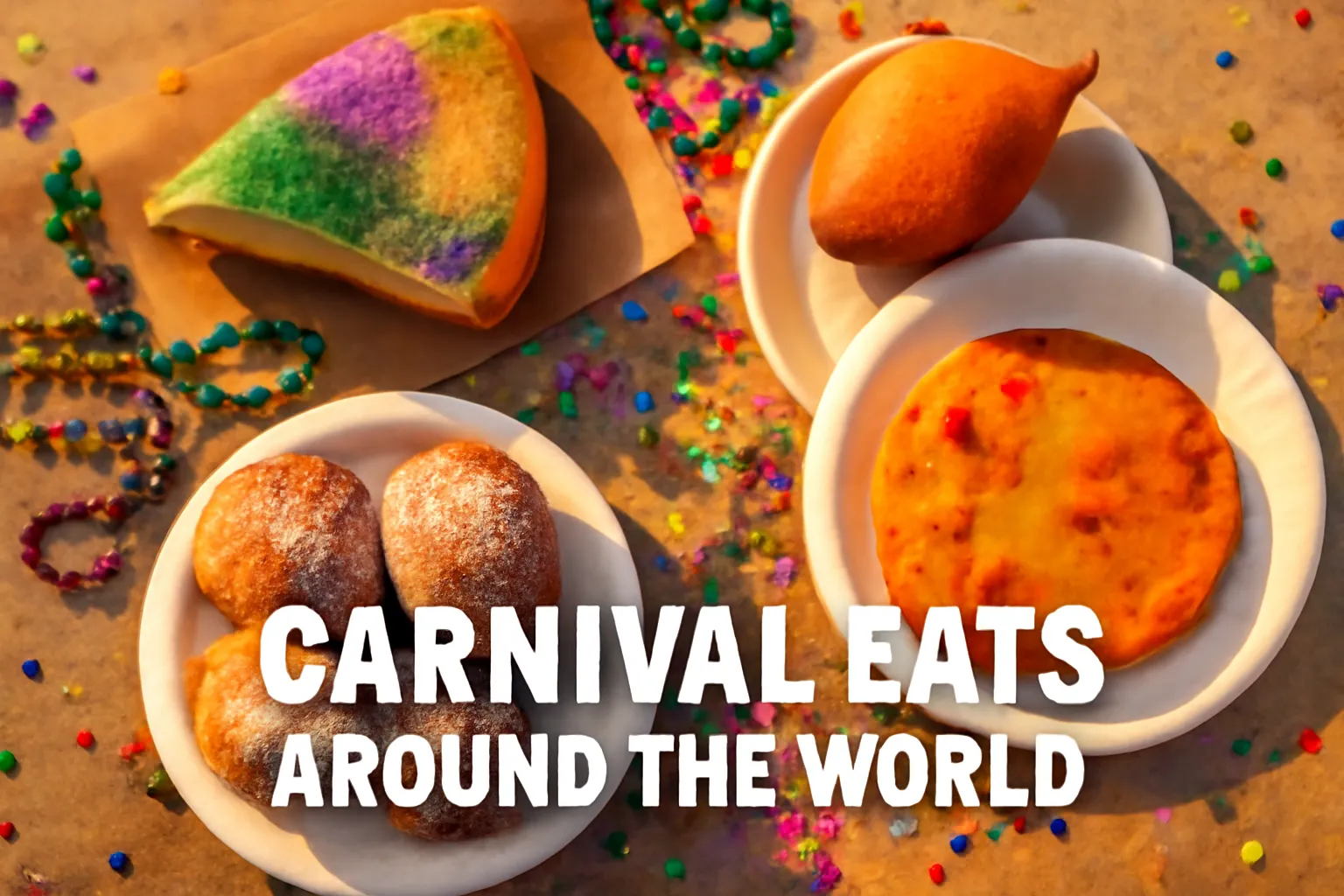
I’ll argue this without blinking: New Orleans during Mardi Gras delivers the finest Mardi Gras food festival experience anywhere, and it isn’t a close contest. This was already one of the world’s great food cities before you factor in parade culture, shared euphoria, and a centuries-old habit of treating eating as celebration — stack those together and you get something genuinely one-of-a-kind. King cake justifies the trip on its own: a cinnamon-streaked, purple-gold-green frosted ring with a plastic baby buried inside that somehow becomes a personality quiz for whoever bites into it. But that’s just the opening act. Line up for crawfish étouffée, work through po’boys stuffed with fried oysters, and hunt down red beans and rice good enough to make you question every meal that came before it.
Must-Try Dishes: King cake (Dong Phuong Bakery — locals will vouch for this one), crawfish étouffée, charbroiled oysters, and a beignet from Café Du Monde that will inevitably end up on your shirt.
Best Food Neighborhoods: The French Quarter for the classics and the chaos, Frenchmen Street for a more local late-night feel, and Mid-City for parade routes where neighborhood families set out food spreads that aren’t technically for sale — though someone will hand you a plate anyway.
Practical Tip: Lock in accommodation 3–4 months ahead — prices triple during Mardi Gras week and rooms vanish fast. The strongest eating isn’t on Bourbon Street; it’s along the Uptown parade routes, where locals set up ladders, tailgates, and coolers stocked with home cooking. Follow a parade, make a friend, eat their food. That’s the whole strategy.
Venice Carnival Food Traditions — The Most Elegant Way to Eat in a Crowd
📍 Venice, Italy | Dates: Approximately 10 days ending on Shrove Tuesday | Duration: ~10 days
Venice Carnival is, without question, the best-dressed food festival on earth. People turn up in elaborate 18th-century costume just to eat fritole — fried dough balls dusted in powdered sugar, sometimes filled with raisins, pine nuts, or cream — while standing over a canal, and there’s something wonderfully surreal about the whole scene. The best carnival food experiences in Venice run through bacaro culture: cramped, standing-room-only wine bars tucked into narrow alleys, pouring ombra (a small glass of local wine) alongside cicchetti — Venetian bar bites like baccalà mantecato, sardines in saor, or artichoke on crostini — for around €1.50 apiece. Galani, the crispy fried ribbons of dough that count as Venice’s carnival fritter, only show up during this season and vanish the moment it wraps. Eat every one you can manage.
Must-Try Dishes: Fritole, galani, cicchetti with baccalà mantecato, and sarde in saor (sweet-sour sardines that surprise you every time).
Best Food Neighborhoods: Cannaregio and Dorsoduro for a proper bacaro crawl, Campo Santa Margherita for a lively, local piazza with strong street snacks, and the Rialto Market area for produce and bacari that never make it into guidebooks.
Practical Tip: Spend your first evening on a bacaro crawl — figure €20–30 for a full cicchetti dinner spread across four or five stops. Steer clear of eating near St. Mark’s Square during Carnival; prices are absurd and quality drops accordingly. Venice rewards whoever walks away from the mask-wearing crowds.
Barranquilla Carnival — Colombia’s Most Delicious Four Days
📍 Barranquilla, Colombia | Dates: The four days before Ash Wednesday (UNESCO-recognized carnival) | Duration: ~4 official days, with food events surrounding the whole week
Barranquilla Carnival carries UNESCO recognition, gets wildly overlooked by international travelers, and serves some of the best street food I’ve come across among february food festivals in Europe and South America. The arepas de huevo alone are worth the flight: deep-fried corn cakes stuffed with egg (sometimes meat too), sold hot off carts along the parade routes and built for eating mid-dance. Butifarra soledeña, a pork sausage from the nearby town of Soledad, is the carnival snack strangers will press into your hand simply because they want you to understand something real about their city. This is a place that celebrates without restraint, and its food culture reflects a Colombian-Caribbean identity distinct from Bogotá, Cartagena, or Medellín — coastal, salty, fried, and genuinely extraordinary.
Must-Try Dishes: Arepas de huevo, butifarra soledeña, carimañolas (yuca fritters stuffed with meat), and a cold costeño beer permanently in hand, because the heat is no joke.
Best Food Neighborhoods: The Via 40 parade route for the heaviest concentration of street food, and the surrounding neighborhoods near the Vía 40 stadium, where family-run food operations quietly outperform anything in the main plaza.
Practical Tip: Barranquilla runs considerably cheaper than Rio or New Orleans — expect to eat exceptionally well on $10–15 USD a day. Fly directly into Barranquilla’s Ernesto Cortissoz International Airport instead of routing through Bogotá if you have the option. Locals here are visibly delighted when foreign visitors show up, and the food hospitality matches that energy completely.
The Hip Flask That Survived Three Carnivals (and Saved Me from Overpriced Daiquiris)
Carnival crowds push drink prices up everywhere you turn — $12 mojitos on Bourbon Street, €8 spritzers at every Venice bacaro, street vendors charging triple what locals pay. A discreet flask lets you handle the drinking side quietly beforehand so you can actually focus on the food instead of babysitting a watered-down cocktail.
What works
- Six ounces hits the right size — enough to split a quick drink with someone you meet waiting in a bloco line, without broadcasting “tourist carrying a flask.”
- Stainless steel genuinely keeps liquid cold through hours of walking Carnival routes in February heat, and it won’t sweat through your pocket the way plastic does.
- Slim enough to pass through airport security without comment when empty, and sturdy enough to survive getting knocked around inside my carnival float gear without a dent.
What doesn’t
- Six ounces disappears quickly if you’re genuinely trying to stay hydrated — expect three refills across a full Mardi Gras parade day, which cuts into the convenience.
- The cap is small and easy to lose in a packed street celebration; mine got left behind in a New Orleans bathroom, and I spent the rest of the trip improvising with plastic wrap.
I almost ditched the flask idea entirely after that bathroom incident in NOLA, but I’d already packed it to Venice and remembered why it mattered—one sip of proper rum beats nursing a €10 tourist cocktail every time. Grab the 6 oz Stainless Steel Hip Flask with Funnel for Men & Women before you book your Carnival flights.
Frequently Asked Questions
Where should I eat during Rio Carnival instead of the Sambadrome?
Eat along the bloco routes instead, where vendors court local regulars rather than tourist wallets and charge a third of Sambadrome prices. Lapa works for late-night eating, Santa Teresa for artisanal plates, and Ipanema and Leblon for the thickest vendor clusters. Budget $15–25 USD daily on street food and drinks.
What is the best King cake bakery in New Orleans for Mardi Gras?
Dong Phuong Bakery is where locals vouch for King cake during Mardi Gras. This cinnamon-streaked, purple-gold-green frosted ring with a plastic baby inside justifies a trip on its own and serves as the opening act before crawfish étouffée and po’boys.
How much does a full bacaro crawl cost in Venice Carnival?
Spend €20–30 for a full cicchetti dinner spread across four or five bacaro stops in Venice during Carnival. Cicchetti cost around €1.50 apiece and pair with ombra, a small glass of local wine, best experienced in Cannaregio, Dorsoduro, or Campo Santa Margherita.
How many days does Barranquilla Carnival last and what is the budget?
Barranquilla Carnival runs approximately four official days before Ash Wednesday, with food events surrounding the whole week. Expect to eat exceptionally well on $10–15 USD daily, considerably cheaper than Rio or New Orleans, with must-tries including arepas de huevo and butifarra soledeña.
About This Article

Written by Elena Vasquez. Elena Vasquez is a full-time traveler and the founder of Witty Passport. Over fifteen years and more than 50 countries across six continents — including a stretch spent leading groups professionally through Southeast Asia and the remote highlands of South America — she's written the kind of destination guides she always wished existed: practical, specific, and built on real experience rather than recycled itineraries. More about this site.
Scope and limits. Elena is a full-time traveler, not a licensed travel agent or immigration adviser. Entry requirements, visa rules, and advisories change without notice — always confirm against the official government source for your destination and passport before booking.
Verify this against a primary source
Specifics change, and your situation may differ from the one described here. These are the authorities worth checking directly:
- U.S. Department of State — entry requirements and travel advisories
- CDC Travelers' Health — vaccination and health notices by destination
- TSA — current carry-on and screening rules