
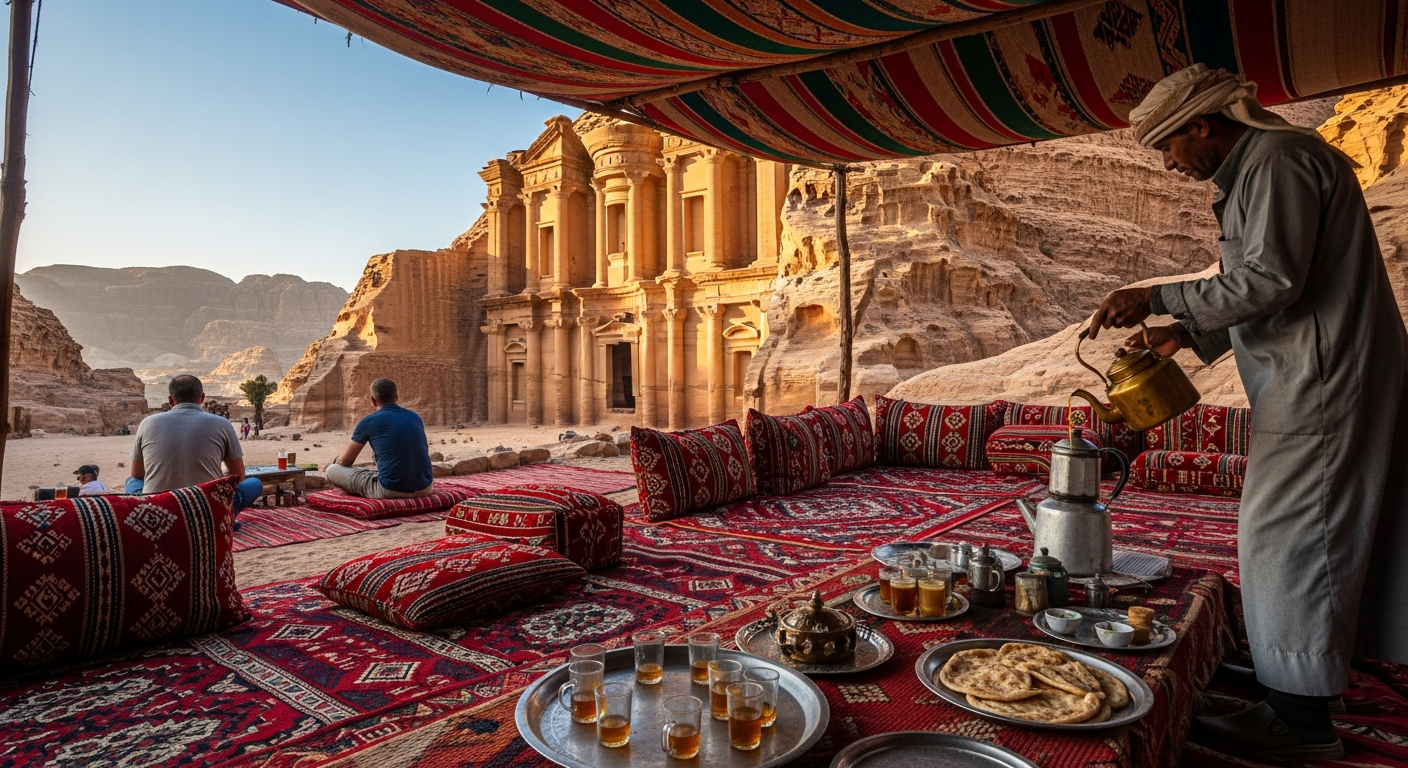
Most travelers recognize Petra immediately by its iconic Treasury. However, a greater wonder hides high in the rocky mountains. This hidden gem is the Monastery, or Ad Deir. It demands effort to reach, but the reward exceeds the struggle. While the Treasury sits near the entrance, the Monastery requires a dedicated hike. Consequently, fewer tourists make the journey. You find silence here that the lower city lacks. Indeed, this solitude amplifies the site’s majesty.
The Architectural Marvel of Petra’s Monastery
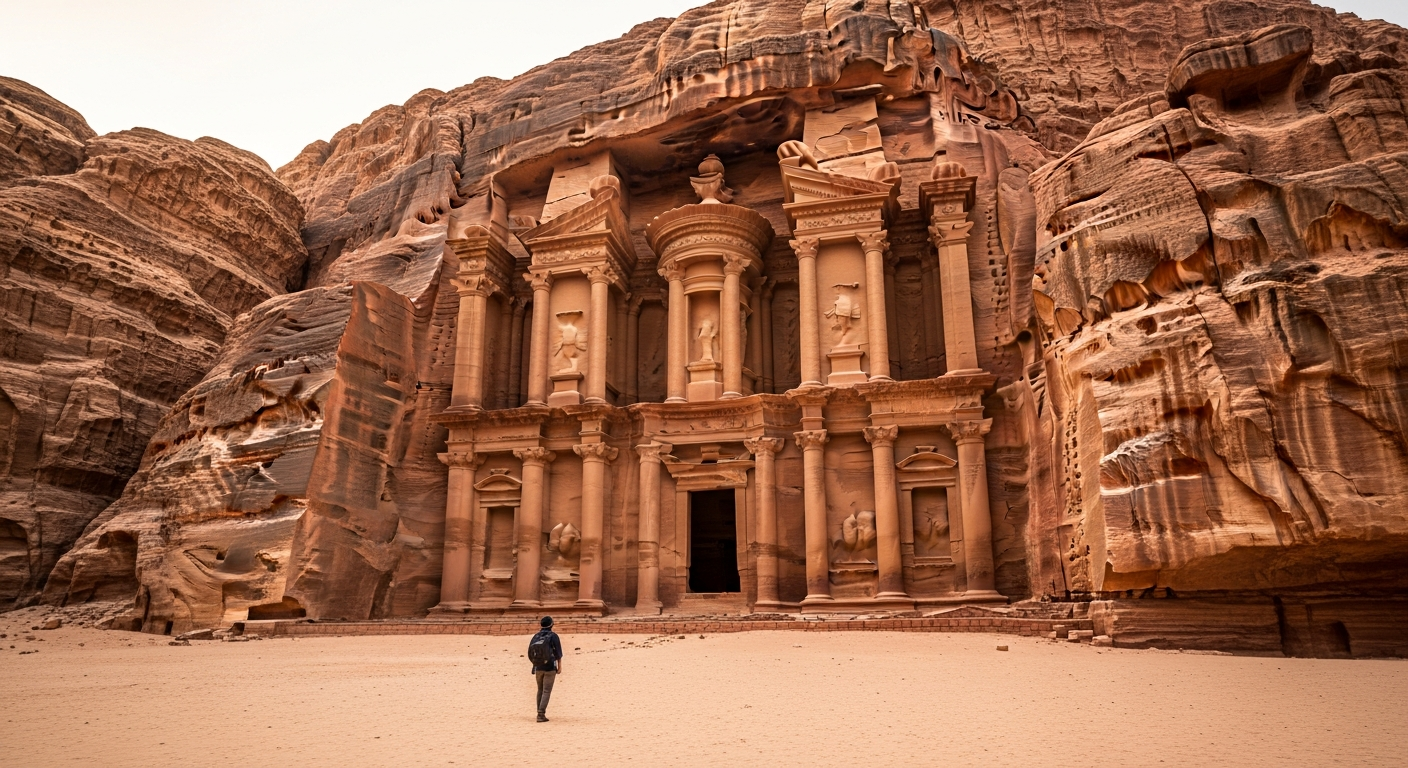
The sheer scale of Ad-Deir monastery leaves visitors breathless upon first glimpse. Measuring approximately 50 meters wide and 45 meters high, the façade towers over the surrounding landscape. Moreover, ancient Nabataean craftsmen carved this monument entirely from solid rock. The sandstone cliff became their canvas around the 3rd century BCE. Consequently, the monastery represents one of humanity’s most impressive engineering feats. Each column, doorway, and decorative element was painstakingly chiseled by hand. The precision required for such work remains astounding even by modern standards.
If you’re planning to tackle the challenging hike up to Petra’s Monastery, you’ll want to ensure you have the right gear to make the journey both comfortable and memorable. Starting with proper footwear, the XPETI Men’s TERRA hiking boots provide excellent ankle support and traction on the uneven stone steps that lead to Ad Deir. To carry your essentials during the ascent, a lightweight backpack that’s both waterproof and foldable makes it easy to store water, snacks, and personal items without weighing you down. Staying hydrated in Jordan’s desert climate is absolutely crucial, so bringing an insulated water bottle that keeps your drinks cold for up to twenty-four hours will help you maintain energy throughout the steep climb. The intense Middle Eastern sun can be relentless, especially during midday, which is why a Home Prefer Outdoor sun hat with UPF50+ protection and a neck flap becomes essential for preventing sunburn and heat exhaustion. When you finally reach the top and witness the breathtaking facade of the Monastery, you’ll want to capture those incredible moments with a high-quality camera that features excellent zoom capabilities and image stabilization for stunning photography. Since you’ll be spending several hours exploring the site and taking photos, a reliable GOODaaa Portable Charger with multiple outputs ensures your devices stay powered throughout your entire adventure at this remote location. For those who need extra stability on the rocky terrain, the TREKOLOGY Trek-Z Cork trekking poles offer lightweight support that folds compactly when not in use, making them perfect for international travel. Protecting your skin from the harsh desert sun is non-negotiable, so applying broad-spectrum SPF 50 sunscreen from a convenient two-bottle pack ensures you have enough coverage for multiple applications throughout the day. To cool down after the strenuous climb, a moisture-activated cooling towel pack provides instant relief when soaked with water and can be reused throughout your entire Petra visit. Finally, safety should always be a priority when hiking in remote archaeological sites, so carrying a compact Mini First Piece aid kit with 150 essential medical supplies gives you peace of mind to handle minor injuries or emergencies during your exploration of this ancient wonder.
Exceptional State of Preservation
Unlike many ancient structures, the monastery has withstood centuries remarkably well. The dry desert climate has protected the sandstone from excessive erosion. Additionally, the remote location shielded it from urban development and warfare. Visitors today can examine decorative urns, Corinthian capitals, and geometric patterns with striking clarity. The original chisel marks are still visible in many sections. Furthermore, the reddish-golden hue of the stone shifts beautifully throughout the day. Sunrise and sunset create particularly dramatic lighting effects across the façade. Therefore, photographers and historians alike find endless details to study and capture.
Beyond Photography: An Immersive Experience
While the monastery creates stunning photographs, the journey offers much deeper rewards. The 800-step climb through Petra’s rugged terrain builds anticipation with every turn. Meanwhile, the path winds past ancient caves, Bedouin tea stops, and panoramic viewpoints. Each segment reveals new geological formations and historical remnants. As a result, visitors gain appreciation for the Nabataeans’ daily lives and challenges. The physical effort required connects modern travelers to ancient pilgrims who made similar journeys. Moreover, reaching the summit provides a profound sense of accomplishment and perspective.
Planning Your Essential Visit
For example, starting your climb early morning helps you avoid midday heat and crowds. The trek typically takes 45 minutes to one hour depending on fitness level. However, the experience rewards those who take time to pause and absorb the surroundings. Pack plenty of water and wear sturdy hiking shoes for the uneven stone steps. Additionally, consider hiring a local guide who can share stories and historical context. Therefore, allocating at least three hours for the complete monastery experience ensures unhurried exploration.
The Challenge of the Ascent
The journey begins at the basin of the ancient city. Travel Guide From here, the trail turns upward. You face a physical challenge immediately. Specifically, the path consists of hundreds of uneven steps. Some guidebooks claim there are 800 steps. Others say the number is closer to 900. Regardless of the exact count, your legs will feel the burn. .
Take your time on this path. The sun beats down relentlessly on the stone. Heat radiates from the canyon walls. Thus, pacing is crucial. Rush, and you will exhaust yourself quickly. Instead, walk steadily. Drink water often. You are walking in the footsteps of ancient people. This thought can motivate you when the stairs seem endless. Additionally, the changing perspective of the valley below is stunning. Every turn reveals a new angle of the rose-red city.
Encounters Along the Trail
The Vibrant Marketplace Along the Ascent
The journey upward transforms into an unexpected cultural experience. Moreover, the climb becomes a fascinating blend of physical challenge and social interaction. Bedouin merchants have established a thriving micro-economy along the ancient stone pathway. These weathered steps, carved centuries ago, now serve a dual purpose. They guide pilgrims upward while supporting local families.
The makeshift shops appear every fifty meters or so. Furthermore, each stall displays handcrafted treasures with remarkable artistry. Silver jewelry gleams in the harsh desert sun, featuring intricate geometric patterns. Traditional designs passed down through generations catch every visitor’s eye. Colorful scarves flutter in the mountain breeze like prayer flags. Additionally, vendors showcase unusual geological specimens found in surrounding valleys. These polished stones and crystals tell the region’s ancient story.
More Than Commercial Transactions
The Bedouin shopkeepers offer something precious beyond merchandise. Their warm hospitality provides essential rest during the demanding ascent. Consequently, many climbers find renewed strength through these brief encounters. The vendors understand the mountain’s challenges intimately. They’ve witnessed thousands attempt this pilgrimage over the years.
“Rest here, my friend,” becomes a common refrain. These invitations aren’t merely sales tactics. Instead, they reflect genuine concern for weary travelers. The merchants often share sweet tea or cold water. Meanwhile, they tell stories about the monastery’s history and legends. Their presence transforms a solitary trek into a communal experience. As a result, visitors gain cultural insight alongside physical accomplishment.
“Welcome, rest a minute,” they say. This hospitality is genuine. Stopping for a cup of sweet sage tea can save your energy. It gives your heart rate a chance to settle. Furthermore, chatting with the locals enriches the experience. They know every inch of these mountains. They share stories that you won’t find in guidebooks.
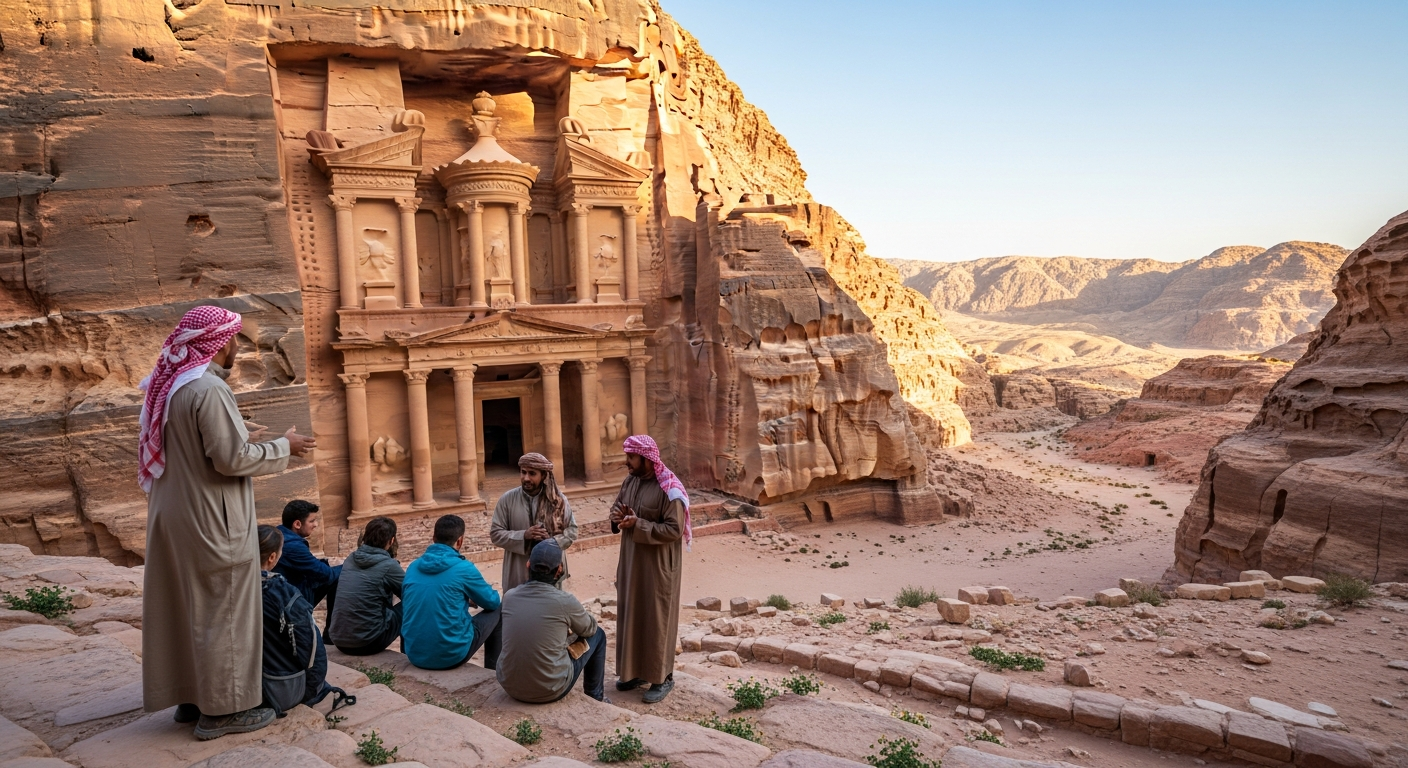
Donkeys also share the path. Handlers guide them up and down the steep stairs. They carry supplies and sometimes weary tourists. However, walking is the safer choice for most. You control your own footing this way. Plus, you can stop whenever you want to take a photo. The views of the canyon improve with every flight of stairs. Consequently, these breaks serve a dual purpose: rest and sightseeing.
The Grand Reveal
Finally, the stairs end. The path levels out. You turn a final corner, and there it is. The Monastery emerges from the rock with commanding presence. It is larger than the Treasury. In fact, the sheer scale is difficult to comprehend until you stand beneath it. The doorway alone is taller than a house. Unlike the Treasury, which hides in a narrow canyon, the Monastery sits in an open plaza.
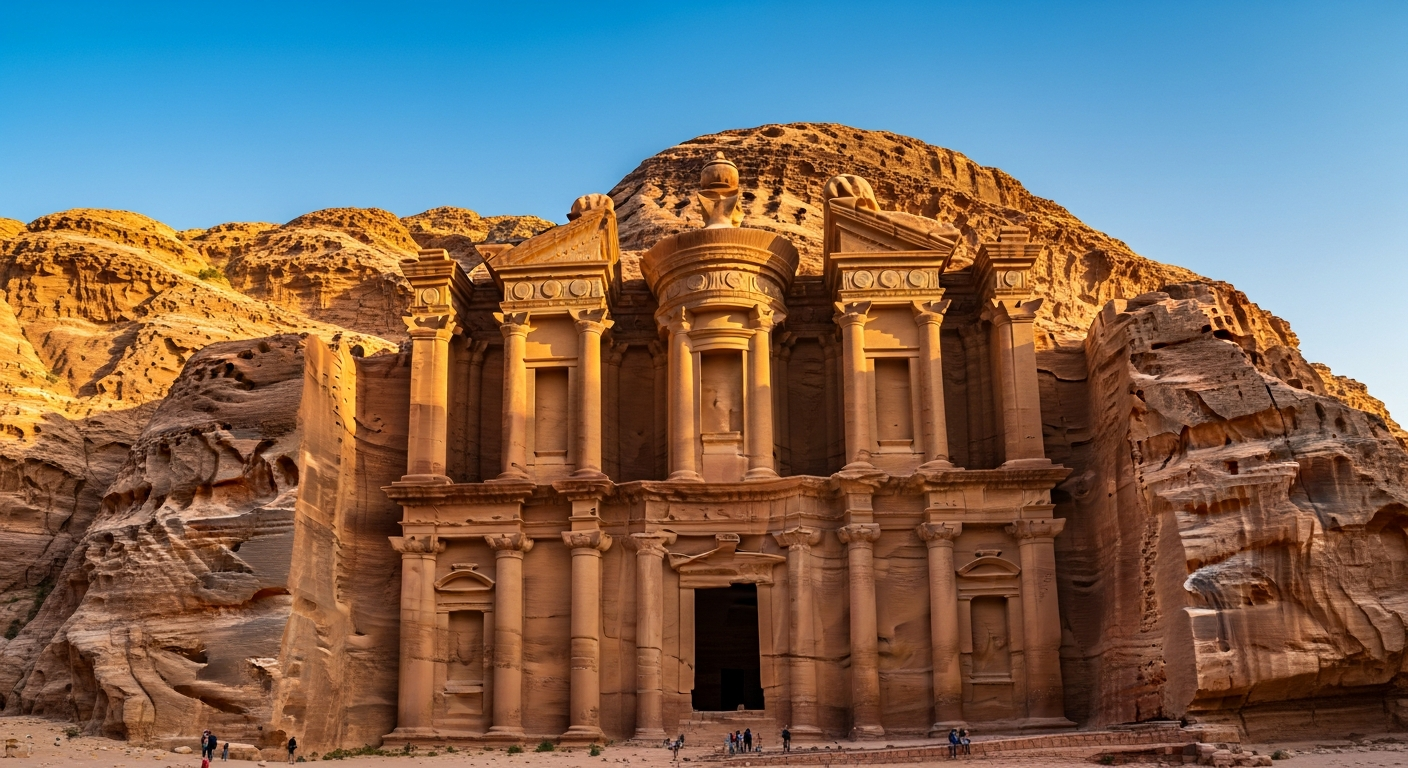
Sunlight floods the facade. The stone glows a rich, golden yellow. This differs from the pink hues of the lower city. Moreover, the open space allows you to step back. You can view the entire structure without craning your neck. Crowds are thin here. You might even have the view to yourself for a moment.
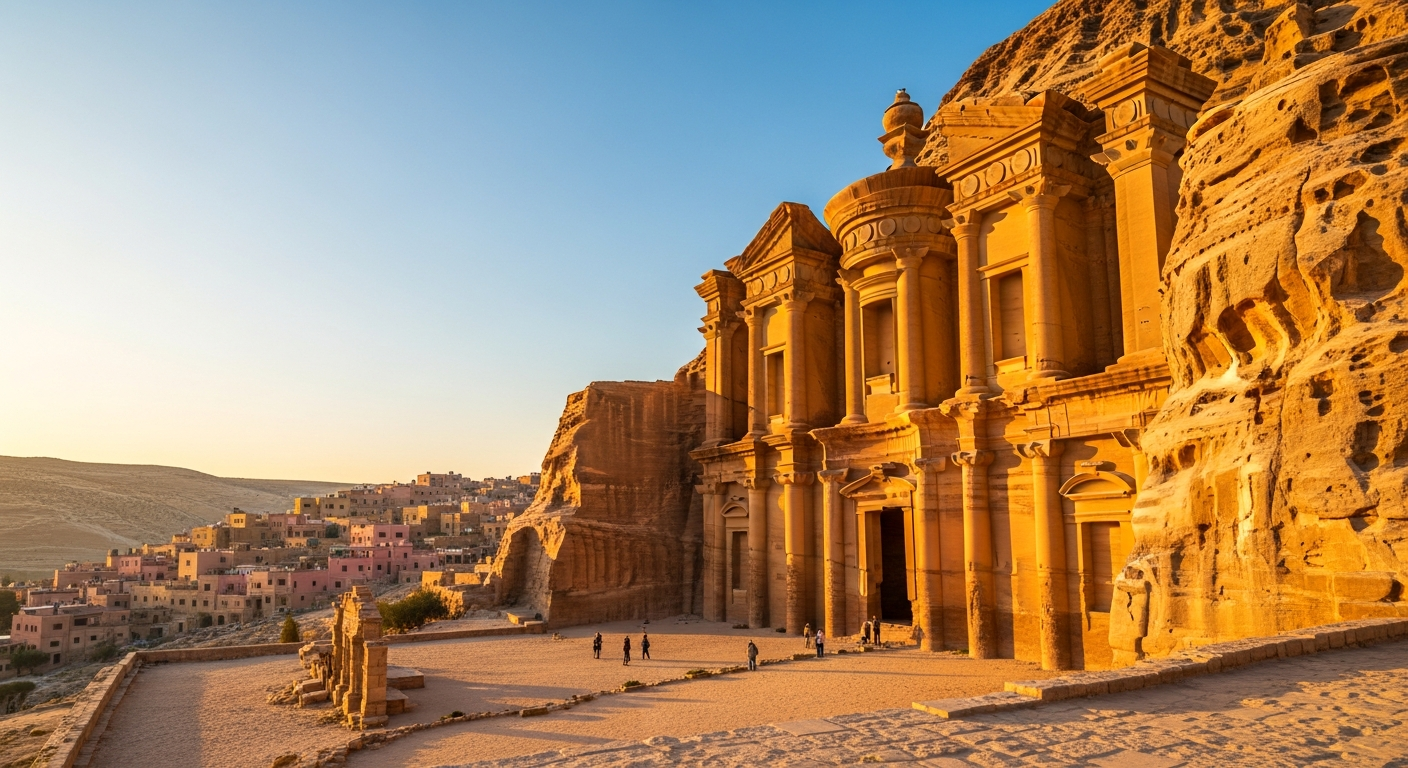
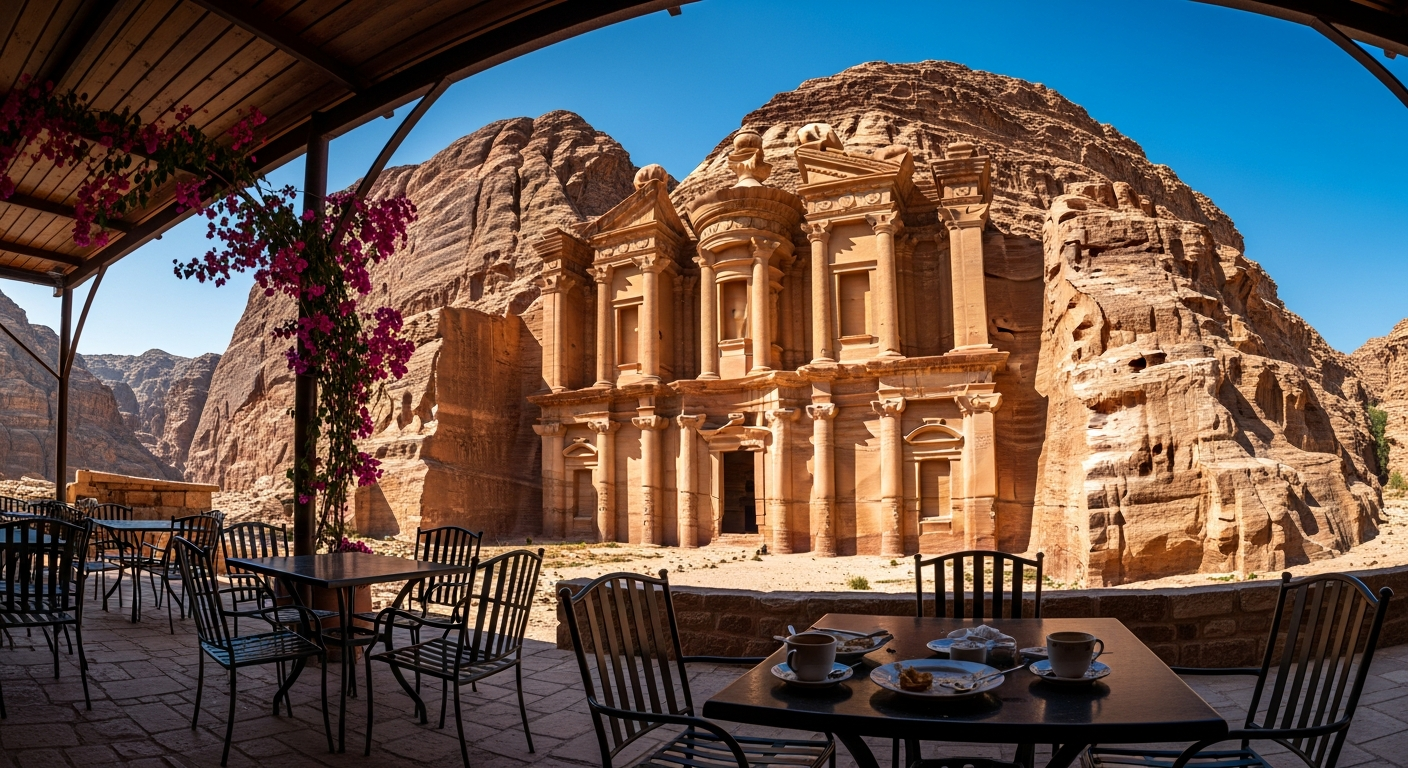
Take time to explore the plaza. A small cafe sits opposite the monument. You can buy a cold drink and sit in the shade. From this vantage point, you can admire the architectural precision. The Nabataeans carved this masterpiece from the top down. They removed the rock layer by layer. This engineering feat remains impressive two thousand years later.
Beyond the Facade
Beyond the Tourist Crowds
Most travelers commit a common error at this remarkable site. They arrive at the monastery‘s main entrance, feeling accomplished. The initial viewpoint satisfies their expectations. Therefore, they assume their journey is complete. The bustling cafe becomes their final destination. Visitors sip coffee and capture the obligatory Instagram shots. Within thirty minutes, they’re descending back to their vehicles.
However, this premature departure means missing the monastery’s true crown jewel. The actual experience lies ahead, waiting for those willing to venture further. Many tourists remain completely unaware of what exists beyond.
Following the Path Less Traveled
Small wooden markers dot the landscape past the main courtyard. These unassuming signs bear an extraordinary claim. They declare “The Best View in the World” awaits above. Initially, this proclamation might seem like typical tourist hyperbole. Nevertheless, countless seasoned travelers confirm its accuracy.
The additional path requires minimal effort. You’ll invest roughly ten to fifteen minutes of gentle climbing. The terrain remains manageable for most fitness levels. Furthermore, the trail is well-maintained and clearly marked throughout. Stone steps guide you upward through ancient rock formations.
What Makes the Extended Hike Worthwhile
This continuation rewards your persistence generously. The panoramic vista from the upper viewpoint dramatically surpasses the lower perspectives. Additionally, you’ll encounter far fewer people at this elevation. Consequently, you can absorb the spiritual atmosphere without distraction. The silence itself becomes part of the experience. Moreover, photography opportunities multiply exponentially at the summit.
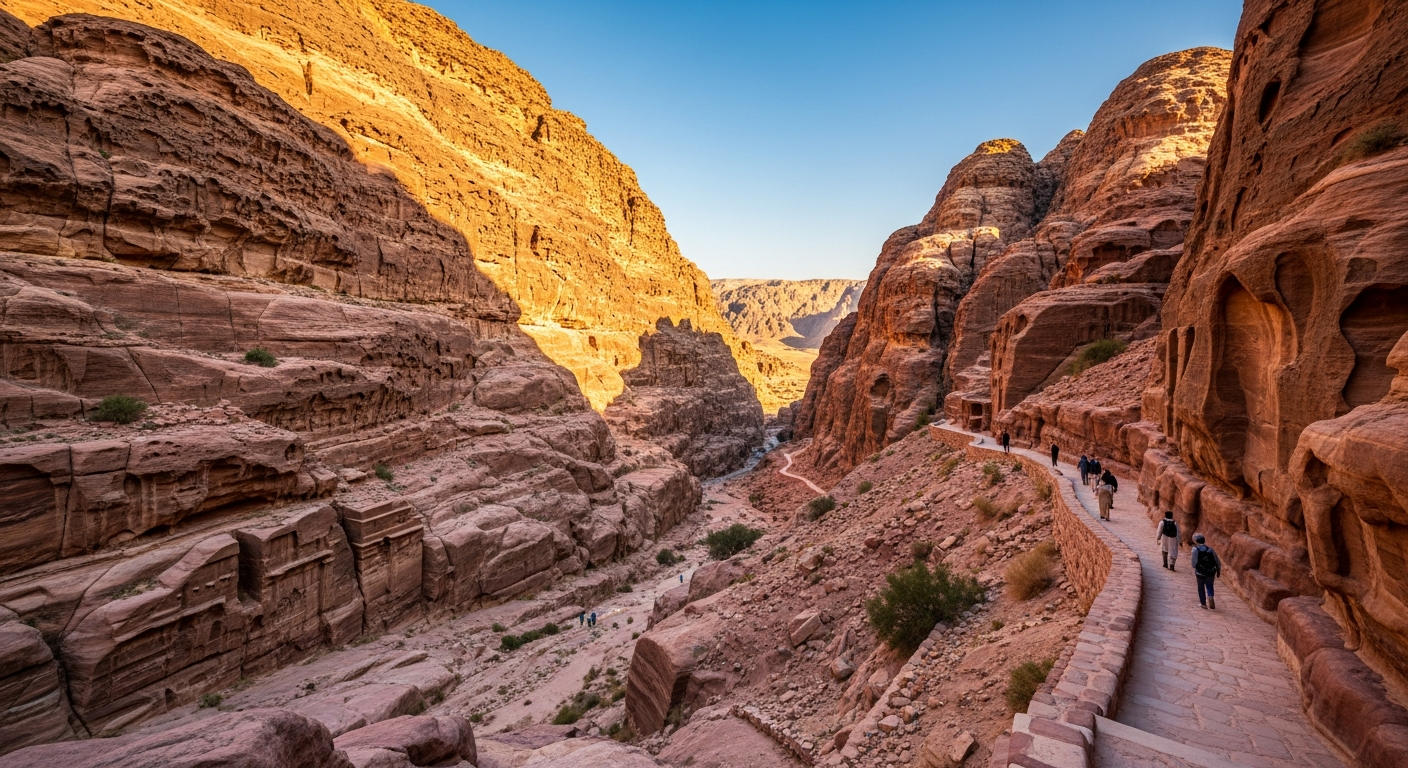
These viewpoints overlook the spectacular Wadi Araba. The landscape drops away dramatically. You stand on the edge of a massive rift valley. On a clear day, you can see across the border into Israel. The desert floor stretches out thousands of feet below. It looks like the surface of Mars. Dark, jagged mountains pierce the sandy haze.
Silence reigns up here. The wind is the only sound. It whips through the canyons and cools your skin. This is the true “End of the World.” You feel small against the vastness of nature. Therefore, sit on a rock and absorb the scene. This moment of peace is the ultimate reward for your climb. It justifies every step you took to get here.
Practical Tips for the Hike
Preparation ensures a successful climb. First, wear sturdy shoes. The stones are slippery and uneven. Flip-flops are dangerous on this terrain. Second, bring plenty of water. The cafe at the top sells drinks, but you need hydration during the hike. The air is dry, and you lose fluids quickly.
Start your day early. The morning sun hits the Monastery facade perfectly. Additionally, the temperature is cooler before noon. If you visit in the afternoon, the path might be in the shade, but the facade will be shadowed too.
Assessing Your Physical Readiness
Before embarking on the monastery trail, honestly evaluate your current physical condition. This journey demands moderate to strenuous effort from most visitors. The path climbs steadily upward through rocky terrain. Your cardiovascular system will get a workout. However, you won’t need specialized climbing skills or equipment. The route follows a well-established trail without technical sections.
Individuals who exercise regularly should manage the ascent comfortably. For example, if you walk briskly several times weekly, you’ll likely handle it well. Similarly, those who enjoy recreational hiking will find the challenge reasonable. Nevertheless, sedentary individuals might struggle with the sustained elevation gain.
Planning Your Climbing Timeline
Allocate sufficient time for your monastery visit to avoid rushing. Most hikers require 45 to 60 minutes to reach the summit. This timeframe assumes a steady, moderate pace with occasional brief stops. Furthermore, your personal fitness level significantly impacts this duration. Stronger hikers might complete the climb in 35 minutes. Conversely, those taking frequent breaks could need 75 to 90 minutes.
The descent typically requires 30 to 45 minutes for most visitors. Therefore, budget at least two hours for the round trip. Additionally, factor in time for exploring the monastery itself and enjoying the panoramic views.
Protecting Your Joints During Descent
The downward journey presents unique physical challenges that many underestimate. Your knee joints absorb considerable impact with each downward step. Consequently, the descent often proves more uncomfortable than the climb. The repetitive jarring motion stresses the patella and surrounding cartilage. Moreover, the quadriceps muscles work intensely to control your descent speed.
Consider bringing trekking poles or walking sticks for enhanced stability. These tools redistribute weight away from your knees. As a result, they reduce joint compression by approximately 25 percent. Additionally, poles improve balance on loose rocks and uneven surfaces. If you have existing knee problems, poles become essential equipment. Meanwhile, taking smaller steps and moving slowly also minimizes joint stress effectively.
Conclusion
Petra holds many secrets. Yet, the Monastery stands out as its crown jewel. It combines history, culture, and nature into one experience. The physical exertion filters out the casual tourists. Thus, those who reach the top share a bond. You earned this view.
A Masterpiece Carved in Stone
The architectural scale of Ad Deir is simply overwhelming. Indeed, the massive facade measures nearly 50 meters wide. It dwarfs the famous Treasury found in the valley below. Additionally, the golden sandstone glows intensely against the stark blue sky. This structure was not built with bricks; rather, it was sculpted directly from the mountain. Consequently, the ancient craftsmanship commands immediate respect from every visitor. The sheer magnitude of the columns creates a humbling atmosphere.
The Journey Upwards
Reaching this remote wonder requires significant physical effort. Specifically, travelers must conquer a winding path of over 800 rock-cut steps. However, the arduous climb is part of the essential experience. Along the way, you will encounter diverse sights:
- Stunning geological formations
- Friendly Bedouin vendors offering tea
- Sweeping views of the canyon
- Moments of quiet reflection
Therefore, the ascent becomes a rhythm of exertion and discovery. Do not rush the process. Instead, take your time to breathe in the ancient air.
Beyond the Facade
Upon arrival, the physical exhaustion quickly fades into pure wonder. You are witnessing a true masterpiece of Nabataean engineering. Furthermore, the panoramic views of the Wadi Araba valley are breathtaking. On clear days, the horizon seems to stretch endlessly toward Israel and Palestine. Thus, the site serves as a powerful reminder of human potential. It connects the past to the present seamlessly. Ultimately, this isolated sanctuary offers a rare moment of peace.
If you’re planning to tackle the challenging hike up to Petra’s Monastery, you’ll want to ensure you have the right gear to make the journey both comfortable and memorable. Starting with proper footwear, the XPETI Men’s TERRA hiking boots provide excellent ankle support and traction on the uneven stone steps that lead to Ad Deir. To carry your essentials during the ascent, a lightweight backpack that’s both waterproof and foldable makes it easy to store water, snacks, and personal items without weighing you down. Staying hydrated in Jordan’s desert climate is absolutely crucial, so bringing an insulated water bottle that keeps your drinks cold for up to twenty-four hours will help you maintain energy throughout the steep climb. The intense Middle Eastern sun can be relentless, especially during midday, which is why a Home Prefer Outdoor sun hat with UPF50+ protection and a neck flap becomes essential for preventing sunburn and heat exhaustion. When you finally reach the top and witness the breathtaking facade of the Monastery, you’ll want to capture those incredible moments with a high-quality camera that features excellent zoom capabilities and image stabilization for stunning photography. Since you’ll be spending several hours exploring the site and taking photos, a reliable GOODaaa Portable Charger with multiple outputs ensures your devices stay powered throughout your entire adventure at this remote location. For those who need extra stability on the rocky terrain, the TREKOLOGY Trek-Z Cork trekking poles offer lightweight support that folds compactly when not in use, making them perfect for international travel. Protecting your skin from the harsh desert sun is non-negotiable, so applying broad-spectrum SPF 50 sunscreen from a convenient two-bottle pack ensures you have enough coverage for multiple applications throughout the day. To cool down after the strenuous climb, a moisture-activated cooling towel pack provides instant relief when soaked with water and can be reused throughout your entire Petra visit. Finally, safety should always be a priority when hiking in remote archaeological sites, so carrying a compact Mini First Piece aid kit with 150 essential medical supplies gives you peace of mind to handle minor injuries or emergencies during your exploration of this ancient wonder.
*As an Amazon Associate, I earn from qualifying purchases.